

What Is The Relationship Between Bodily Kinesthetic Intelligence And Motor Skills?
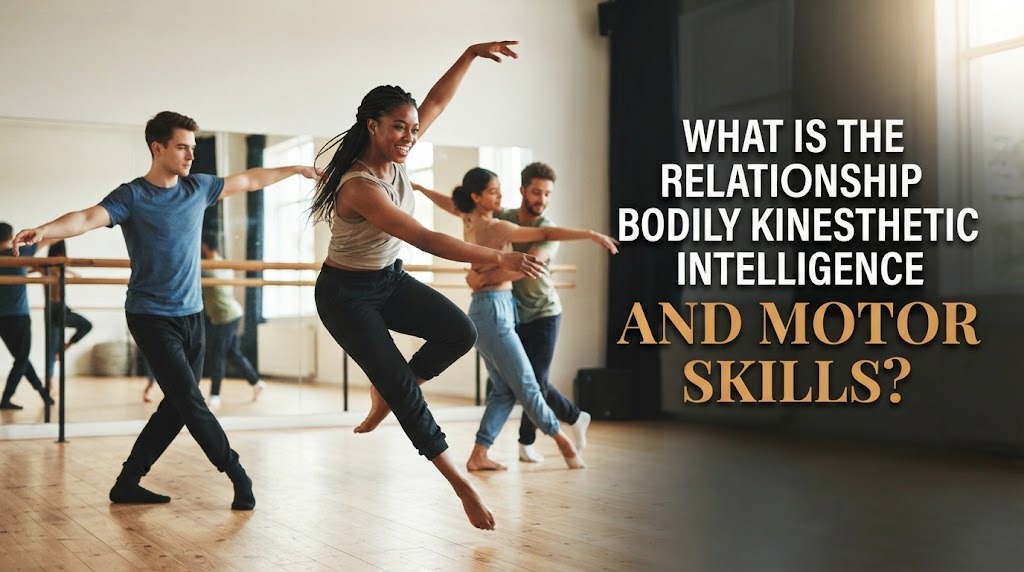
Bodily kinesthetic intelligence and motor skills are closely connected because both involve the effective use and control of the body. Bodily kinesthetic intelligence refers to the ability to use physical movement to perform tasks, express ideas, and solve practical problems. Motor skills are specific abilities that allow people to control their body movements, including actions involving large and small muscles. Understanding their relationship can help explain why some people are comfortable with physical activities and hands-on tasks. However, the two concepts are not exactly the same because intelligence describes a broader ability, while motor skills describe specific physical movements.
WHAT ARE BODILY KINESTHETIC INTELLIGENCE AND MOTOR SKILLS?
Bodily kinesthetic intelligence is one concept within Howard Gardner's theory of multiple intelligences. It describes the ability to use the body effectively for movement, expression, practical tasks, and problem-solving. Someone with strong abilities in this area may enjoy sports, dancing, crafts, acting, cooking, or technical activities. They may also learn effectively through direct experience and physical practice. This ability can develop through experience, practice, and opportunities to use the body in meaningful ways.
Motor skills are the abilities used to control body movements. They are commonly divided into gross motor skills and fine motor skills. Gross motor skills involve larger movements such as running, jumping, balancing, and throwing, while fine motor skills involve smaller and more precise movements such as writing, drawing, cutting, and manipulating small objects. These skills develop through practice and physical experience, particularly during childhood.
HOW ARE THEY CONNECTED?
The connection between the two can be seen when a person uses motor skills to perform physical tasks effectively. For example, a dancer needs balance, coordination, and controlled movements to perform a routine. These motor skills provide the physical foundation, while bodily kinesthetic intelligence involves using the body purposefully and adapting movements to achieve a goal. The person may also need to understand timing, space, and body position. Therefore, motor skills can contribute to the practical expression of bodily kinesthetic abilities.
However, having strong motor skills does not automatically mean someone has exceptionally strong bodily kinesthetic intelligence. A person can develop excellent physical skills through extensive training and repetition. Bodily kinesthetic intelligence involves a broader combination of body control, awareness, movement, and practical application. It can also include using physical actions to communicate or solve problems.
THE ROLE OF COORDINATION
Coordination is an important connection between bodily kinesthetic intelligence and motor skills. It involves controlling different parts of the body so they work together smoothly. Activities such as catching a ball, playing an instrument, dancing, or using tools require different forms of coordination. Good coordination can make physical tasks more accurate and efficient. Repeated practice can gradually improve coordination and movement control.
Coordination is not limited to sports. Everyday activities such as writing, cooking, dressing, typing, and using household objects also require coordinated movements. When people practice these activities, they can improve their motor control and body awareness. These abilities can support the practical use of bodily kinesthetic intelligence in different situations.
GROSS MOTOR SKILLS AND KINESTHETIC ABILITIES
Gross motor skills involve the use of large muscle groups for activities such as walking, running, jumping, climbing, swimming, and balancing. These skills provide an important foundation for many physical activities. A person who participates in sports or dance may use several gross motor skills at the same time. Training can improve strength, balance, coordination, and movement control. These abilities can then support more complex physical tasks.
Children can develop gross motor skills through age-appropriate play and physical activities. Running games, throwing balls, climbing safely, and jumping activities can provide opportunities to practice movement. Such experiences can contribute to body awareness and physical confidence. However, children develop at different rates, so activities should match their individual abilities and developmental stages.
FINE MOTOR SKILLS AND KINESTHETIC ABILITIES
Fine motor skills involve smaller and more precise movements, particularly those involving the hands and fingers. Writing, drawing, sewing, playing certain musical instruments, building models, and using small objects all require fine motor control. These skills can support activities that require accuracy and patience. People who enjoy crafts or detailed practical work may use fine motor skills frequently. Regular practice can improve precision and coordination.
Fine motor skills also play an important role in everyday independence. Tasks such as buttoning clothes, tying shoelaces, using utensils, and handling tools require controlled hand movements. Developing these abilities can help children and adults perform practical tasks with greater accuracy. They are one part of the physical abilities that can contribute to broader kinesthetic performance.
HOW PRACTICE STRENGTHENS BOTH ABILITIES
Practice is important for developing both motor skills and bodily kinesthetic abilities. Repeated physical activities allow the brain and body to become more familiar with specific movements. Over time, movements can become more controlled, accurate, and efficient. Feedback can also help people recognize mistakes and adjust their technique. This process is common in sports, music, crafts, dance, and other practical activities.
Practice should be gradual and appropriate for the person's age and ability. Starting with basic movements can create a foundation before progressing to more difficult tasks. Regular practice can also build confidence and persistence. The goal is not simply to repeat movements but to understand, adjust, and improve them.
WHY BODY AWARENESS MATTERS
Body awareness refers to understanding where the body is positioned and how it is moving. It can help people recognize balance, posture, direction, force, and movement while performing an activity. Body awareness is useful in sports, dance, physical education, crafts, and everyday tasks. A person can use this awareness to adjust their movements when something feels incorrect. This can improve control and reduce unnecessary movements.
Bodily kinesthetic intelligence can involve using this awareness in purposeful ways. For example, a dancer may adjust their posture during a movement, while a craft maker may change hand pressure when working with delicate materials. These adjustments show how physical awareness and practical action can work together. Experience and feedback can help strengthen this ability.
HOW THEY DEVELOP DURING CHILDHOOD
Childhood is an important period for developing motor skills and physical abilities. Children naturally practice movement through playing, crawling, walking, running, drawing, building, and manipulating objects. Appropriate physical activities can provide opportunities to strengthen both gross and fine motor skills. Adults can support development by providing safe environments and age-appropriate activities. Children should also have enough freedom to explore movement without unnecessary pressure.
As children gain experience, they can develop more complex movement patterns. Activities such as sports, dance, crafts, music, and practical projects can challenge their coordination and control. These experiences may also encourage problem-solving and creativity. Development varies from child to child, so progress should be considered individually rather than through constant comparison.
CONCLUSION
Bodily kinesthetic intelligence and motor skills are related because both involve using and controlling the body effectively, but they describe different things. Motor skills are specific movement abilities, while bodily kinesthetic intelligence is a broader capacity to use physical movement for tasks, expression, learning, and problem-solving. Gross and fine motor skills can provide an important physical foundation for kinesthetic activities. Through practice, coordination, body awareness, and meaningful experiences, people can continue developing these abilities. Understanding the relationship between them can help parents, teachers, and learners choose suitable activities for physical and practical development.
Recent Posts

Bagaimana Sistem SKS pada Program Kuliah... 22.11.2026/27 View

How Does Technology Make Daily Evaluation... 21.11.2026/65 View

Apa Strategi Menghadapi Kesenjangan antara Kompetensi... 21.11.2026/65 View

Mengapa Inventaris Aset Penting bagi Kelancaran... 21.11.2026/62 View

When Should Musicians Join a Record... 21.11.2026/63 View
