

What Is The Relationship Between Carbon Emissions And Climate Change?
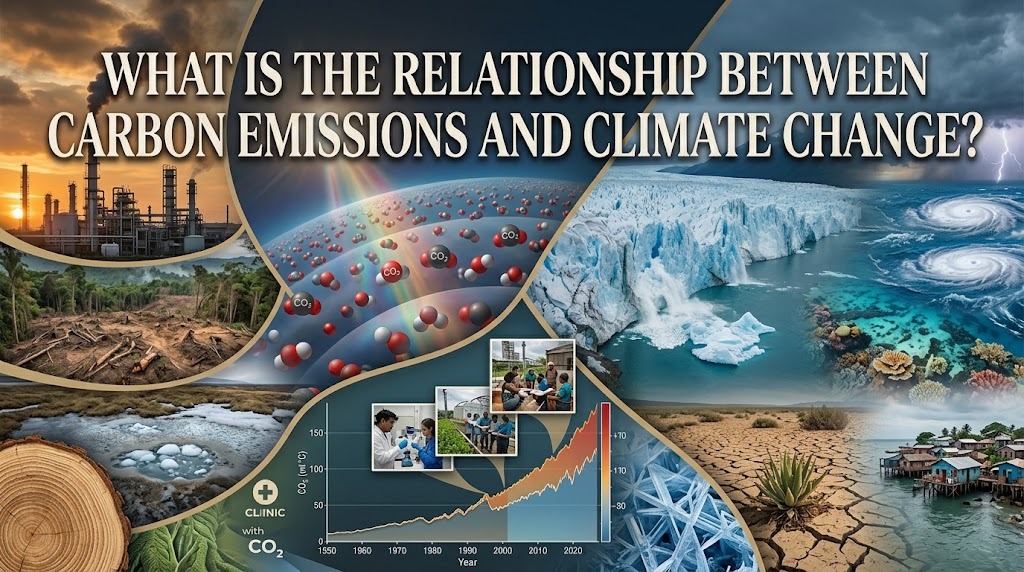
Carbon emissions and climate change are closely connected because the release of carbon dioxide into the atmosphere contributes to global warming. Many human activities, including transportation, electricity production, industrial manufacturing, and deforestation, increase the amount of carbon dioxide in the atmosphere. This gas traps heat and strengthens the natural greenhouse effect, causing Earth's average temperature to rise. Higher carbon emissions contribute to long-term changes in the climate system, affecting weather patterns, oceans, ecosystems, and human life. Understanding this relationship is important for finding effective ways to reduce global warming and protect the planet.
1. WHAT ARE CARBON EMISSIONS?
Carbon emissions mainly refer to the release of carbon dioxide (CO₂) into the atmosphere through natural processes and human activities. Burning coal, oil, and natural gas for electricity, transportation, and industrial production is a major source of human-caused carbon emissions. Deforestation also contributes to the problem because cutting down or burning trees can release stored carbon and reduce the number of trees available to absorb CO₂. Although natural processes such as respiration and volcanic activity release carbon dioxide, human activities have significantly increased atmospheric CO₂ concentrations. Reducing emissions from energy use, transportation, and land management is therefore essential for limiting global warming.
2. HOW CARBON EMISSIONS CAUSE GLOBAL WARMING
Carbon dioxide is a greenhouse gas that absorbs and re-emits some of the heat radiated by Earth's surface. This natural process helps keep the planet warm enough to support life. However, when human activities add excessive amounts of CO₂ to the atmosphere, more heat is retained within the climate system. As a result, Earth's average temperature increases, contributing to global warming. Other greenhouse gases, including methane and nitrous oxide, also contribute to warming, but carbon dioxide is especially important because of the large quantities released and its long-lasting influence on the climate.
3. THE DIFFERENCE BETWEEN CARBON EMISSIONS AND CLIMATE CHANGE
Carbon emissions and climate change are related, but they do not mean the same thing. Carbon emissions are one of the causes, while climate change describes long-term changes in temperature, rainfall, sea levels, and other climate patterns. Carbon dioxide emissions increase the concentration of greenhouse gases, which strengthens the greenhouse effect and raises global temperatures. These rising temperatures can influence rainfall, increase the risk of certain extreme weather events, and contribute to melting glaciers and rising sea levels. Understanding this difference helps explain why reducing emissions is a key part of addressing climate change.
4. MAJOR SOURCES OF CARBON EMISSIONS
Several human activities contribute significantly to carbon emissions worldwide. Burning fossil fuels for electricity, heating, and transportation is one of the largest sources. Industrial processes, including cement manufacturing, also release carbon dioxide, while deforestation reduces the ability of forests to store carbon. Agriculture and waste management contribute to overall greenhouse gas emissions as well, although some of their emissions come from gases other than CO₂. Identifying these sources helps governments, businesses, and individuals develop targeted strategies to reduce emissions and limit their environmental impact.
5. THE IMPACT OF CARBON EMISSIONS ON THE ENVIRONMENT
Increasing carbon emissions contribute to global warming, which affects natural environments in many ways. Rising temperatures can increase heat stress in ecosystems, alter growing seasons, and shift the habitats of plants and animals. Melting glaciers and ice sheets, together with the expansion of warmer seawater, contribute to rising sea levels. In addition, oceans absorb some atmospheric carbon dioxide, causing ocean acidification, which can harm corals and other organisms that build shells or skeletons from calcium carbonate. These changes can disrupt ecosystems, reduce biodiversity, and threaten the natural resources that people depend on.
6. HOW CARBON EMISSIONS AFFECT HUMAN LIFE
The effects of carbon emissions reach beyond the natural environment and can influence people's health, livelihoods, and daily activities. Climate change increases the risk of dangerous heat, while changing rainfall patterns can contribute to droughts and floods in vulnerable regions. These conditions can damage crops, disrupt water supplies, and increase food production costs. Coastal communities may also face greater flooding risks as sea levels rise. Reducing carbon emissions can help limit future climate risks, although some impacts will continue because the climate system responds gradually to past emissions.
7. WAYS TO REDUCE CARBON EMISSIONS
Reducing carbon emissions requires action from individuals, businesses, and governments. Switching from fossil fuels to renewable energy, such as solar and wind power, can reduce emissions from electricity generation. Using public transportation, walking, cycling, and improving vehicle efficiency can also lower emissions from travel. Businesses can adopt energy-efficient equipment, reduce waste, and improve production methods, while protecting forests helps preserve natural carbon storage. Consistent emission reductions across different sectors are necessary to slow global warming and reduce the severity of future climate change.
8. THE IMPORTANCE OF CARBON FOOTPRINT AWARENESS
A carbon footprint is the total greenhouse gas emissions associated with a person, product, organization, or activity, usually expressed as carbon dioxide equivalent. Understanding a carbon footprint helps identify which activities contribute most to climate change. For example, frequent car use, high energy consumption, and the production of goods can contribute to an individual's overall footprint. People and businesses can use this information to set realistic reduction goals and measure their progress. Although personal choices matter, effective climate action also requires broader changes in energy systems, infrastructure, and public policy.
CONCLUSION
The relationship between carbon emissions and climate change is based on the role of greenhouse gases in Earth's climate system. Carbon dioxide emissions increase atmospheric CO₂ concentrations, strengthen the greenhouse effect, and contribute to global warming. This warming affects weather patterns, oceans, ecosystems, agriculture, and human health. Reducing emissions through renewable energy, energy efficiency, sustainable transportation, and forest protection can help limit future climate impacts. Taking action today is essential for building a more sustainable future and protecting the planet for generations to come.
Recent Posts

Bagaimana Sistem SKS pada Program Kuliah... 22.11.2026/47 View

How Does Technology Make Daily Evaluation... 21.11.2026/75 View

Apa Strategi Menghadapi Kesenjangan antara Kompetensi... 21.11.2026/77 View

Mengapa Inventaris Aset Penting bagi Kelancaran... 21.11.2026/73 View

When Should Musicians Join a Record... 21.11.2026/77 View
