

What Is the Relationship Between Carbon Emissions and Global Warming?
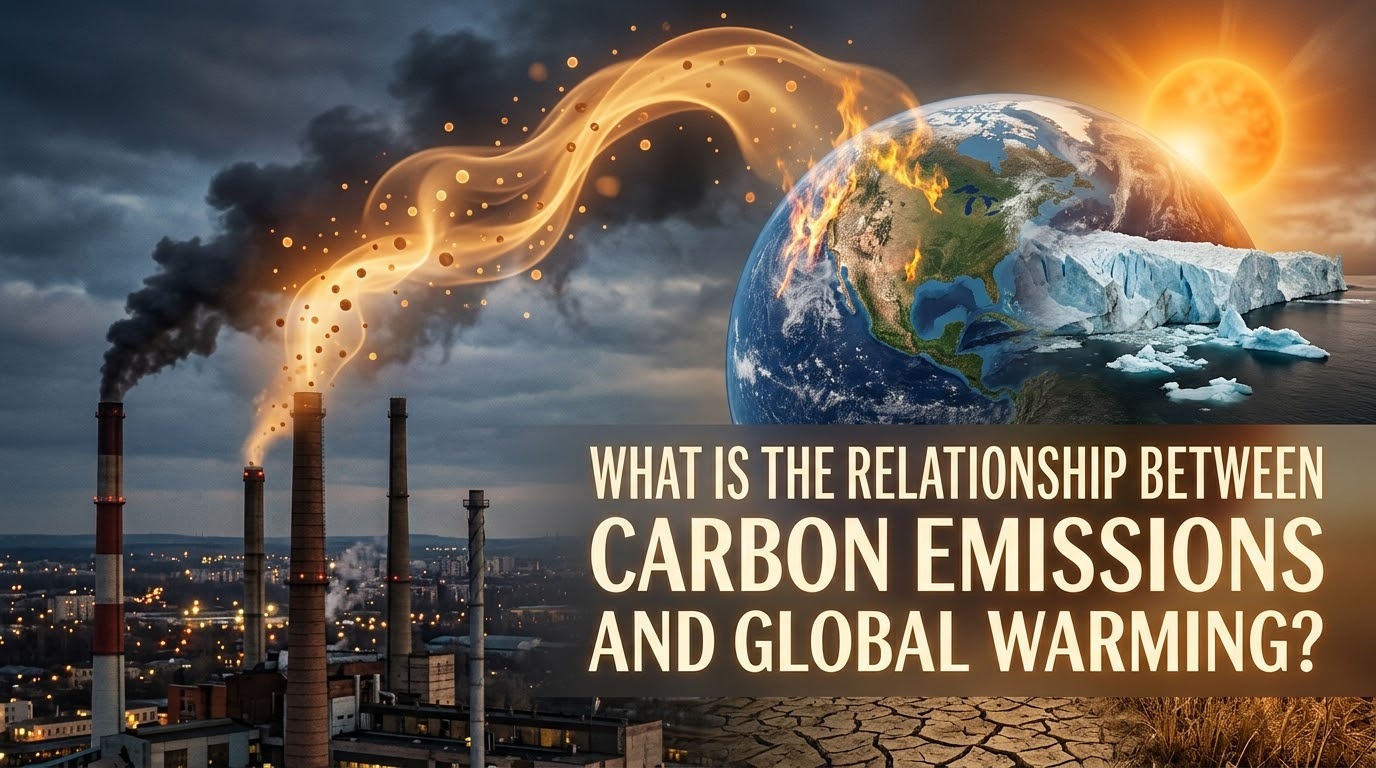
Carbon emissions and global warming are closely connected because carbon dioxide released by human activities contributes to the buildup of greenhouse gases in the atmosphere. When people burn fossil fuels to generate electricity, power vehicles, or operate factories, carbon dioxide is released into the air. This gas absorbs and re-emits heat, strengthening the greenhouse effect and contributing to the long-term increase in Earth's average temperature.
Understanding the relationship between carbon emissions and global warming helps explain why reducing emissions is an important part of climate action. Carbon dioxide is not the only greenhouse gas, but it is a major contributor to human-caused warming. The amount released, the length of time it remains in the climate system, and the ability of forests and oceans to absorb some of it all influence the pace of global warming.
CARBON EMISSIONS INCREASE GREENHOUSE GAS CONCENTRATIONS
Carbon emissions commonly refer to the release of carbon dioxide and other carbon-containing gases into the atmosphere. In discussions about climate change, the term often focuses on carbon dioxide produced by burning coal, oil, and natural gas. These emissions increase the concentration of greenhouse gases that influence Earth's temperature.
The atmosphere naturally contains carbon dioxide, which is essential for plant growth and part of the Earth's carbon cycle. However, human activities have added carbon dioxide faster than natural processes can remove all of the additional amount. Forests, soils, and oceans absorb some emissions, but a substantial share remains in the atmosphere. As carbon dioxide concentrations rise, the greenhouse effect becomes stronger, contributing to global warming over time.
BURNING FOSSIL FUELS IS A MAJOR SOURCE OF CARBON EMISSIONS
The use of fossil fuels is one of the main sources of human-caused carbon emissions. Coal is burned in power plants, petroleum fuels vehicles and aircraft, and natural gas is used for electricity generation, heating, and industrial activities. These processes release carbon dioxide that adds to the greenhouse gases already present in the atmosphere.
Industrial production also contributes to emissions through energy consumption and certain chemical reactions. For example, cement manufacturing releases carbon dioxide during the production of clinker, an essential component of cement. The total emissions associated with a product may also include those generated during the extraction of raw materials, transportation, and manufacturing. Improving energy efficiency, adopting cleaner production methods, and expanding low-carbon energy sources can help reduce these emissions.
CARBON DIOXIDE TRAPS HEAT IN THE EARTH'S ATMOSPHERE
The connection between carbon emissions and rising temperatures is explained by the greenhouse effect. Earth's surface absorbs energy from sunlight and releases some of that energy as infrared radiation. Carbon dioxide absorbs part of this outgoing radiation and re-emits energy, reducing the rate at which heat escapes directly into space.
When more carbon dioxide accumulates in the atmosphere, the Earth system retains additional energy. Over time, the planet warms as it moves toward a new energy balance. This process does not mean every location becomes warmer at the same rate, because oceans, land surfaces, atmospheric circulation, and natural climate variations influence local conditions. Nevertheless, the overall effect of increasing carbon dioxide concentrations is to raise global average temperatures.
RISING CARBON EMISSIONS CONTRIBUTE TO CLIMATE IMPACTS
As global warming continues, changes can occur throughout the climate system. Higher temperatures contribute to the melting of glaciers and land-based ice sheets, while warmer ocean water expands and adds to rising sea levels. Warming can also increase heatwave risks and influence rainfall patterns, drought conditions, and the intensity of certain extreme weather events.
These effects can influence ecosystems, agriculture, water supplies, and human health. For example, prolonged heat and changing rainfall can make crop production more difficult in some regions, while coastal communities may face greater risks from flooding and erosion. The specific impacts vary by location and depend on other environmental factors. Reducing carbon emissions can limit future warming and lower the risks associated with continued climate change.
REDUCING CARBON EMISSIONS CAN HELP LIMIT GLOBAL WARMING
Reducing carbon emissions is an important way to slow the rate of global warming. Governments and businesses can contribute by expanding renewable energy, improving industrial efficiency, modernizing transportation systems, and reducing dependence on fossil fuels. Protecting forests also matters because forests store carbon and absorb carbon dioxide as they grow.
Individuals can support these efforts by saving electricity, using public transportation when practical, reducing food waste, and choosing durable products instead of frequently replacing usable items. However, personal choices are only one part of the solution. Larger changes in energy systems, infrastructure, industrial production, and public policy are necessary to achieve substantial emissions reductions. Combining individual efforts with coordinated action across society can help reduce greenhouse gas emissions and limit future temperature increases.
CONCLUSION
The relationship between carbon emissions and global warming lies in the way carbon dioxide strengthens the greenhouse effect. When human activities release large amounts of carbon dioxide into the atmosphere, the gas accumulates and causes the Earth system to retain additional heat. Burning fossil fuels, industrial production, and land-use changes are important sources of these emissions.
Reducing carbon emissions can help limit future global warming and lower the risks of rising sea levels, extreme heat, and ecosystem disruption. Cleaner energy, efficient technology, forest protection, and responsible resource use are important parts of this effort. By combining practical everyday choices with broader changes in industry and public policy, society can work toward a lower-emission future.
Recent Posts

Bagaimana Sistem SKS pada Program Kuliah... 22.11.2026/48 View

How Does Technology Make Daily Evaluation... 21.11.2026/76 View

Apa Strategi Menghadapi Kesenjangan antara Kompetensi... 21.11.2026/78 View

Mengapa Inventaris Aset Penting bagi Kelancaran... 21.11.2026/73 View

When Should Musicians Join a Record... 21.11.2026/78 View
