

What Is The Relationship Between Deforestation And Climate Change?
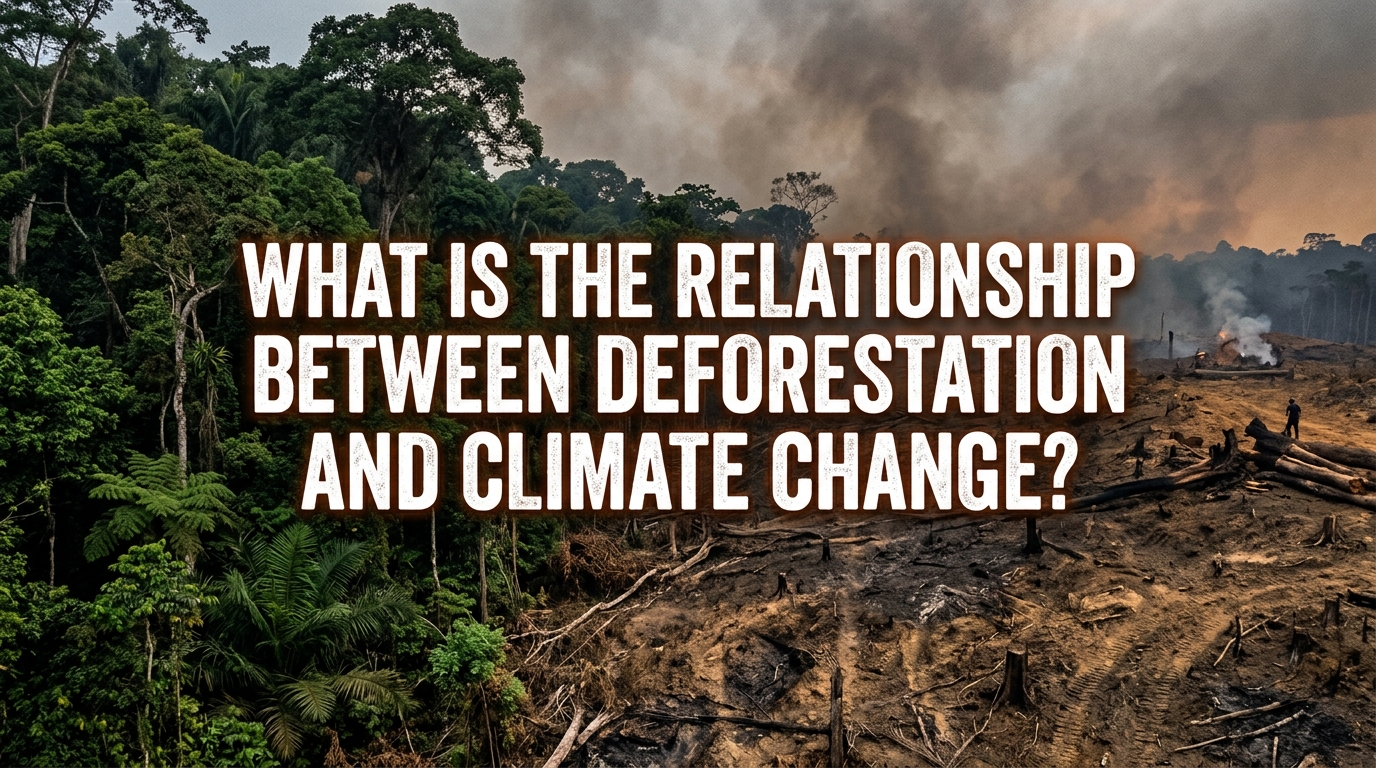
Deforestation and climate change are closely connected environmental problems that affect ecosystems, wildlife, and human communities around the world. Deforestation, the large-scale removal of forests, contributes to climate change by releasing stored carbon dioxide and reducing the Earth's ability to absorb carbon from the atmosphere. At the same time, climate change can make forests more vulnerable to drought, wildfires, and other environmental stresses.
Understanding the relationship between deforestation and climate change is essential for protecting the environment and reducing global warming. Forests play a vital role in regulating the climate, maintaining biodiversity, protecting soil, and supporting the water cycle. When forests are destroyed, these natural functions become weaker, creating environmental consequences that can extend far beyond the affected area. Protecting existing forests and restoring degraded land are therefore important parts of global climate action.
WHAT IS DEFORESTATION AND WHY DOES IT HAPPEN?
Deforestation occurs when forests are permanently cleared or converted into other land uses, such as agricultural fields, plantations, roads, or urban developments. It can happen when trees are cut down for timber, land is cleared for livestock grazing, or forests are removed to access minerals and other resources. In some regions, forests are also cleared to support the production of commercial crops. Although wood and agricultural products provide important economic benefits, unsustainable forest removal can cause serious environmental damage. The long-term effects depend on the scale of clearing, the type of forest, and how the land is managed afterward.
Deforestation is especially concerning in tropical regions, where forests store large amounts of carbon and support exceptional biodiversity. When forests are cleared, the environmental damage can continue even after the trees have been removed. Soil may become more vulnerable to erosion, wildlife may lose its habitat, and the local water cycle can change. Land-use change is a major driver of deforestation, making sustainable agriculture, responsible forestry, and effective land-use planning important solutions. Reducing unnecessary forest clearing helps preserve the ecological functions that forests provide.
HOW DEFORESTATION CONTRIBUTES TO CLIMATE CHANGE
Trees absorb carbon dioxide (CO2) from the atmosphere through photosynthesis and store carbon in their trunks, branches, leaves, and roots. Forest soils also contain significant amounts of carbon accumulated through decomposing organic matter. When forests are cleared and vegetation is burned or left to decay, some of this stored carbon returns to the atmosphere as carbon dioxide. Soil disturbance can release additional carbon, depending on local conditions and land management. These emissions increase the concentration of greenhouse gases that contribute to global warming.
Deforestation also reduces the amount of carbon that can be absorbed by forests in the future. When mature forests are replaced by land uses with less vegetation, the area may store considerably less carbon over time. This weakens an important natural process that helps regulate the global climate. Carbon emissions from forest loss and reduced carbon absorption make deforestation a significant contributor to human-caused climate change. Preventing forest destruction can therefore help limit emissions while preserving a valuable natural carbon store.
THE ROLE OF FORESTS IN REGULATING THE CLIMATE
Forests help regulate the climate by absorbing carbon dioxide and storing carbon for years or even centuries. Their trees and vegetation also release water vapor into the atmosphere through transpiration, a process in which plants move water from their roots and release it through their leaves. Together with evaporation, this process contributes to atmospheric moisture and can influence cloud formation and rainfall patterns. Forests also provide shade and cool surrounding areas by releasing water vapor. These functions help maintain local environmental conditions and support nearby ecosystems.
Large forest systems can influence climate patterns across wider regions. For example, tropical forests recycle moisture through the atmosphere, helping sustain rainfall in some areas. When extensive forest cover disappears, less moisture may return to the atmosphere, potentially increasing dryness in certain regions. The exact effects depend on geography, atmospheric circulation, and the amount of forest lost. Healthy forests are important natural climate regulators, which is why their protection benefits both local environments and the broader climate system.
HOW DEFORESTATION AFFECTS TEMPERATURE AND RAINFALL
Deforestation can increase local temperatures because removing trees reduces shade and changes how the land absorbs and releases energy. Forested areas often remain cooler than nearby cleared land, particularly during hot periods. Without tree cover, more sunlight reaches the ground, and surface temperatures may rise. The loss of vegetation can also reduce the amount of water released into the atmosphere through transpiration. These changes can make some cleared landscapes hotter and drier.
Rainfall patterns may also change when large areas of forest are removed. With less moisture entering the atmosphere, some regions may experience reduced rainfall or longer dry periods. Drier conditions can affect agriculture, water supplies, and the survival of native plants and animals. However, the relationship between forest loss and rainfall is complex and varies by location, so not every cleared area experiences the same outcome. Deforestation can disrupt the local water cycle, potentially creating conditions that make ecosystems and communities more vulnerable to climate-related hazards.
THE CONNECTION BETWEEN DEFORESTATION, DROUGHT, AND WILDFIRES
Deforestation and climate change can interact to increase the risk of drought and wildfires in some regions. Removing trees can reduce moisture recycling and expose soil to direct sunlight, increasing the likelihood of dry conditions. Meanwhile, climate change can raise temperatures and intensify drought in many areas, leaving vegetation more vulnerable to burning. When forests become drier, fires may spread more easily under suitable weather conditions. Hotter and drier conditions can increase wildfire risk, although fire patterns also depend on ignition sources, vegetation, land management, and local weather.
Wildfires can release large quantities of carbon dioxide when trees and other vegetation burn. Severe fires may also damage soil, destroy wildlife habitats, and reduce a forest's ability to recover. When repeated fires prevent forests from regrowing, the affected land may lose some of its capacity to store carbon. In certain ecosystems, fire is a natural part of regeneration, but unusually severe or frequent fires can cause lasting damage. Preventing unnecessary forest clearing and improving fire management can help reduce risks to forests, communities, and the climate.
THE IMPACT OF DEFORESTATION ON WILDLIFE AND BIODIVERSITY
Forests provide food, shelter, and breeding grounds for countless species. When trees are removed, animals may lose access to essential resources or become isolated in smaller habitat areas. This can reduce population sizes, disrupt migration routes, and increase competition for food and space. Climate change adds further pressure by altering temperatures, rainfall, and the availability of suitable habitats. Deforestation and climate change together threaten biodiversity, especially for species that depend on specific forest conditions.
The loss of biodiversity can also affect the functions that keep ecosystems healthy. Birds, insects, and other animals help pollinate plants, disperse seeds, and control certain pests. When these species decline, forest regeneration and ecological balance may be affected. Damaged ecosystems can become less resilient to drought, disease, and other environmental changes. Protecting connected forest habitats and restoring degraded areas can help wildlife populations recover. Forest conservation supports both biodiversity and climate resilience, making it an important environmental priority.
HOW TO REDUCE DEFORESTATION AND CLIMATE CHANGE
Reducing deforestation requires coordinated action from governments, businesses, communities, and consumers. Governments can enforce forest protection laws, improve land-use planning, and support sustainable agricultural practices that reduce pressure to clear new land. Businesses can strengthen supply-chain monitoring and avoid sourcing products linked to illegal or unsustainable forest destruction. Communities can participate in forest management and protect the resources they depend on. Preventing forest loss is one of the most effective ways to preserve existing carbon stores and avoid additional emissions from land clearing.
Restoring degraded forests can also help address climate change by allowing vegetation and soils to recover their ability to store carbon. Planting trees can be useful, but restoration works best when it considers native species, local ecosystems, and long-term maintenance. Protecting natural forests is especially important because mature ecosystems often provide benefits that newly planted trees cannot replace quickly. Consumers can contribute by reducing unnecessary waste, choosing responsibly sourced products, and supporting credible conservation initiatives. Combining forest protection, responsible consumption, and ecosystem restoration can help reduce emissions and strengthen environmental health.
CONCLUSION
Deforestation and climate change are closely linked because forest destruction releases stored carbon, reduces future carbon absorption, and can disrupt local temperatures and rainfall patterns. These changes can worsen global warming while increasing pressure on wildlife, water supplies, soil, and human communities. Climate change can also make forests more vulnerable to drought and severe wildfires, creating a cycle of environmental damage in some regions. Protecting existing forests, reducing unsustainable land clearing, and restoring degraded ecosystems are essential steps toward addressing both problems. By managing forests responsibly, society can help protect biodiversity, limit greenhouse gas emissions, and support a more stable climate for future generations.
Recent Posts

Bagaimana Sistem SKS pada Program Kuliah... 22.11.2026/50 View

How Does Technology Make Daily Evaluation... 21.11.2026/80 View

Apa Strategi Menghadapi Kesenjangan antara Kompetensi... 21.11.2026/79 View

Mengapa Inventaris Aset Penting bagi Kelancaran... 21.11.2026/75 View

When Should Musicians Join a Record... 21.11.2026/80 View
