

What Is the Relationship Between Economic Growth and Urban Traffic Congestion?
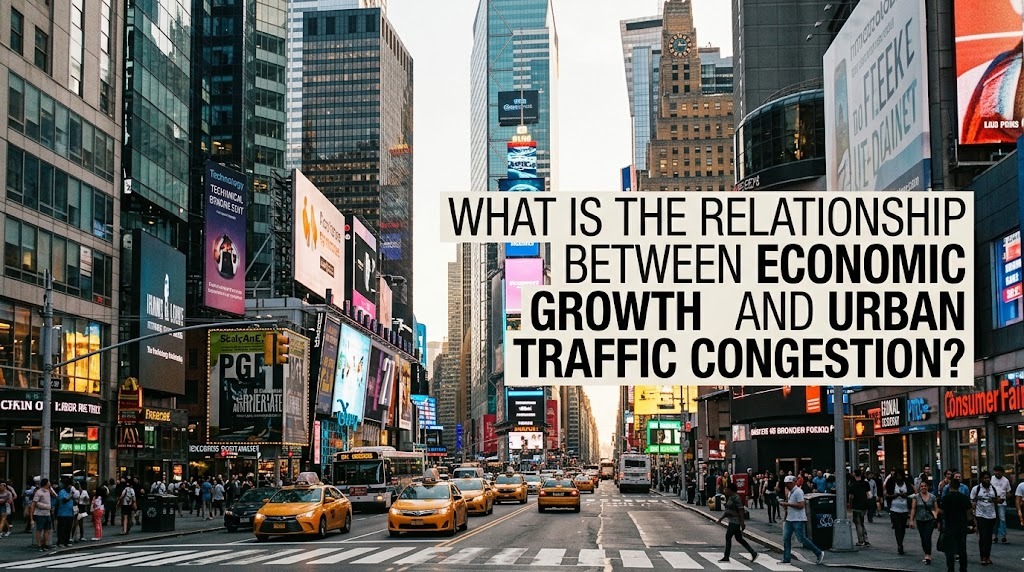
Economic growth and urban traffic congestion are closely connected because expanding economic activity increases the movement of people, goods, and services. As cities develop, businesses create more jobs, household incomes may rise, and demand for transportation often increases. However, when transportation infrastructure and public transit services cannot keep up with this growing demand, roads become crowded and travel times increase. Understanding the relationship between economic growth and traffic congestion is essential for creating cities that are both economically productive and environmentally sustainable.
INCREASING VEHICLE OWNERSHIP AND INCOME
Economic growth can increase household purchasing power, allowing more people to afford cars and motorcycles. As incomes rise, private vehicles may become more attractive because they offer flexibility, convenience, and independence. This can increase the number of vehicles traveling on urban roads, particularly in cities where public transportation is limited. When vehicle ownership grows faster than road capacity, traffic congestion can become more severe.
However, higher income does not automatically lead to heavier congestion in every city. The impact depends on transportation policies, urban design, parking availability, and the quality of public transportation. Cities with reliable trains, buses, and other shared mobility options can accommodate more residents without requiring everyone to own a private vehicle. Therefore, sustainable transportation planning is important for ensuring that rising incomes do not create excessive pressure on urban roads.
BUSINESS EXPANSION AND TRANSPORTATION DEMAND
Economic development encourages businesses to expand their operations, establish new offices, and increase the distribution of goods. These activities generate more transportation demand because employees need to commute, customers visit commercial areas, and delivery vehicles transport products between locations. When many businesses operate in the same central district, the surrounding roads may experience heavy traffic throughout the day. This situation becomes particularly challenging when commercial development is concentrated in areas with limited transportation alternatives.
Growing businesses also depend on efficient logistics to receive materials and deliver products. Traffic delays can make delivery schedules less predictable and increase operating costs. In some cases, companies may need additional vehicles or working hours to complete the same transportation tasks. Developing efficient freight systems, designated loading areas, and well-connected commercial districts can help cities support business growth while reducing unnecessary traffic.
URBANIZATION AND CONCENTRATION OF JOBS
Economic growth often attracts people from rural areas and smaller towns to major cities in search of employment, education, and better services. This process, known as urbanization, increases the number of residents who need transportation for their daily activities. If housing development does not keep pace with job creation, workers may live far from their workplaces and travel longer distances each day. These longer journeys can increase the number of vehicles using major roads.
The concentration of offices, universities, shopping centers, and government facilities in a few locations can also create traffic bottlenecks. Thousands of people may travel toward the same destinations during morning rush hours and return home in the evening. Cities can address this problem through integrated urban planning, affordable housing near employment centers, and the development of multiple business districts. These strategies can shorten commuting distances and distribute transportation demand more evenly across the city.
TRAFFIC CONGESTION AND ECONOMIC PRODUCTIVITY
Although economic growth can increase traffic congestion, congestion itself can also weaken economic performance. Workers who spend excessive time commuting may arrive late, experience fatigue, and have less time available for productive activities. Businesses may face delayed deliveries, missed appointments, and higher transportation expenses. These disruptions can reduce efficiency and make it more difficult for companies to serve customers reliably.
Traffic congestion can also affect the movement of emergency services, maintenance teams, and other essential workers. In cities that depend heavily on road transportation, delays may increase the cost of distributing goods and providing services. Over time, these additional costs can reduce a city's attractiveness to businesses and investors. Improving transportation efficiency can therefore support economic productivity by making travel more predictable and reducing wasted time and resources.
SUSTAINABLE SOLUTIONS FOR GROWING CITIES
Cities need transportation policies that allow economic activity to expand without creating unsustainable traffic conditions. Investing in reliable public transportation, including buses and urban rail systems, can help move more people using available road space. Safe sidewalks, bicycle lanes, and well-connected neighborhoods can also reduce dependence on private vehicles for short journeys. These improvements give residents more transportation choices while helping cities manage increasing travel demand.
Governments can also use technology and planning strategies to improve traffic flow. Intelligent traffic management systems can adjust signal timing, monitor road conditions, and provide real-time travel information. Flexible working hours, remote work where appropriate, and better freight scheduling can help spread travel demand throughout the day. By combining these measures with coordinated land-use planning, cities can encourage economic growth while protecting mobility, environmental quality, and residents' well-being.
KESIMPULAN
Economic growth and urban traffic congestion influence each other in several ways. Economic expansion can increase vehicle ownership, business activity, urbanization, and commuting demand, placing additional pressure on road networks. At the same time, severe congestion can reduce productivity, increase transportation costs, and make cities less efficient.
The most effective approach is to combine economic development with sustainable transportation planning. Governments should improve public transit, create better-connected neighborhoods, manage traffic intelligently, and encourage alternatives to private vehicles. With effective planning and investment, cities can support business growth, improve accessibility, and reduce the negative effects of traffic congestion.
Recent Posts

Bagaimana Sistem SKS pada Program Kuliah... 22.11.2026/54 View

How Does Technology Make Daily Evaluation... 21.11.2026/83 View

Apa Strategi Menghadapi Kesenjangan antara Kompetensi... 21.11.2026/81 View

Mengapa Inventaris Aset Penting bagi Kelancaran... 21.11.2026/78 View

When Should Musicians Join a Record... 21.11.2026/83 View
