

What Is the Relationship Between MAPSI and Islamic Character Education in Schools?
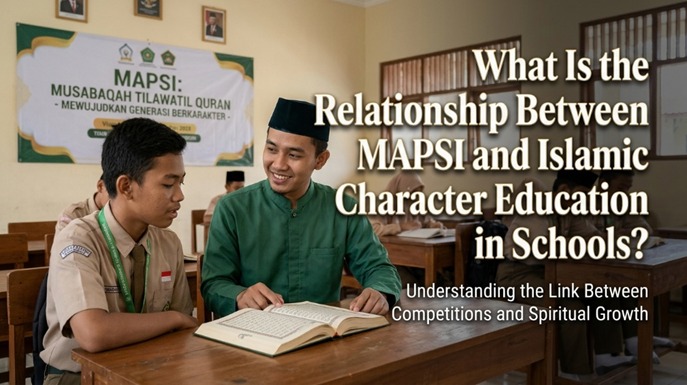
Islamic character education plays an important role in shaping students into individuals who have good morals, strong religious values, and positive attitudes toward others. Schools have an important responsibility to introduce and develop these values through classroom learning and extracurricular activities. One activity that can support this goal is the MAPSI Competition (Islamic Religious Education and Arts Competition).
MAPSI is an educational competition that provides students with opportunities to demonstrate their Islamic knowledge, religious skills, and creative talents. However, its benefits go beyond winning awards or receiving recognition. MAPSI also encourages students to practice Islamic values in their daily lives. Understanding the relationship between MAPSI and Islamic character education helps explain how competitions can contribute to students' moral, spiritual, and social development.
1. UNDERSTANDING THE ROLE OF MAPSI IN ISLAMIC EDUCATION
MAPSI is a competition that focuses on developing students' abilities in Islamic religious education and related artistic activities. Depending on the organizer and competition guidelines, its categories may include Quran recitation, Islamic speeches, religious knowledge, and other activities related to Islamic learning.
Through these activities, students can apply the religious knowledge they have gained at school. They are encouraged not only to understand Islamic teachings but also to demonstrate their abilities through meaningful experiences. Therefore, MAPSI can become a supporting educational activity that connects religious knowledge with practical learning and character development.
2. STRENGTHENING FAITH AND SPIRITUAL AWARENESS
One important relationship between MAPSI and Islamic character education is their shared focus on strengthening students' religious understanding. Activities related to Quran recitation, Islamic knowledge, and religious expression encourage students to learn more about their faith.
During preparation, students may spend more time studying the Quran, understanding Islamic teachings, and learning about religious responsibilities. These experiences can strengthen their spiritual awareness and encourage them to appreciate the importance of practicing Islamic values. Through consistent guidance, students can develop a stronger connection between religious knowledge, faith, and everyday behavior.
3. DEVELOPING GOOD MORALS AND ETHICAL BEHAVIOR
Good morals (Akhlakul Karimah) are essential elements of Islamic character education. MAPSI supports moral development by introducing students to activities that encourage honesty, discipline, respect, responsibility, and positive behavior.
For example, students learn to respect judges' decisions, appreciate other participants, and follow competition rules. They also practice showing humility when they achieve success and accepting results without looking down on others. These experiences teach students that good character is just as important as academic ability or competition achievements.
4. TEACHING DISCIPLINE AND RESPONSIBILITY
Discipline and responsibility are important values that students need to develop from an early age. Preparing for MAPSI requires participants to organize their practice schedules, complete learning tasks, and follow instructions from teachers or coaches.
Through regular preparation, students learn the importance of consistency and commitment. They also understand that achieving good results requires effort rather than relying only on natural talent. These habits support Islamic character education because discipline, responsibility, and commitment are valuable qualities in both religious and everyday life.
5. PROMOTING HONESTY AND SPORTSMANSHIP
Honesty is a fundamental value in Islamic teachings and an important part of character development. In MAPSI, students have opportunities to practice honesty by demonstrating their actual abilities, following competition regulations, and avoiding dishonest actions.
Sportsmanship is equally important because students may encounter participants with different skill levels and achievements. They are encouraged to appreciate other people's efforts, accept the results fairly, and avoid excessive pride when they win. By practicing these attitudes, students learn that integrity and respect are more valuable than winning at any cost.
6. ENCOURAGING TOLERANCE AND RESPECT FOR OTHERS
Islamic character education teaches students to respect other people and maintain positive relationships within their communities. MAPSI can support this learning process by bringing together participants from different schools, backgrounds, and abilities.
Through interaction with other participants, students learn to communicate politely, appreciate differences in performance, and cooperate with others. They also develop an understanding that everyone deserves respect, regardless of their competition results. These experiences help build tolerance, mutual respect, and social awareness, which are important qualities for living harmoniously in society.
7. CONNECTING RELIGIOUS KNOWLEDGE WITH DAILY PRACTICE
Learning Islamic teachings at school becomes more meaningful when students can apply them in their daily activities. MAPSI provides opportunities to connect religious knowledge with practical experiences through preparation, participation, and interaction.
For example, students who learn about honesty can practice it during competitions, while those who study discipline can apply it through consistent training. Students who understand the importance of respecting others can demonstrate this value when interacting with teachers and fellow participants. In this way, MAPSI helps reinforce the idea that Islamic education should influence behavior, not remain limited to theoretical knowledge.
8. BUILDING CONFIDENT AND RELIGIOUSLY RESPONSIBLE STUDENTS
Islamic character education aims to develop students who are not only knowledgeable but also confident and responsible. MAPSI supports this objective by giving students opportunities to express their abilities through religious and educational activities.
When students perform in front of an audience or participate in challenging competitions, they learn to overcome nervousness and trust their preparation. At the same time, they are encouraged to maintain humility, respect others, and remember the religious values behind their activities. This combination helps develop individuals who have confidence, strong moral principles, and a sense of responsibility toward themselves and their communities.
9. SUPPORTING THE ROLE OF TEACHERS AND SCHOOLS
Teachers and schools play an essential role in connecting MAPSI activities with Islamic character education. Teachers can guide students during preparation, provide religious understanding, and encourage positive attitudes throughout the competition process.
Schools should also emphasize that MAPSI is not simply about achieving trophies or becoming champions. Instead, it should be an educational experience that promotes moral development, religious understanding, and social responsibility. By providing appropriate guidance and evaluation, schools can ensure that character building remains an important goal alongside competition performance.
CONCLUSION
The relationship between MAPSI and Islamic character education in schools can be seen through their shared goal of developing students who understand religious teachings and demonstrate good behavior. MAPSI provides practical learning experiences that encourage students to strengthen their faith, develop discipline, practice honesty, respect others, and take responsibility for their actions.
However, the success of character education does not depend on competition participation alone. Teachers, parents, and schools must continue reinforcing Islamic values in students' daily lives. When MAPSI is supported by consistent guidance and positive learning environments, it can become a meaningful way to develop a generation that is knowledgeable, confident, responsible, and has good Islamic character.
Recent Posts

How Does Technology Make Daily Evaluation... 21.11.2026/62 View

Apa Strategi Menghadapi Kesenjangan antara Kompetensi... 21.11.2026/63 View

Mengapa Inventaris Aset Penting bagi Kelancaran... 21.11.2026/59 View

When Should Musicians Join a Record... 21.11.2026/58 View

Daily Evaluation or Daily Planning Which... 21.11.2026/66 View
