

What Is the Relationship Between Operations Management and Customer Satisfaction?
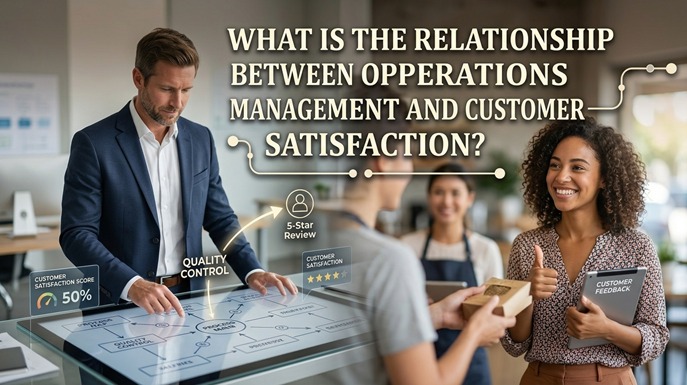
Operations management and customer satisfaction are closely connected because the way a business manages its daily activities directly influences the quality of products and services received by customers. Every business needs well-organized processes to ensure that products are available, orders are handled correctly, and services are delivered on time. When operations run efficiently, customers are more likely to receive consistent quality and a positive experience.
In today's competitive business environment, customer expectations continue to increase. People want affordable prices, reliable products, fast delivery, and responsive customer service. These expectations make operations management an important part of building customer trust and loyalty. By improving operational processes, businesses can provide better customer experiences, strengthen their reputation, and achieve long-term success.
1. ENSURING CONSISTENT PRODUCT AND SERVICE QUALITY
One of the strongest relationships between operations management and customer satisfaction is product and service quality. Operations management helps businesses establish standards for production, quality inspections, and service delivery. These standards ensure that customers receive products or services that meet their expectations. Consistent quality also reduces complaints and prevents problems that could damage a company's reputation.
For example, a restaurant needs to maintain food quality, cleanliness, and proper preparation procedures to provide a satisfactory dining experience. Similarly, a manufacturing company must inspect its products to ensure they meet established specifications. Through effective quality control, businesses can reduce defects, maintain reliability, and increase customer confidence.
2. IMPROVING PRODUCT AND SERVICE DELIVERY SPEED
Customers generally expect businesses to deliver products and services within a reasonable period. Delayed deliveries, slow order processing, and long waiting times can create frustration and reduce customer satisfaction. Operations management helps companies organize workflows, manage schedules, and coordinate activities to minimize unnecessary delays. Efficient processes allow businesses to complete customer orders more quickly and reliably.
For instance, an online store can improve delivery performance by organizing its warehouse, preparing orders systematically, and coordinating with logistics providers. Businesses can also use digital tracking systems to monitor order progress and identify potential delays. By improving delivery efficiency, companies can provide more convenient services and create a better customer experience.
3. MAINTAINING PRODUCT AVAILABILITY THROUGH INVENTORY MANAGEMENT
Product availability is another important factor that connects operations management with customer satisfaction. Customers may become disappointed when the products they want are unavailable or out of stock. Effective inventory management helps businesses maintain sufficient stock to meet customer demand without storing excessive quantities. This balance supports smoother operations and reduces the risk of missed sales.
Businesses can monitor stock levels, analyze purchasing patterns, and establish reorder points to determine when additional products are needed. For example, a supermarket can use inventory management software to identify products that are selling quickly and replenish them before shortages occur. By maintaining reliable product availability, companies can improve customer convenience and encourage repeat purchases.
4. REDUCING OPERATIONAL COSTS AND OFFERING COMPETITIVE PRICES
Operational efficiency can influence the prices businesses offer to their customers. When companies manage resources effectively, reduce waste, and simplify unnecessary processes, they can lower operating expenses. These savings may allow businesses to offer more competitive prices without sacrificing product or service quality. Affordable pricing can improve customer satisfaction, especially when customers believe they receive good value for their money.
For example, a manufacturing company that reduces material waste and improves production efficiency may lower its cost per product. However, reducing expenses should not involve compromising safety, quality, or customer service. The goal is to achieve cost efficiency while maintaining the standards customers expect.
5. STRENGTHENING CUSTOMER SERVICE AND COMMUNICATION
Good customer service is not only the responsibility of customer support employees. It also depends on how effectively different business departments coordinate their activities. Operations management helps establish clear procedures for handling customer inquiries, processing complaints, managing returns, and providing after-sales support. These procedures make customer interactions more organized and consistent.
Businesses can also use customer relationship management (CRM) systems to record customer information and monitor previous interactions. This allows employees to understand customer concerns and provide more relevant assistance. When companies respond quickly and resolve problems effectively, customers are more likely to develop trust and maintain long-term relationships with the business.
6. IMPROVING EMPLOYEE PRODUCTIVITY AND SERVICE PERFORMANCE
Employees play an important role in determining the quality of products and services delivered to customers. When business processes are organized properly, employees can complete their tasks more efficiently and avoid unnecessary confusion. Operations management supports this by establishing clear responsibilities, providing appropriate training, and ensuring that employees have the resources needed to perform their work.
For example, a hotel can improve guest satisfaction by training its employees to handle reservations, respond to requests, and manage check-in procedures efficiently. A well-trained workforce can provide more professional service and reduce mistakes. Therefore, employee productivity and effective workforce management contribute directly to a better customer experience.
7. USING TECHNOLOGY TO ENHANCE CUSTOMER EXPERIENCE
Technology has become an important tool for connecting operational efficiency with customer satisfaction. Businesses can use digital systems to automate transactions, monitor orders, manage customer information, and improve communication. These tools help reduce manual errors and allow employees to provide faster and more accurate services. Customers also benefit from easier access to business information and services.
For instance, online retailers can provide real-time order tracking, automated payment confirmations, and digital customer support. Restaurants can use online ordering systems to reduce waiting times and improve order accuracy. When technology is implemented properly, it helps businesses create more convenient services and meet changing customer expectations.
8. HANDLING CUSTOMER COMPLAINTS AND CONTINUOUS IMPROVEMENT
Customer complaints provide valuable information about weaknesses in business operations. Problems such as defective products, late deliveries, incorrect orders, and poor communication may indicate that certain processes need improvement. Operations managers can analyze these complaints to identify their causes and prevent similar problems from happening again. This approach helps businesses improve service reliability instead of simply addressing individual complaints.
Companies should establish clear complaint-handling procedures and collect feedback through surveys, reviews, and direct communication. Managers can then use this information to evaluate operational performance and introduce corrective actions. Through continuous improvement, businesses can respond to customer needs more effectively and maintain higher satisfaction levels over time.
9. BUILDING CUSTOMER TRUST AND LONG-TERM LOYALTY
Customer satisfaction is an important foundation for building lasting relationships between businesses and their customers. When a company consistently provides reliable products, reasonable prices, and dependable services, customers are more likely to trust its brand. Effective operations management helps maintain this consistency by ensuring that business activities follow established standards and procedures.
Satisfied customers may return to make additional purchases, recommend the business to others, and leave positive reviews. These behaviors can strengthen a company's reputation and support long-term growth. Therefore, investing in operational excellence is not only beneficial for daily business activities but also contributes to customer retention and brand loyalty.
10. MEASURING OPERATIONAL PERFORMANCE AND CUSTOMER SATISFACTION
Businesses need to measure both operational performance and customer satisfaction to understand whether their management strategies are effective. Operational indicators such as production time, order accuracy, defect rates, and delivery performance help managers evaluate the efficiency of internal processes. Meanwhile, customer satisfaction can be measured through surveys, customer reviews, complaint records, and the Net Promoter Score (NPS).
By comparing these measurements, businesses can identify connections between operational performance and customer experiences. For example, an increase in late deliveries may be followed by more customer complaints. Managers can use this information to improve logistics, adjust schedules, or strengthen supplier coordination. Regular evaluation ensures that operational improvements continue to support customer expectations.
CONCLUSION
Operations management and customer satisfaction have a strong relationship because efficient business processes directly influence the quality, availability, price, and delivery of products and services. Effective operations management helps companies reduce errors, improve productivity, maintain inventory, strengthen communication, and respond to customer needs more quickly.
However, achieving high customer satisfaction requires continuous attention to operational performance and customer feedback. Businesses must invest in employee development, appropriate technology, quality control, and process improvement. By managing these areas effectively, companies can build customer trust, increase customer loyalty, improve business performance, and achieve sustainable growth.
Recent Posts

Bagaimana Sistem SKS pada Program Kuliah... 22.11.2026/12 View

How Does Technology Make Daily Evaluation... 21.11.2026/63 View

Apa Strategi Menghadapi Kesenjangan antara Kompetensi... 21.11.2026/64 View

Mengapa Inventaris Aset Penting bagi Kelancaran... 21.11.2026/61 View

When Should Musicians Join a Record... 21.11.2026/59 View
