

What Is the Relationship Between Political Literacy and Democracy?
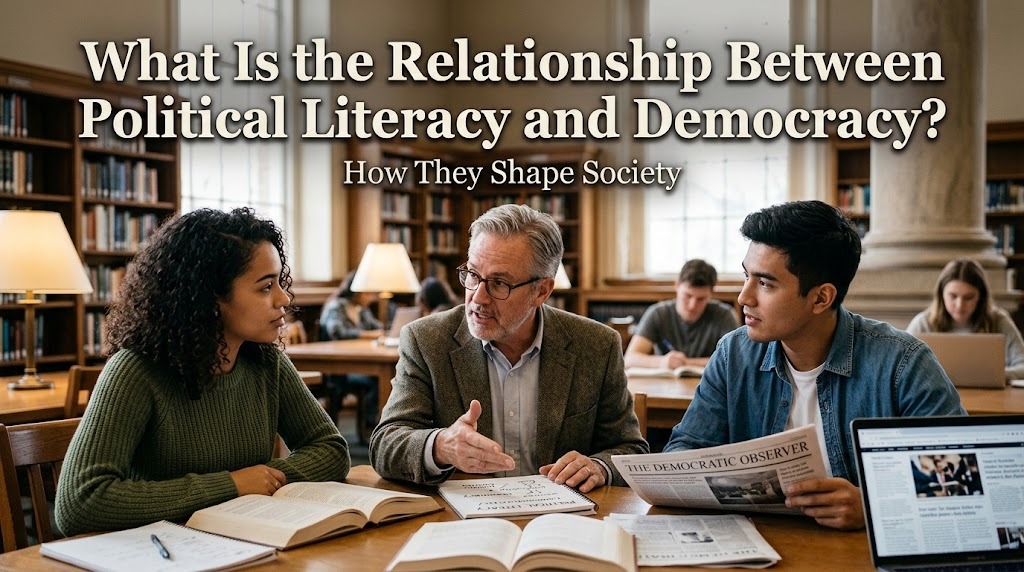
Political literacy refers to the knowledge and skills people use to understand political issues, public institutions, rights, responsibilities, and civic participation. Democracy, meanwhile, involves systems in which citizens have opportunities to participate in public decision-making. Because citizens interact with political institutions and information, political literacy can play an important role in how people understand and engage with democratic life.
The relationship between political literacy and democracy can be seen through people's ability to understand public issues, evaluate information, communicate about different viewpoints, and participate in civic processes. Political literacy does not determine what political position a person should hold. Instead, it can provide a foundation for people to form their own informed views.
HELPING CITIZENS UNDERSTAND DEMOCRATIC PROCESSES
One connection between political literacy and democracy is the ability to understand how democratic institutions and processes work. Citizens may encounter elections, public policies, laws, government institutions, and community decision-making throughout their lives.
Basic political knowledge can make these processes easier to understand. People can learn about the roles of public institutions, how representatives are selected, and how citizens can participate in civic affairs.
A better understanding of democratic processes can also help people recognize the difference between their rights, responsibilities, and the roles of different institutions. This knowledge can make civic participation more meaningful.
SUPPORTING INFORMED CIVIC PARTICIPATION
Civic participation is an important element of democratic life. Depending on age, legal rights, and circumstances, people may participate through elections, community activities, public discussions, volunteering, or other appropriate forms of civic engagement.
Political literacy can help citizens understand the information they encounter before participating. The Council of Europe describes democratic citizenship as involving the exercise of rights and responsibilities and participation in civic and political processes.
Informed participation does not require citizens to have identical political views. Democracy allows people to hold different opinions while participating within established rules and respecting the rights of others.
HELPING PEOPLE EVALUATE POLITICAL INFORMATION
Modern democracy operates in an environment where people can access political information through traditional media and digital platforms. Political literacy skills can help individuals evaluate this information before accepting or sharing it.
People can examine the source of a claim, look for supporting evidence, compare information with other credible sources, and consider whether important context is missing. UNESCO emphasizes the importance of media and information literacy for accessing, evaluating, and using information effectively.
These abilities are particularly relevant when political information spreads quickly online. Careful evaluation can help people distinguish factual information from opinions, interpretations, or claims that require further verification.
ENCOURAGING RESPECTFUL POLITICAL DISCUSSION
Democratic societies include people with different backgrounds, interests, and political perspectives. Political literacy can help individuals understand political concepts and discuss disagreements without assuming that everyone must share the same position.
Understanding different perspectives can make political discussions more constructive. People can listen to arguments, ask questions, examine evidence, and explain their own views without relying on personal attacks.
The Council of Europe identifies dialogue, respect for diversity, human rights, and peaceful conflict resolution as elements of a culture that supports democracy.
STRENGTHENING DEMOCRATIC AWARENESS
The relationship between political literacy and democracy also involves awareness of the connection between citizens and public institutions. When people understand how institutions function, they may be better prepared to follow public developments and identify issues that affect their communities.
Political literacy can also encourage individuals to recognize that democracy involves more than elections. Learning about public affairs, communicating with others, participating in community activities, and understanding civic rights can all contribute to civic life.
However, political literacy does not guarantee that everyone will reach the same conclusions. Its role is to provide people with knowledge and skills that support independent judgment and responsible participation in a democratic society.
CONCLUSION
Political literacy and democracy are connected because political knowledge and information-evaluation skills can help citizens understand democratic processes and participate in civic life.
By developing political literacy, people can learn to understand public institutions, evaluate political information, consider different perspectives, and communicate respectfully. These abilities can support informed civic participation while allowing each person to form their own political views.
Recent Posts

Bagaimana Sistem SKS pada Program Kuliah... 22.11.2026/33 View

How Does Technology Make Daily Evaluation... 21.11.2026/67 View

Apa Strategi Menghadapi Kesenjangan antara Kompetensi... 21.11.2026/67 View

Mengapa Inventaris Aset Penting bagi Kelancaran... 21.11.2026/65 View

When Should Musicians Join a Record... 21.11.2026/66 View
