

What Is the Relationship Between Population Growth and Population Density?
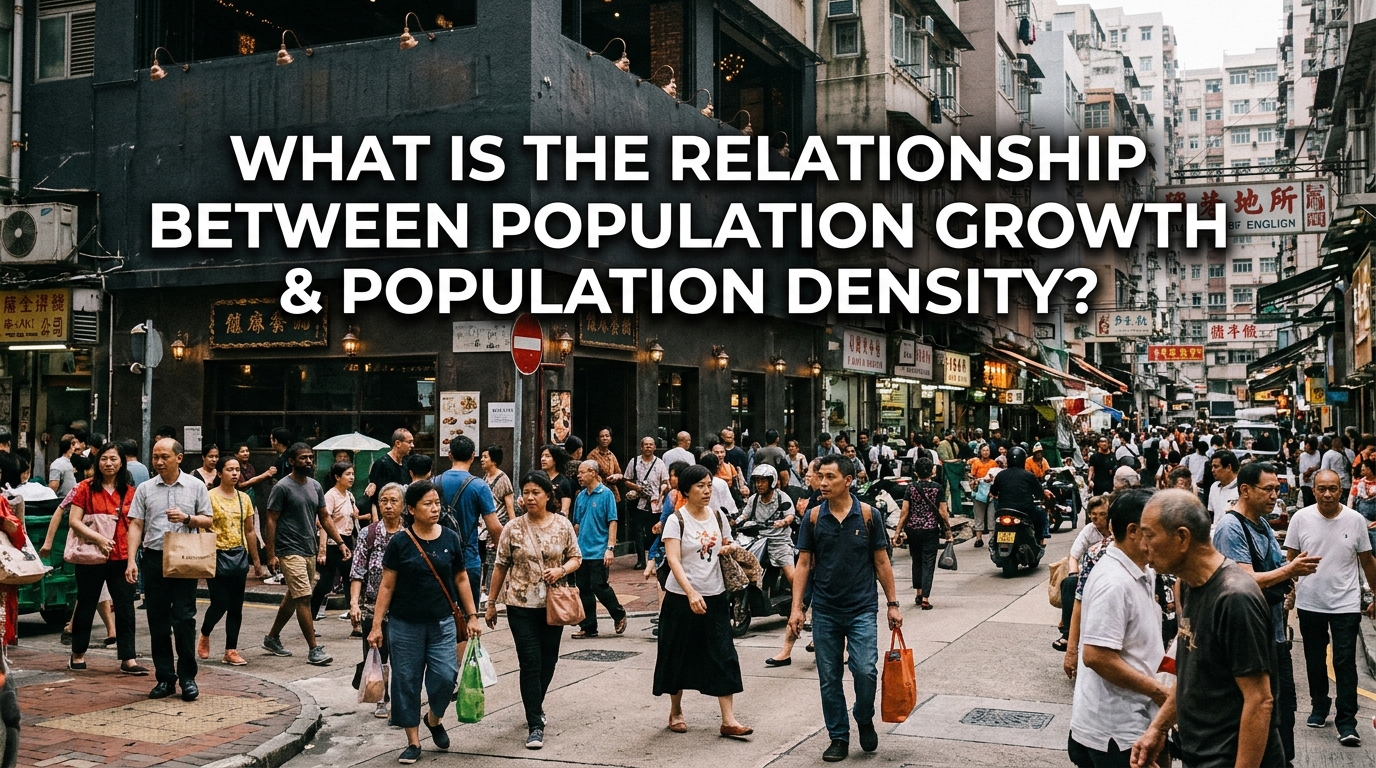
Population growth and population density are two important concepts in population studies and human geography. Both are closely related because they describe changes in the number of people living in a particular area and how those people are distributed. Population growth refers to an increase in the number of people over time, while population density measures how many people live within a specific unit of land area. Although these concepts are different, changes in population growth can significantly influence population density, especially in areas with limited space and resources.
Understanding the relationship between population growth and population density is essential for governments, urban planners, and communities. It helps identify challenges such as overcrowding, housing shortages, traffic congestion, and pressure on public services. By understanding how these two factors interact, governments can develop better policies to support sustainable development and improve people's quality of life.
UNDERSTANDING POPULATION GROWTH AND POPULATION DENSITY
Population growth is the increase or decrease in the number of people living in a particular area over a certain period. It is influenced by three main factors: birth rates, death rates, and migration. When births and immigration exceed deaths and emigration, the population generally increases. On the other hand, population growth slows down or becomes negative when deaths and emigration are higher than births and immigration.
Meanwhile, population density refers to the average number of people living in a specific area, usually measured in people per square kilometer. It is calculated by dividing the total population by the total land area. For example, an area with 100,000 residents and a land area of 50 square kilometers has a population density of 2,000 people per square kilometer. This measurement helps explain how concentrated or spread out a population is within a particular region.
HOW POPULATION GROWTH AFFECTS POPULATION DENSITY
Population growth can directly increase population density when the number of residents rises within an area that does not expand significantly. As more people move into or are born in the same location, the number of residents per square kilometer increases. This situation commonly occurs in major cities where employment opportunities, educational institutions, and public facilities attract people from surrounding regions. Consequently, urban areas may become increasingly crowded as their populations continue to grow.
However, population growth does not always result in higher population density. If a region expands its residential areas or develops new settlements, its population may increase without experiencing a substantial rise in density. For example, a growing city that develops new housing areas and expands its boundaries may distribute its residents across a larger area. Therefore, the relationship between population growth and population density also depends on land availability, urban development, and population distribution.
FACTORS THAT INFLUENCE POPULATION GROWTH AND DENSITY
Several factors determine how population growth affects population density in different regions. One of the most important is natural population change, which occurs through births and deaths. Regions with high birth rates and relatively low death rates often experience faster population growth. In contrast, areas with low birth rates or aging populations may experience slower growth or population decline.
Another important factor is migration. People often move to cities because they offer better employment opportunities, education, healthcare, and transportation facilities. This movement can increase population density in destination areas while reducing it in the regions people leave. Other factors, including geographical conditions, economic development, government policies, and available infrastructure, also influence where people choose to live. As a result, population growth and density can vary significantly between urban, suburban, and rural areas.
THE IMPACT OF INCREASING POPULATION DENSITY ON DAILY LIFE
Increasing population density can create both opportunities and challenges for communities. On the positive side, densely populated areas can support stronger economic activities because businesses have access to larger markets and more workers. Public transportation, schools, hospitals, and other facilities may also serve more people within a relatively small area. When properly managed, high population density can encourage efficient land use and support economic development.
However, excessive population density can place significant pressure on public infrastructure and natural resources. Housing demand may increase, making property prices and rental costs more expensive. Traffic congestion, air pollution, waste management problems, and overcrowded public facilities can also become more serious. If urban development cannot keep pace with population growth, residents may experience lower living standards and reduced access to essential services.
THE DIFFERENCE BETWEEN POPULATION GROWTH AND POPULATION DENSITY
Although population growth and population density are connected, they measure different aspects of population conditions. Population growth focuses on how the number of residents changes over time, while population density explains how many people occupy a particular area. Population growth is generally measured as a percentage or number of additional residents within a specific period. Meanwhile, population density is measured by the number of people per square kilometer or another unit of land area.
For example, two cities may experience the same population growth rate but have very different population densities. A city with a smaller land area may become more densely populated than a city with a much larger territory, even if both gain the same number of residents. Similarly, a highly populated region does not necessarily have high population density if its geographical area is extensive. Understanding this difference is important for accurately evaluating population trends and planning regional development.
EXAMPLES OF THE RELATIONSHIP BETWEEN POPULATION GROWTH AND DENSITY
Major metropolitan areas provide clear examples of how population growth can influence population density. Cities that attract large numbers of workers, students, and families often experience increasing demand for housing and public transportation. When their populations grow faster than their available residential space, population density tends to rise. This condition can be observed in rapidly developing urban areas across many countries, including Indonesia.
In Indonesia, cities such as Jakarta and Surabaya face considerable challenges related to population concentration and urban development. Economic opportunities and access to public facilities encourage people to move to these cities. As a result, certain urban districts experience high population density, creating greater demand for housing, transportation, healthcare, and education. These examples demonstrate why population growth must be considered alongside land availability and regional planning.
STRATEGIES TO MANAGE POPULATION GROWTH AND POPULATION DENSITY
Managing population growth and density requires comprehensive planning and cooperation between governments and communities. One important strategy is balanced regional development, which involves distributing economic opportunities, educational facilities, and public services beyond major cities. By developing smaller cities and rural areas, governments can reduce excessive migration toward metropolitan regions. This approach can also encourage more balanced population distribution.
Another strategy is improving urban planning and public infrastructure. Governments need to provide affordable housing, reliable public transportation, adequate healthcare, and sufficient educational facilities to accommodate growing communities. In addition, environmental protection and sustainable land use should become priorities in regional development. Governments can also support accessible reproductive health services and family planning education so individuals and families can make informed decisions about family size. These measures help communities manage demographic changes while maintaining a healthy living environment.
CONCLUSION
Population growth and population density are closely connected because changes in the number of residents can influence how concentrated a population becomes within a particular area. When the population increases without a corresponding expansion of available land, population density generally rises. However, the relationship also depends on migration patterns, geographical conditions, land availability, and regional development.
Understanding these two concepts helps governments identify population-related challenges and create effective development strategies. Balanced regional planning, improved infrastructure, affordable housing, and sustainable resource management are essential for addressing the effects of increasing population density. With appropriate policies, population growth can be managed more effectively while supporting economic opportunities and improving the quality of life for communities.
Recent Posts

Bagaimana Sistem SKS pada Program Kuliah... 22.11.2026/33 View

How Does Technology Make Daily Evaluation... 21.11.2026/67 View

Apa Strategi Menghadapi Kesenjangan antara Kompetensi... 21.11.2026/67 View

Mengapa Inventaris Aset Penting bagi Kelancaran... 21.11.2026/65 View

When Should Musicians Join a Record... 21.11.2026/66 View
