

What Is the Relationship Between Stress and Concentration Problems?
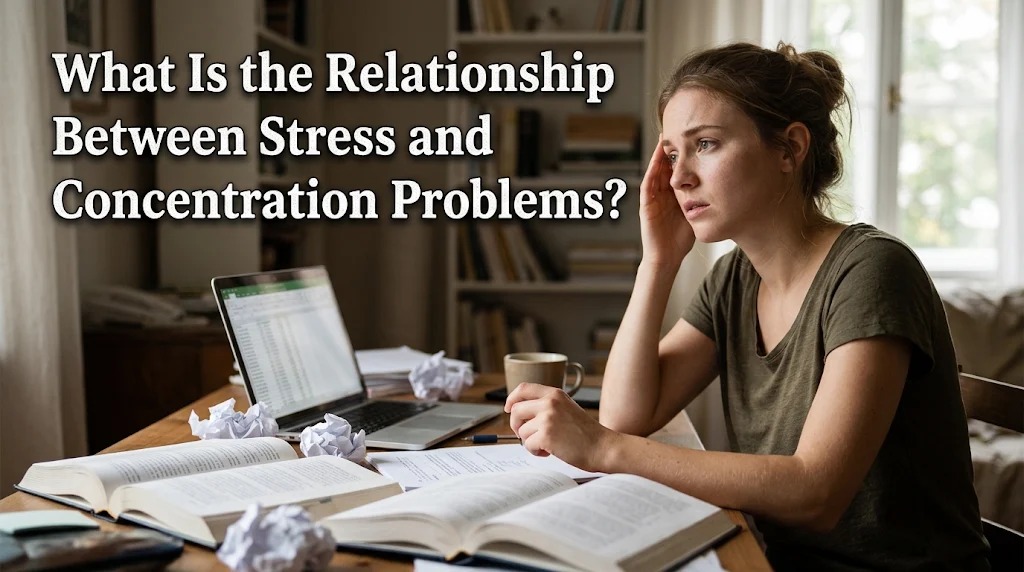
Stress and concentration have a close relationship because mental pressure can affect how the brain processes information, maintains attention, and completes daily activities. When someone experiences stress, their mind may become filled with worries, negative thoughts, or concerns about different responsibilities. As a result, focusing on important tasks can become more difficult.
Stress is a normal response to challenging situations, but excessive or prolonged stress can interfere with concentration and productivity. Understanding how stress affects attention is important because it helps people recognize the signs and find effective ways to manage them.
HOW STRESS AFFECTS THE BRAIN AND CONCENTRATION
Stress triggers the body's natural response to situations that are considered challenging or threatening. During this response, the body releases hormones such as cortisol and adrenaline to prepare for action. Although this reaction can be helpful in certain situations, excessive stress may interfere with brain functions involved in attention, memory, and decision-making.
When people experience prolonged stress, they may find it difficult to organize their thoughts or focus on one activity. Their minds can become occupied with problems, making it harder to understand information and complete tasks. Stress can also affect the prefrontal cortex, a brain region involved in planning, self-control, and concentration. This explains why people under pressure sometimes struggle to think clearly, even when performing familiar activities.
WHY STRESS MAKES IT DIFFICULT TO MAINTAIN FOCUS
One reason stress causes concentration problems is that it occupies mental resources. When someone constantly worries about personal problems, work responsibilities, or academic pressure, their attention may shift away from the activity they are trying to complete. This makes it harder to process information and maintain focus for extended periods.
Stress can also increase mental fatigue and emotional tension. People experiencing high stress may become easily distracted, impatient, or overwhelmed by simple responsibilities. They might repeatedly read the same information without understanding it or forget what they intended to do. These difficulties can reduce productivity and make everyday activities feel more exhausting.
THE EFFECT OF STRESS ON MEMORY AND PRODUCTIVITY
Stress does not only affect concentration but can also influence memory. When someone feels overwhelmed, remembering instructions, important details, or previously learned information may become more difficult. This happens because stress can interfere with brain processes responsible for storing and retrieving memories. As a result, people may forget appointments, make mistakes, or struggle to remember information during important activities.
Reduced concentration and memory difficulties can eventually affect productivity. Students may have trouble understanding lessons, while employees may find it difficult to complete assignments accurately. When tasks take longer than expected, people can experience additional pressure and frustration. This situation may create a cycle in which stress causes poor concentration, and poor concentration creates even more stress.
COMMON SIGNS OF STRESS RELATED CONCENTRATION PROBLEMS
Stress-related concentration problems can appear in different ways. Some people experience frequent distraction, while others find it difficult to make decisions or organize their thoughts. Recognizing these signs can help individuals understand when stress may be affecting their ability to focus.
Other common signs include mental exhaustion, forgetfulness, difficulty following conversations, and repeatedly switching between tasks without completing them. Physical symptoms such as headaches, muscle tension, and sleep disturbances may also occur alongside concentration difficulties. However, these symptoms can have different causes, so they should not automatically be considered signs of stress alone.
EFFECTIVE WAYS TO REDUCE STRESS AND IMPROVE CONCENTRATION
Managing stress is an important step toward improving concentration. One effective approach is organizing daily responsibilities by setting priorities and dividing large tasks into smaller activities. This can make responsibilities feel more manageable and reduce the pressure of having too much work to complete at once.
Maintaining healthy habits is equally important. Getting enough sleep, eating balanced meals, drinking sufficient water, and exercising regularly can support brain function and emotional well-being. Relaxation techniques such as deep breathing, meditation, and mindfulness can also help calm the mind. Taking short breaks between activities allows the brain to recover and makes it easier to return to work with better attention.
CONCLUSION
Stress and concentration problems are closely connected because excessive mental pressure can affect attention, memory, and productivity. When stress becomes difficult to manage, people may struggle to focus, remember information, and complete everyday responsibilities. However, these difficulties can often be reduced through effective stress management, healthy routines, sufficient rest, and better time organization. If stress and concentration problems persist or significantly interfere with daily life, seeking help from a qualified healthcare professional can provide appropriate support.
Recent Posts

Bagaimana Sistem SKS pada Program Kuliah... 22.11.2026/4 View

How Does Technology Make Daily Evaluation... 21.11.2026/63 View

Apa Strategi Menghadapi Kesenjangan antara Kompetensi... 21.11.2026/64 View

Mengapa Inventaris Aset Penting bagi Kelancaran... 21.11.2026/61 View

When Should Musicians Join a Record... 21.11.2026/59 View
