

What Is the Relationship Between the Industrial Revolution and the Internet of Things?
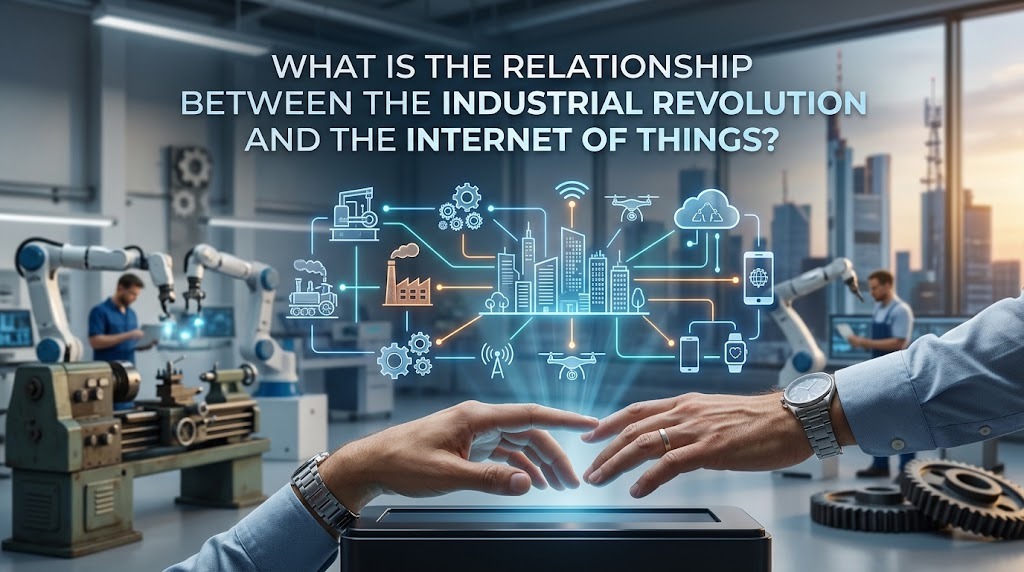
The Industrial Revolution has transformed the way industries produce goods, manage resources, and deliver services. From steam-powered machines to computers and artificial intelligence, each stage has introduced technologies that improve productivity and change working methods. Today, the Internet of Things (IoT) plays an important role in the development of modern industry by connecting physical devices to digital networks. This connection allows machines, sensors, and computer systems to collect, exchange, and analyze information automatically.
The relationship between the Industrial Revolution and the Internet of Things is particularly important in Industry 4.0, which focuses on smart manufacturing, automation, and real-time data. With IoT technology, industrial equipment can communicate with other devices, monitor operating conditions, and help businesses make faster decisions. These capabilities can reduce production delays, improve product quality, and support more efficient resource management. Understanding this relationship helps explain how industrial technology is developing and why connected systems are becoming increasingly important in modern businesses.
UNDERSTANDING THE INTERNET OF THINGS IN INDUSTRY
The Internet of Things refers to a network of physical objects equipped with sensors, software, and communication technologies that enable them to collect and exchange data. These objects can include industrial machines, vehicles, production equipment, and environmental monitoring devices. Unlike traditional equipment that operates independently, IoT-connected devices can send information to other systems for monitoring and analysis. This makes it easier for businesses to understand what is happening across their operations.
In industrial environments, IoT is often used to monitor machine performance, temperature, pressure, energy consumption, and product movement. For example, a sensor installed on a production machine can transmit information about its operating condition to a central monitoring system. Managers can use this information to identify unusual activity and respond before a minor issue becomes a serious problem. IoT does not necessarily make every machine intelligent by itself, but it provides valuable data that can support automation and informed decision-making. As a result, connected devices have become an important foundation of modern industrial systems.
THE CONNECTION BETWEEN THE INDUSTRIAL REVOLUTION AND IOT
The relationship between the Industrial Revolution and IoT reflects the continued development of industrial technology. The First Industrial Revolution introduced mechanized production through steam and water power, while the Second expanded electricity and mass production. The Third brought computers, electronics, and digital automation into factories. The Fourth Industrial Revolution connected these digital systems with physical machines through technologies such as IoT, artificial intelligence, cloud computing, and data analytics.
IoT is one of the key technologies supporting Industry 4.0 because it allows machines and devices to exchange information across industrial networks. For example, sensors can monitor production conditions and send data to software that identifies inefficiencies. When combined with artificial intelligence, these systems can help predict equipment failures and recommend maintenance. This integration makes industrial operations more connected and responsive than systems that rely entirely on manual inspection. However, IoT is only one part of Industry 4.0, and its effectiveness depends on reliable networks, compatible equipment, secure data systems, and appropriate human oversight.
HOW IOT IMPROVES INDUSTRIAL PRODUCTIVITY
One major benefit of IoT is its ability to improve industrial productivity through real-time monitoring. Businesses can collect information from production equipment and identify problems that might otherwise remain unnoticed. For example, sensors can detect unusual vibration or rising temperatures in machinery, allowing maintenance teams to investigate potential faults. Early detection can reduce unexpected downtime and help companies avoid expensive equipment damage.
IoT can also improve inventory management, production planning, and supply chain coordination. Connected tracking devices can help businesses monitor the location and condition of materials as they move between warehouses, factories, and delivery destinations. Managers can use this information to organize resources more efficiently and reduce unnecessary delays. In some facilities, connected systems also help monitor energy use and identify equipment that consumes more electricity than expected. These benefits depend on the accuracy of the data and how effectively a company responds to the information it receives. When properly implemented, IoT can support higher efficiency, more consistent product quality, and better operational control.
EXAMPLES OF IOT APPLICATIONS IN MODERN INDUSTRIES
IoT is used in several industries to improve monitoring, coordination, and production processes. In smart factories, sensors can track machine performance, production speed, and equipment conditions. These systems help supervisors identify bottlenecks and make adjustments when necessary. Connected production equipment can also share information with inventory and quality-control systems, making factory operations more coordinated.
In agriculture, IoT devices can monitor soil moisture, temperature, and environmental conditions to support irrigation and crop management. In transportation and logistics, connected trackers can help businesses monitor vehicle locations and shipments. Energy companies can use networked sensors to monitor equipment and identify unusual operating conditions. Healthcare facilities may also use connected devices to monitor certain patient measurements and equipment status, subject to appropriate safety and privacy requirements. These examples show that the relationship between industrial development and IoT extends beyond manufacturing into many areas of everyday life and economic activity.
CHALLENGES OF IMPLEMENTING IOT IN INDUSTRY
Although IoT offers significant advantages, implementing it can create several challenges. Businesses may need to invest in sensors, network infrastructure, software, maintenance, and employee training. Older industrial equipment may not support modern connectivity without additional devices or modifications. Small businesses can face particular difficulties when they have limited budgets or lack employees with the necessary technical knowledge.
Cybersecurity and data privacy are also important concerns. Connected equipment may become vulnerable if devices use weak passwords, outdated software, or poorly protected networks. Unauthorized access could disrupt operations, expose sensitive information, or create safety risks. Businesses should therefore use secure authentication, regular software updates, network monitoring, and appropriate access controls. They also need reliable data management practices and plans for responding to system failures. Careful planning can help organizations adopt IoT more safely and obtain greater value from their investments.
THE FUTURE OF IOT IN THE INDUSTRIAL REVOLUTION
The future of IoT will be closely connected to advances in artificial intelligence, robotics, cloud computing, and edge computing. As these technologies develop, industrial systems may become better at analyzing information and responding to changing conditions. AI can help interpret data collected by sensors, while connected robots can perform tasks based on information from surrounding equipment. Edge computing can process certain data near the devices that generate it, reducing the need to send every piece of information to a distant server.
These developments may support more flexible manufacturing, predictive maintenance, and efficient resource management. IoT can also help businesses monitor energy consumption and reduce material waste, contributing to more sustainable production. However, future progress will depend on affordable infrastructure, technical standards, cybersecurity, and access to skilled workers. Companies must ensure that connected systems are reliable and that important decisions remain subject to suitable human supervision. By addressing these challenges, industries can use IoT to support innovation and strengthen their ability to adapt to future technological changes.
CONCLUSION
The Industrial Revolution and the Internet of Things are closely connected through the development of modern digital industry. Earlier industrial revolutions introduced mechanization, electricity, and computers, while Industry 4.0 uses IoT to connect physical equipment with digital systems. This connection allows businesses to monitor operations in real time, improve productivity, reduce downtime, and manage resources more efficiently.
Nevertheless, successful IoT implementation requires investment, reliable infrastructure, cybersecurity, and trained employees. Businesses must also consider data privacy and the environmental effects of their technological choices. By combining IoT with responsible management and other advanced technologies, industries can build smarter, more efficient, and more adaptable production systems.
Recent Posts

Bagaimana Sistem SKS pada Program Kuliah... 22.11.2026/50 View

How Does Technology Make Daily Evaluation... 21.11.2026/79 View

Apa Strategi Menghadapi Kesenjangan antara Kompetensi... 21.11.2026/79 View

Mengapa Inventaris Aset Penting bagi Kelancaran... 21.11.2026/75 View

When Should Musicians Join a Record... 21.11.2026/80 View
