

What Is the Relationship Between the Social Media Algorithm and Content Views?
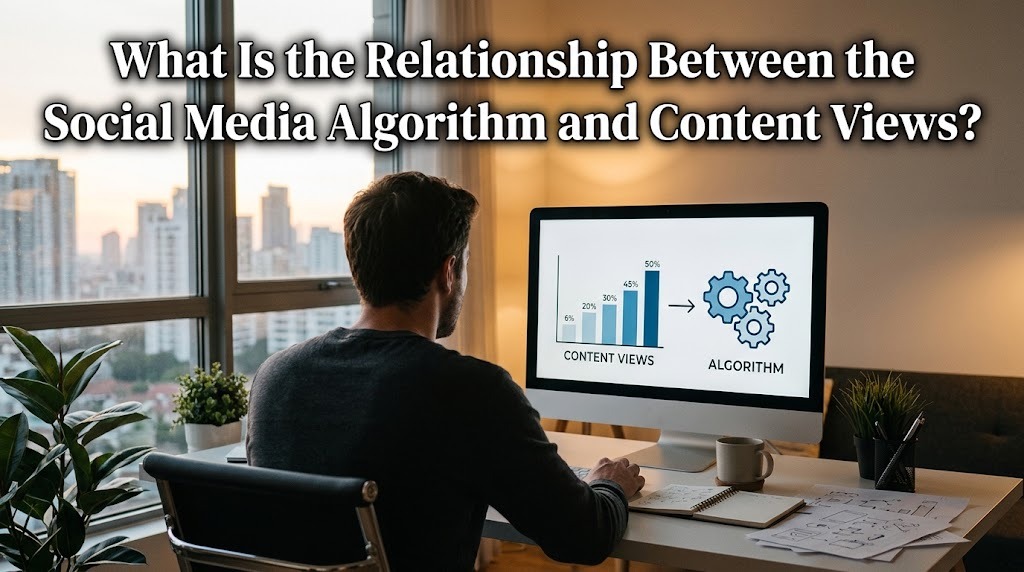
Social media has changed the way people discover information, entertainment, products, and communities online. Every day, users encounter an enormous amount of content, but they cannot view everything that is published. To manage this large volume of information, platforms use a social media algorithm to organize and recommend content. This system can influence which posts or videos users are more likely to discover and, as a result, can affect the number of views that content receives.
The relationship between algorithms and content views is important for creators, businesses, and digital marketers. A post may have high-quality information but still receive limited views if it does not reach the right audience. At the same time, content that matches user interests can receive more opportunities to be discovered. Understanding this relationship can help creators develop a more effective and sustainable content strategy.
HOW DOES THE SOCIAL MEDIA ALGORITHM WORK?
A social media algorithm is a system used by platforms to organize and recommend content based on various signals. These signals can include user interactions, viewing behavior, content relevance, relationships between users and creators, and other available information. Instead of showing every post to every user, the system attempts to prioritize content that may be interesting or useful to a particular person.
The exact recommendation process differs between platforms and can change over time. Some platforms may place greater emphasis on video viewing behavior, while others may consider interactions, relationships, or content relevance more strongly. Therefore, there is no single algorithm that controls all social media platforms. What they generally share is the goal of matching content with users who may be interested in it.
WHY CAN THE ALGORITHM AFFECT CONTENT VIEWS?
The algorithm can affect content views because it influences how easily users can discover a particular post or video. If content is recommended to users who are likely to find it relevant, it has more opportunities to be viewed. On the other hand, content that is shown to a less relevant audience may receive fewer views even when its quality is good. This makes content distribution an important part of social media performance.
However, algorithms do not guarantee a specific number of views. Content performance can also depend on audience interest, competition, timing, presentation, and many other factors. A post may initially receive limited attention and later gain more views if it becomes relevant to a growing audience. Therefore, creators should avoid assuming that algorithmic recommendations are the only reason a piece of content performs well or poorly.
HOW DOES USER BEHAVIOR INFLUENCE CONTENT VIEWS?
User behavior provides important signals that can influence what content is recommended. Actions such as watching a video, liking a post, commenting, sharing, saving, following an account, or searching for a topic can indicate different levels of interest. Repeated behavior can help the platform identify patterns and make future recommendations more personalized.
Viewing behavior is particularly relevant to content views. For example, watching a video for a significant portion of its duration may indicate that the content is holding the user's attention. Quickly skipping similar content may provide a different signal. These patterns can contribute to future recommendations, although the exact importance of each signal depends on the platform's system.
DOES HIGH ENGAGEMENT ALWAYS MEAN MORE VIEWS?
High engagement can provide useful signals, but it does not automatically guarantee that content will receive a large number of views. Likes, comments, shares, and saves represent different types of user responses, and platforms can evaluate them alongside other signals. A post may receive many likes from a small audience without necessarily being recommended widely. Similarly, a post with fewer visible interactions may still reach users through recommendations or search.
The quality and relevance of interactions can also matter. Content that encourages meaningful discussion or provides information that users want to save and share may offer stronger audience value than content that attracts only brief reactions. For this reason, creators should focus on meaningful engagement rather than chasing numbers alone. A healthy content strategy combines audience value with an understanding of how people respond to the content.
HOW CAN CREATORS INCREASE CONTENT VIEWS?
Creators can improve their opportunities for receiving views by producing content that is relevant, useful, original, and appropriate for their target audience. Before creating content, they should understand the questions, interests, and problems of the people they want to reach. A clear topic and strong presentation can make the content easier to understand and more attractive to the intended audience.
Creators can also study their platform analytics to identify patterns in content performance. Metrics such as views, reach, watch time, retention, shares, saves, and engagement can provide useful information about audience responses. Instead of copying another creator's strategy exactly, creators can use these insights to develop their own approach. Continuous improvement based on audience data can be more sustainable than trying to find a permanent formula for the algorithm.
WHY CAN CONTENT VIEWS CHANGE OVER TIME?
Content views can change because user interests, platform recommendations, trends, and content competition are constantly evolving. A topic that attracts significant attention today may receive less interest later. Similarly, a previously published post can sometimes gain additional views when the subject becomes relevant again or when users begin searching for related information.
Algorithm updates can also affect how content is distributed. Platforms may adjust their recommendation systems to improve user experience or support new features. This means that changes in views do not necessarily indicate a problem with the creator or the content itself. Creators should examine longer-term performance and multiple metrics before making conclusions about their strategy.
CONCLUSION
The relationship between the social media algorithm and content views is closely connected to how platforms distribute and recommend content. Algorithms analyze various signals, including user behavior, content relevance, interactions, and viewing patterns, to determine what users may want to see. When content reaches an audience that finds it relevant, it may have more opportunities to receive views.
However, there is no single factor that guarantees high view counts. Creators should focus on quality, relevance, audience needs, meaningful engagement, and continuous improvement. By understanding their audience and using analytics responsibly, creators can build content strategies that remain useful even as social media recommendation systems continue to change.
Recent Posts

Bagaimana Sistem SKS pada Program Kuliah... 22.11.2026/35 View

How Does Technology Make Daily Evaluation... 21.11.2026/69 View

Apa Strategi Menghadapi Kesenjangan antara Kompetensi... 21.11.2026/69 View

Mengapa Inventaris Aset Penting bagi Kelancaran... 21.11.2026/67 View

When Should Musicians Join a Record... 21.11.2026/68 View
