

What Is The Role Of Archaeology In Preserving Cultural Heritage?
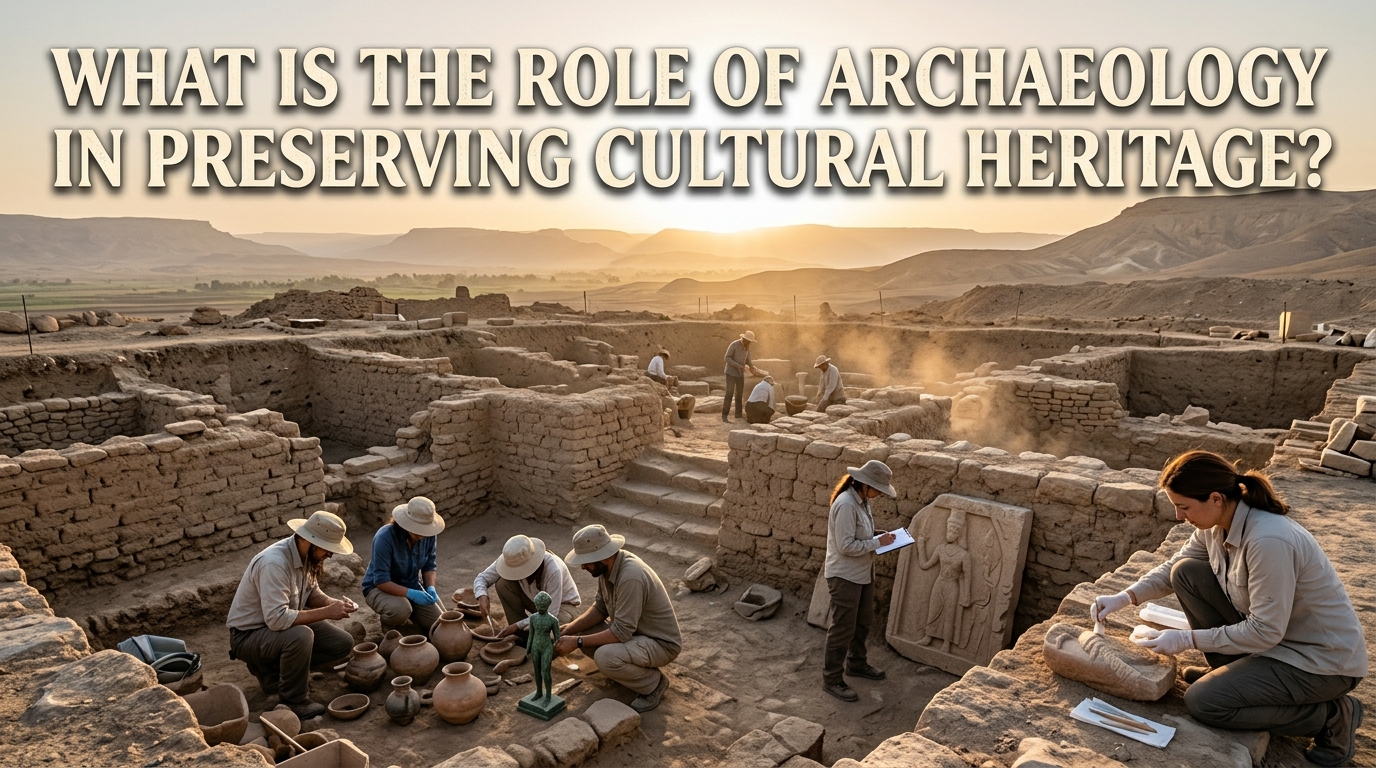
Cultural heritage connects people with their history, traditions, and identity. Ancient temples, historic buildings, traditional objects, burial sites, and archaeological remains provide valuable evidence of how earlier societies lived and developed. However, these resources can be threatened by natural disasters, urban development, illegal excavation, and environmental changes. Archaeology plays an important role in discovering, understanding, and protecting cultural heritage so that its historical value can be passed on to future generations.
Through scientific research, careful excavation, and conservation efforts, archaeologists help communities understand the meaning of historical places and objects. Their work also provides evidence that may not be available in written records. By combining research with responsible preservation, archaeology helps protect the material remains of human history and strengthen cultural understanding.
WHAT IS ARCHAEOLOGY AND CULTURAL HERITAGE?
Archaeology is the scientific study of past human societies through material evidence, including tools, pottery, buildings, monuments, and human-made landscapes. Archaeologists examine these remains to understand how people lived, worked, traded, and practiced their beliefs. Their research can reveal details about ancient technologies, social relationships, economic activities, and cultural traditions.
Cultural heritage includes both tangible heritage, such as historic buildings, artifacts, and archaeological sites, and intangible heritage, such as traditional knowledge, rituals, languages, and performing arts. Archaeology primarily investigates material evidence, but its findings can also help communities understand the origins and development of living traditions. Together, archaeological research and cultural knowledge provide a broader understanding of how societies preserve their identities across generations.
HOW ARCHAEOLOGY IDENTIFIES IMPORTANT HERITAGE SITES
One of the main roles of archaeology is to discover and document historically significant places. Researchers use field surveys, historical maps, archival records, aerial photographs, and satellite imagery to identify locations that may contain evidence of past human activity. They then examine these places to determine their historical significance and assess the condition of the remains.
Accurate documentation is essential because archaeological sites can be damaged or altered over time. Archaeologists record locations, measurements, structures, artifacts, and relationships between different layers of soil. Modern tools such as geographic information systems and three-dimensional scanning can improve the accuracy of these records. Detailed archaeological documentation helps researchers understand a site's history and provides a foundation for future conservation work.
HOW ARCHAEOLOGY HELPS PRESERVE HISTORICAL OBJECTS
Ancient artifacts provide direct evidence of past human activities and cultural achievements. Pottery, coins, jewelry, tools, sculptures, and household objects can reveal information about craftsmanship, trade, technology, and everyday life. Archaeologists study these objects carefully to understand their original purpose, age, materials, and cultural significance.
Preserving artifacts requires more than simply storing them in a museum. Some objects are vulnerable to moisture, temperature changes, light, pollution, or chemical reactions. Conservation specialists use appropriate scientific methods to stabilize fragile materials, prevent further deterioration, and document any necessary treatment. Proper storage and careful handling help ensure that archaeological objects remain available for research, education, and public appreciation.
THE ROLE OF ARCHAEOLOGY IN RESTORING HISTORIC BUILDINGS
Archaeological research can help conservation teams understand the original design and construction of historic buildings. By examining foundations, building materials, architectural details, and traces of earlier structures, researchers can identify how a site changed over time. This information is particularly valuable when buildings have been damaged by conflict, natural disasters, neglect, or inappropriate renovations.
Evidence-based restoration aims to protect a building's historical character rather than recreate an imagined version of the past. Archaeologists work with architects, engineers, historians, and conservation experts to determine which features should be preserved and how repairs can be carried out responsibly. Not every damaged structure can or should be reconstructed completely. In some cases, stabilizing the remaining structure and documenting its condition is the most appropriate way to protect its heritage value.
HOW MODERN TECHNOLOGY SUPPORTS CULTURAL HERITAGE PRESERVATION
Modern technology has made archaeological research and heritage conservation more effective. Satellite imagery, drones, ground-penetrating radar, and three-dimensional scanning can help researchers identify buried features, map historic landscapes, and document fragile structures. These tools can also reduce the need for unnecessary excavation, which may disturb valuable archaeological evidence.
Digital technology also supports long-term preservation. Researchers can create digital models, photographs, and detailed records that help specialists study sites even when physical access is limited. These records may be useful if a monument is damaged or a site becomes inaccessible. However, digital documentation does not replace the original object or place. Combining modern technology with traditional conservation expertise offers a stronger approach to protecting cultural heritage.
HOW ARCHAEOLOGY PROTECTS CULTURAL IDENTITY
Archaeological discoveries can help communities understand their historical roots and cultural development. Ancient settlements, burial traditions, religious structures, and everyday objects provide evidence of how people lived and interacted with other societies. This information can deepen public understanding of local history and strengthen connections between generations.
However, cultural heritage must be interpreted carefully because archaeological evidence can have different meanings for different communities. Respect for local traditions, Indigenous knowledge, and community perspectives is essential when studying places connected to living cultural identities. Archaeologists should collaborate with relevant communities when planning research, interpreting findings, and making decisions about sensitive objects or sites. This cooperation helps ensure that preservation respects both historical evidence and the people whose heritage is being studied.
THE IMPORTANCE OF COMMUNITY PARTICIPATION
Protecting cultural heritage is not the responsibility of archaeologists alone. Local residents often live near historic places and may possess valuable knowledge about traditional practices, historical events, and environmental changes. Their involvement can help researchers identify vulnerable sites and understand why particular places matter to the community.
Community participation can include educational programs, heritage workshops, volunteer activities, and consultations about conservation plans. Schools, museums, universities, governments, and local organizations can work together to raise awareness and encourage responsible treatment of historical resources. When people understand the significance of archaeological sites, they may be more likely to report damage, discourage looting, and support preservation initiatives. Community involvement also helps ensure that heritage protection benefits the people connected to it.
CHALLENGES IN PRESERVING CULTURAL HERITAGE
Despite its importance, cultural heritage preservation faces many challenges. Urban development, looting, pollution, climate change, and natural disasters can damage archaeological sites and historical objects. Limited funding and a shortage of trained conservation professionals may also prevent researchers from protecting every site that needs attention.
Another challenge is balancing public access with long-term protection. Tourism can support local economies and increase appreciation of heritage, but excessive visitor numbers may cause physical damage and place pressure on fragile sites. Effective management may require visitor limits, protective barriers, regular maintenance, and clear educational information. Long-term conservation planning and cooperation between stakeholders are essential to reduce these risks and protect heritage for future generations.
WHY ARCHAEOLOGICAL HERITAGE MATTERS FOR FUTURE GENERATIONS
Archaeological heritage offers more than a record of ancient objects and buildings. It provides evidence of human creativity, adaptation, cultural exchange, and technological development. Studying this evidence helps people understand how societies changed over time and how earlier communities responded to challenges.
Preserving archaeological sites also supports education, historical research, cultural tourism, and public understanding. Museums and heritage centers can use archaeological discoveries to make history more accessible and engaging. Protecting cultural heritage safeguards knowledge that cannot always be replaced once it is lost. By preserving these resources responsibly, present-day communities can help future generations learn from the achievements, experiences, and mistakes of the past.
CONCLUSION
Archaeology plays a vital role in preserving cultural heritage by identifying historical sites, studying artifacts, documenting ancient structures, and supporting conservation efforts. Its scientific methods help researchers understand the significance of historical evidence and make informed decisions about its protection. Modern technology, professional conservation, and community participation further strengthen these efforts.
However, successful preservation requires continued cooperation among archaeologists, governments, cultural organizations, and local communities. Protecting heritage also means respecting cultural traditions and managing historical sites responsibly. By investing in archaeological research and cultural heritage preservation, society can safeguard important evidence of human history and pass this knowledge on to future generations.
Recent Posts

Bagaimana Sistem SKS pada Program Kuliah... 22.11.2026/50 View

How Does Technology Make Daily Evaluation... 21.11.2026/79 View

Apa Strategi Menghadapi Kesenjangan antara Kompetensi... 21.11.2026/79 View

Mengapa Inventaris Aset Penting bagi Kelancaran... 21.11.2026/75 View

When Should Musicians Join a Record... 21.11.2026/80 View
