

What Is The Role Of Artificial Networks In Autonomous Vehicles?
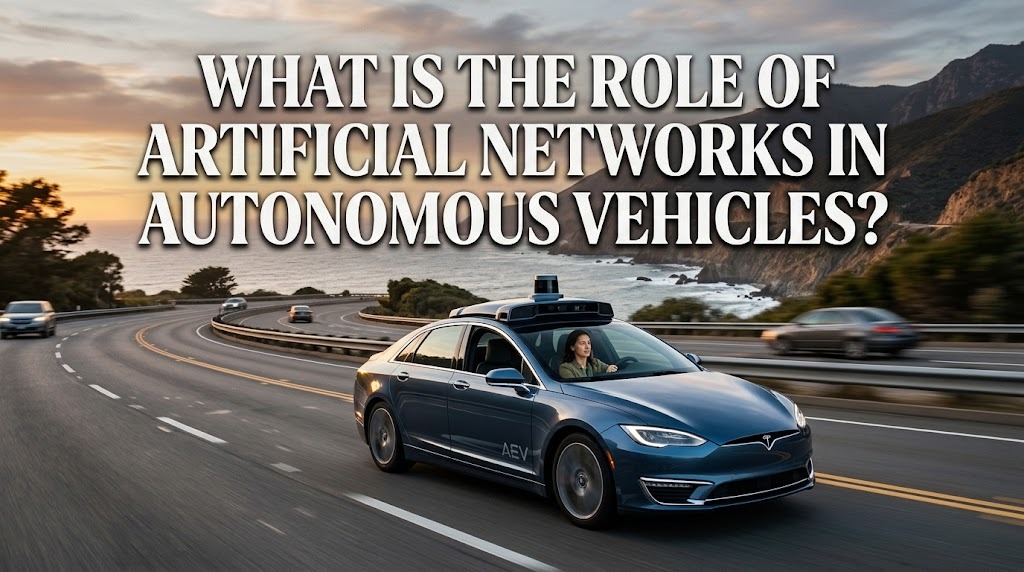
Artificial neural networks serve as the fundamental cognitive engine powering modern autonomous vehicles, enabling self-driving systems to perceive complex environments, predict road behavior, make navigation decisions, and execute precise vehicle control. Autonomous driving requires processing massive volumes of unstructured, high-frequency data generated by diverse sensor suites including cameras, LiDAR, radar, and ultrasonic units. Traditional rule-based programming cannot handle the endless edge cases, unpredictable human behaviors, and dynamic weather conditions present on public roads. Artificial neural networks bridge this gap by transforming raw, high-dimensional environmental telemetry into real-time, actionable driving commands. Understanding the role of artificial neural networks in autonomous vehicles highlights how deep learning algorithms interact with hardware infrastructure to replace human perception, spatial reasoning, and operational execution on modern roadways.
MULTI SENSOR PERCEPTION AND ENVIRONMENT RECONSTRUCTION
The primary role of artificial neural networks in self-driving architecture is environment perception, which involves interpreting visual and spatial signals to construct an accurate digital model of the surrounding world. Convolutional neural networks and vision transformers process continuous video streams from multi-camera setups to perform image classification, semantic segmentation, and object detection. These models identify road boundaries, lane markings, traffic signals, road signs, construction zones, pedestrians, cyclists, and surrounding vehicles instantly across variable lighting conditions.
Simultaneously, specialized 3D neural networks process point-cloud data generated by LiDAR and radar sensors to construct precise spatial depth maps. By fusing visual pixels with spatial depth maps through multi-modal fusion networks, deep learning models build a comprehensive, high-definition three-dimensional occupancy grid surrounding the vehicle in real time. This multi-sensor fusion capability allows the autonomous system to maintain accurate environmental awareness even in low-visibility conditions such as heavy fog, blinding rain, direct sunlight glare, or night driving.
PREDICTIVE BEHAVIORAL MODELING OF ROAD USERS
Navigating complex traffic environments safely requires anticipating the future actions of surrounding road users well before they execute them. Artificial neural networks excel at temporal sequence modeling, utilizing recurrent networks, long short-term memory models, and spatio-temporal transformers to track the continuous trajectories of neighboring objects over time.
By analyzing past movement patterns, velocity vectors, heading angles, and subtle contextual cues such as a pedestrian turning their head toward a crosswalk or a vehicle angling toward a lane line, neural networks calculate probabilistic trajectories for every surrounding object. Forecasting whether a surrounding driver will cut into a lane, yield at an intersection, or accelerate enables the autonomous vehicle to make proactive, defensive driving adjustments rather than reacting abruptly after a dangerous maneuver has already begun.
PATH PLANNING AND REAL TIME DECISION MAKING
Once the environment is perceived and future trajectories are predicted, the autonomous vehicle must formulate an optimal driving trajectory. Deep reinforcement learning architectures and neural planner models process these environmental representations to determine immediate driving behavior across complex road topologies.
The neural network evaluates countless potential trajectories simultaneously, balancing competing priorities such as collision avoidance, passenger comfort, speed optimization, and traffic law compliance. Whether making an unprotected left turn across busy oncoming traffic, navigating a multi-lane roundabout, merging onto a high-speed highway, or maneuvering around double-parked vehicles, neural networks calculate safe, smooth driving paths in milliseconds.
VEHICLE CONTROL AND END TO END NEURAL ARCHITECTURES
The final stage of the autonomous driving pipeline is motion control, where strategic driving plans are translated into physical mechanical actions. Neural networks calculate precise vehicle dynamics parameters to generate continuous commands for electronic steering, throttle actuation, and braking systems.
In advanced end-to-end deep learning designs, a single unified neural network processes raw sensor inputs directly to output steering angles and acceleration rates. By removing traditional rule-based intermediate boundaries between perception, planning, and control, end-to-end architectures optimize the complete driving workflow holistically, allowing the vehicle to exhibit smooth, human-like driving dynamics while reducing overall computational overhead.
CONTINUOUS FLEET LEARNING AND SHADOW MODE OPTIMIZATION
Autonomous vehicles rely on artificial networks not only inside individual cars but also across massive cloud training infrastructures. Auto manufacturers deploy shadow mode technology, where neural networks run silently in consumer vehicles driven by humans. The embedded network compares its predicted driving decisions with the actions taken by the human driver.
When a discrepancy occurs—such as a human taking over control or navigating an unusual obstacle—the sensor data surrounding that specific event is automatically anonymized and uploaded to cloud data centers. Millions of miles of real-world driving data are fed back into massive neural network models to retrain and refine parameter weights. Once optimized, updated neural models are pushed back to the vehicle fleet through over-the-air software updates, ensuring that every car on the road learns continuously from the collective experiences of the entire fleet.
HARDWARE OPTIMIZATION AND REAL TIME INFERENCE AT THE EDGE
Deploying artificial neural networks inside production vehicles requires massive computational efficiency. Autonomous driving networks must run continuously with sub-millisecond latency to ensure safety at high highway speeds. Automotive manufacturers achieve this by optimizing deep learning models for edge execution on specialized neural processing units and automotive-grade system-on-chip hardware.
Through mathematical quantization, weight pruning, and architectural distillation, massive deep learning models are compressed to fit within the power, thermal, and memory budgets of the vehicle's onboard computers. This edge computing deployment ensures that critical safety decisions execute locally within the car, eliminating reliance on cloud connectivity or external cellular networks.
CONCLUSION
Artificial neural networks serve as the essential artificial brain of autonomous vehicles, performing critical functions across perception, behavioral prediction, trajectory planning, low-level motion control, and continuous fleet learning. By extracting meaningful spatial and temporal patterns from complex multi-sensor streams, neural networks enable self-driving vehicles to perceive their environments accurately, make intelligent driving decisions, and react instantly to dynamic traffic conditions. As deep learning architectures, specialized silicon, and fleet-scale training pipelines continue to evolve, artificial neural networks remain the central technology driving the future of safe, fully autonomous transportation.
Recent Posts

Bagaimana Sistem SKS pada Program Kuliah... 22.11.2026/53 View

How Does Technology Make Daily Evaluation... 21.11.2026/82 View

Apa Strategi Menghadapi Kesenjangan antara Kompetensi... 21.11.2026/81 View

Mengapa Inventaris Aset Penting bagi Kelancaran... 21.11.2026/77 View

When Should Musicians Join a Record... 21.11.2026/82 View
