

What Is The Role Of Body Language In The Art Of Speaking?
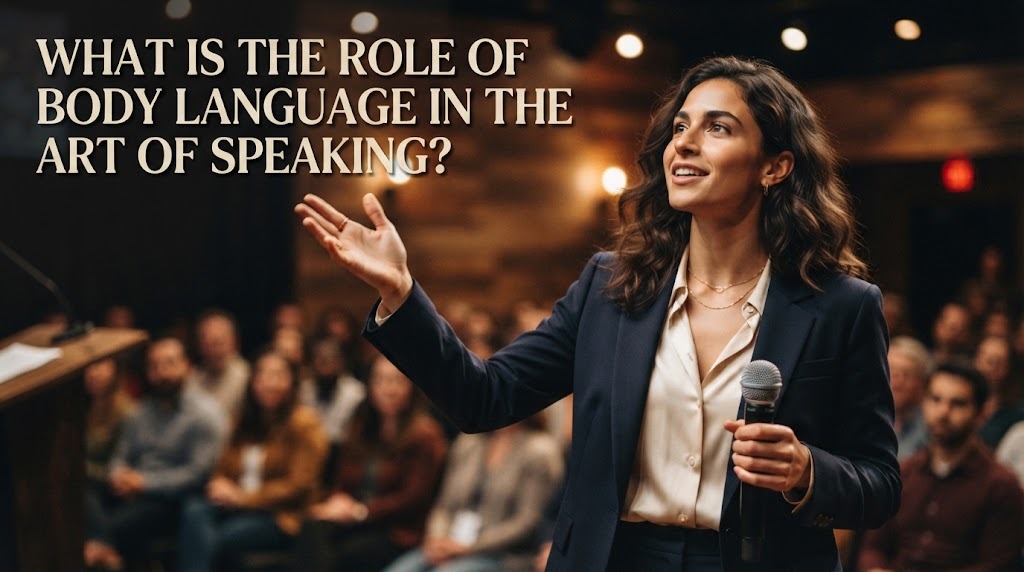
Body language is an important part of the art of speaking because communication does not depend only on words. Facial expressions, eye contact, posture, gestures, and body movement can influence how a message is understood. These nonverbal signals can support spoken words and show emotions or attitudes. Good body language can also make a speaker appear more confident and comfortable. Therefore, understanding body language can help people become more effective speakers.
SUPPORTING SPOKEN MESSAGES
Body language can strengthen the meaning of spoken words. For example, a speaker may use a hand gesture to emphasize an important point or use a facial expression to show excitement. Natural gestures can make explanations easier to follow because they give visual support to the spoken message. When body movements match the words, the communication can feel more consistent. This is useful during conversations, presentations, and public speaking.
However, body language should not distract from the main message. Excessive movements can make it difficult for listeners to focus on what the speaker is saying. Speakers should use gestures that feel natural and appropriate for the situation. A balanced combination of verbal and nonverbal communication can make a message clearer and more engaging. This helps listeners understand both the information and the speaker's attitude.
SHOWING CONFIDENCE
Body language can influence how confident a speaker appears. Standing or sitting with good posture can create a more confident impression than constantly looking down or avoiding eye contact. Confident posture can also help speakers feel more prepared during communication. When the body feels relaxed, it can become easier to speak naturally. This makes posture an important part of effective speaking.
Eye contact can also communicate confidence and attention. Looking at listeners appropriately shows that the speaker is engaged with the conversation. However, eye contact should remain natural because staring continuously may make others uncomfortable. Speakers can look at different people when addressing a group. Appropriate eye contact can create connection and confidence between speakers and listeners.
EXPRESSING EMOTIONS
Words do not always communicate emotions completely. Facial expressions and tone can provide additional information about how a speaker feels. Facial expressions such as smiling, looking concerned, or showing interest can help listeners understand the emotional meaning behind a message. These expressions can make conversations feel more natural and personal. They are particularly useful when discussing experiences, opinions, or feelings.
Body language should generally match the emotion being communicated. If a person says they are excited but uses a completely uninterested facial expression, the message may appear inconsistent. Similarly, a calm facial expression can help during a serious discussion. Understanding these signals can improve emotional communication. Speakers can then express feelings without depending entirely on words.
BUILDING CONNECTION WITH LISTENERS
Good body language can help speakers create a stronger connection with their audience. A relaxed posture, appropriate eye contact, and natural facial expressions can make a speaker appear approachable. Positive nonverbal signals may encourage listeners to pay attention and participate in the conversation. This is especially important when speaking to unfamiliar people. A comfortable speaker can create a more welcoming communication environment.
Body language can also show that a speaker is paying attention to others. Nodding at appropriate moments, facing the person who is speaking, and maintaining an open posture can communicate interest. These simple actions can make conversations feel more balanced. As a result, body language can support trust and mutual understanding. This is useful when building personal, academic, and professional relationships.
IMPROVING PUBLIC SPEAKING
Body language is particularly important during public speaking because audiences observe the speaker's overall presentation. A speaker who stands confidently and uses natural gestures may appear more prepared and engaging. Effective body movement can help emphasize important information during a presentation. Moving around the space should have a purpose rather than being caused by nervousness. Controlled movement can make a presentation feel more dynamic.
Eye contact is also useful when addressing a large audience. Instead of looking only at notes or one location, speakers can look at different sections of the audience. This creates a feeling of direct interaction even when many people are listening. Combining clear speech with appropriate body language can improve public speaking effectiveness. It can also help the speaker maintain audience attention.
PREVENTING MISUNDERSTANDINGS
Body language can sometimes reveal information that spoken words do not clearly express. For example, a person's facial expression may show confusion even when they verbally say they understand. Paying attention to these signals can help speakers recognize when they need to explain something again. Nonverbal feedback can therefore support better communication. It allows speakers to adjust their explanation based on the listener's response.
However, body language should not always be interpreted as absolute proof of someone's feelings or intentions. Cultural differences, personal habits, and individual situations can affect nonverbal behavior. A person avoiding eye contact, for example, may simply be uncomfortable rather than dishonest. Speakers should consider the context and overall communication before making conclusions. This approach helps prevent incorrect assumptions.
DEVELOPING BETTER BODY LANGUAGE
Improving body language begins with becoming more aware of how the body behaves during communication. People can practice speaking in front of a mirror or record themselves during a presentation. Self observation can reveal habits such as unnecessary movements, poor posture, or avoiding eye contact. Once these habits are recognized, speakers can work on improving them gradually. The goal is to become more natural rather than perfectly controlled.
Practice should also focus on comfort and authenticity. Copying another person's gestures exactly may feel unnatural and distracting. Instead, speakers should develop body language that matches their own personality and communication style. Regular practice can make positive habits easier to maintain. Over time, natural body language can become an important part of confident speaking.
CONCLUSION
Body language plays an important role in the art of speaking because it adds meaning to spoken communication. Posture, eye contact, facial expressions, gestures, and movement can support messages, express emotions, show confidence, and build connections with listeners. Body language can also improve public speaking and provide useful nonverbal feedback during conversations. However, nonverbal signals should always be considered together with the situation and other communication cues. By practicing natural and appropriate body language, anyone can become a more confident, engaging, and effective speaker.
Recent Posts

Bagaimana Sistem SKS pada Program Kuliah... 22.11.2026/37 View

How Does Technology Make Daily Evaluation... 21.11.2026/70 View

Apa Strategi Menghadapi Kesenjangan antara Kompetensi... 21.11.2026/73 View

Mengapa Inventaris Aset Penting bagi Kelancaran... 21.11.2026/68 View

When Should Musicians Join a Record... 21.11.2026/71 View
