

What Is the Role of Education in Building a Strong Personality?
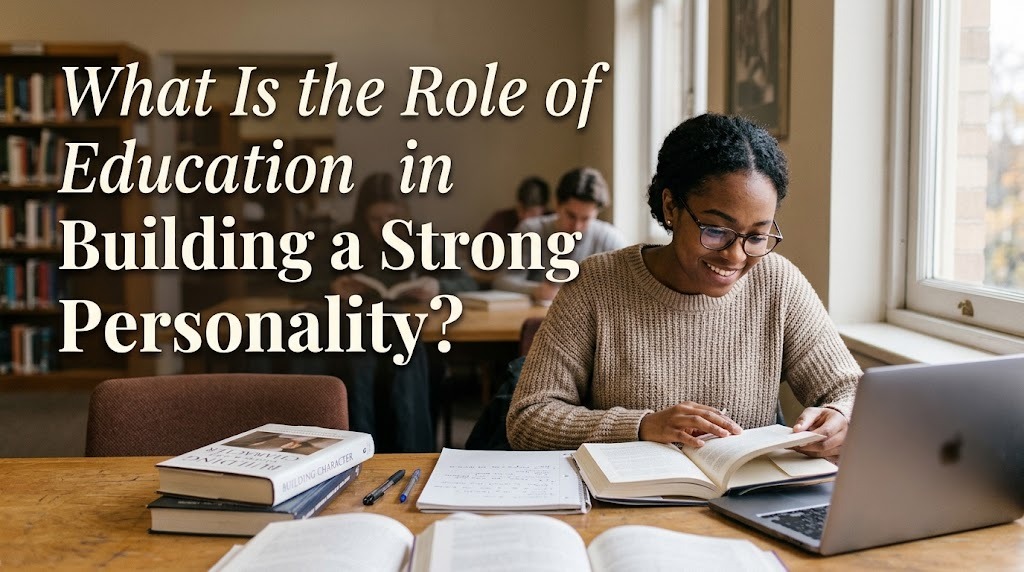
Education plays an important role in building a strong personality because it helps individuals develop knowledge, attitudes, values, and positive behavior. Through education, people learn how to think critically, communicate effectively, solve problems, and interact with others. Education also provides opportunities to understand personal strengths, recognize weaknesses, and develop abilities that support personal growth.
Building a strong personality is not only about achieving good academic results. It also involves developing confidence, discipline, responsibility, independence, and emotional intelligence. These qualities help individuals face challenges, make thoughtful decisions, and adapt to different situations. Therefore, education at home, school, and within society contributes significantly to personality development throughout life.
UNDERSTANDING THE RELATIONSHIP BETWEEN EDUCATION AND PERSONALITY DEVELOPMENT
Education and personality development are closely connected because learning influences how individuals understand themselves and the world around them. Through educational experiences, people gain knowledge and learn values that guide their attitudes and behavior. They also develop the ability to communicate, cooperate, and respond to different situations. These experiences gradually shape their personal characteristics.
Personality development does not happen through academic learning alone. It also involves social interactions, emotional experiences, and practical activities that encourage individuals to become more independent. For example, participating in group discussions teaches students to respect different opinions, while completing assignments develops responsibility and discipline. These learning experiences help build a balanced personality that supports personal and social development.
HOW EDUCATION BUILDS SELF-CONFIDENCE
Self-confidence is an important part of a strong personality because it helps individuals recognize their abilities and believe in their potential. Education provides opportunities for students to discover their interests, practice new skills, and achieve personal goals. Every successful learning experience can strengthen their belief in their ability to overcome challenges. Positive encouragement from teachers and family members can also help students become more confident.
Education also teaches individuals how to handle mistakes and accept constructive criticism. Instead of viewing failure as a reason to give up, students can learn to treat it as an opportunity for improvement. Participating in presentations, discussions, competitions, and other activities allows them to practice expressing their thoughts. Over time, these experiences can help individuals become more confident when communicating and making decisions.
THE ROLE OF EDUCATION IN DEVELOPING DISCIPLINE AND RESPONSIBILITY
Discipline and responsibility are essential qualities that help individuals maintain positive behavior in everyday life. Educational environments introduce students to schedules, rules, deadlines, and responsibilities that encourage them to manage their time effectively. Completing assignments, attending classes, and preparing for examinations teach students the importance of consistency. These habits can become useful foundations for future academic and professional activities.
Education also helps individuals understand the consequences of their decisions. Students learn that completing responsibilities requires effort, commitment, and self-control. When they are encouraged to manage their own tasks, they gradually become more independent and accountable. Developing these qualities through education can help individuals build a personality that is organized, reliable, and prepared to face different challenges.
HOW EDUCATION STRENGTHENS CRITICAL THINKING AND DECISION MAKING
Critical thinking is an important ability that helps individuals analyze information, evaluate situations, and reach reasonable conclusions. Education provides opportunities to develop this skill through discussions, research, problem-solving activities, and practical assignments. Students learn to examine different perspectives rather than accepting every piece of information without question. This ability helps them become more thoughtful and independent individuals.
Good decision-making also contributes to a strong personality. When students learn to compare alternatives, consider possible consequences, and evaluate available information, they become better prepared to make responsible choices. These skills are useful not only in academic activities but also in personal relationships and everyday situations. Education therefore helps individuals develop confidence in their decisions while encouraging them to think carefully before taking action.
THE IMPORTANCE OF CHARACTER EDUCATION IN PERSONALITY FORMATION
Character education helps individuals develop moral values that guide their behavior and interactions with others. Values such as honesty, respect, empathy, fairness, and responsibility are important foundations of a positive personality. Through lessons and everyday experiences, students learn why these values matter and how to apply them in real situations. This process encourages them to become individuals who understand the importance of treating others appropriately.
Schools can support character education through classroom activities, group projects, school rules, and positive examples from teachers. For instance, students learn honesty by completing assignments independently and develop respect by listening to different opinions. These lessons become more meaningful when students practice them consistently. Strong character helps individuals maintain positive attitudes even when facing pressure or difficult circumstances.
HOW SOCIAL INTERACTION AT SCHOOL SHAPES PERSONALITY
Schools provide important opportunities for students to interact with people from different backgrounds, personalities, and perspectives. Through friendships, classroom discussions, and group activities, students learn how to communicate and cooperate with others. These experiences help them develop social confidence and understand the importance of respecting differences. They also learn how to manage disagreements and maintain healthy relationships.
Social interaction can also strengthen empathy and emotional intelligence. Students gradually understand that other people may have different feelings, needs, and opinions. Working together toward shared goals teaches them patience, teamwork, and mutual support. These abilities contribute to a strong personality because individuals become more capable of building positive relationships and adapting to different social environments.
THE ROLE OF TEACHERS AND FAMILY IN BUILDING A STRONG PERSONALITY
Teachers and family members have important responsibilities in supporting personality development. Teachers provide academic guidance, encourage positive behavior, and create learning environments where students can explore their abilities. Their attitudes and communication styles can influence how students approach challenges and interact with others. Teachers who provide constructive feedback can help students develop confidence and a willingness to improve.
Family members also play an important role because personality development begins through early experiences at home. Parents can teach discipline, honesty, independence, and responsibility through daily activities and personal examples. When educational guidance at school is supported by positive habits at home, children receive more consistent lessons. Cooperation between families and schools can create a supportive environment for developing strong personalities.
THE BENEFITS OF CONTINUOUS LEARNING FOR PERSONAL GROWTH
Personality development does not stop after someone graduates from school or university. Continuous learning allows individuals to improve their knowledge, develop new abilities, and adapt to changes throughout life. Reading books, attending training programs, joining communities, and learning from work experiences can provide valuable opportunities for personal development. These activities help individuals remain open to new ideas and experiences.
Continuous learning also encourages individuals to become more flexible and resilient. As people encounter new situations, they can develop better problem-solving skills and learn how to respond to unexpected challenges. The willingness to improve also helps individuals recognize that personal growth requires effort and consistency. By continuing to learn, people can strengthen their confidence, independence, and ability to make responsible decisions.
CONCLUSION
Education plays a significant role in building a strong personality by developing knowledge, confidence, discipline, critical thinking, and positive character. Through academic activities, social interactions, and practical experiences, individuals learn how to understand themselves and respond to different situations. Teachers and family members also contribute by providing guidance, encouragement, and positive examples.
However, building a strong personality requires more than formal education. Individuals must also apply what they learn through everyday actions and continue improving themselves throughout life. With consistent learning and positive support, education can help create individuals who are confident, responsible, independent, and capable of contributing positively to society.p
Recent Posts

Bagaimana Sistem SKS pada Program Kuliah... 22.11.2026/45 View

How Does Technology Make Daily Evaluation... 21.11.2026/73 View

Apa Strategi Menghadapi Kesenjangan antara Kompetensi... 21.11.2026/75 View

Mengapa Inventaris Aset Penting bagi Kelancaran... 21.11.2026/71 View

When Should Musicians Join a Record... 21.11.2026/75 View
