

What Is the Role of Facial Expressions in Communication?
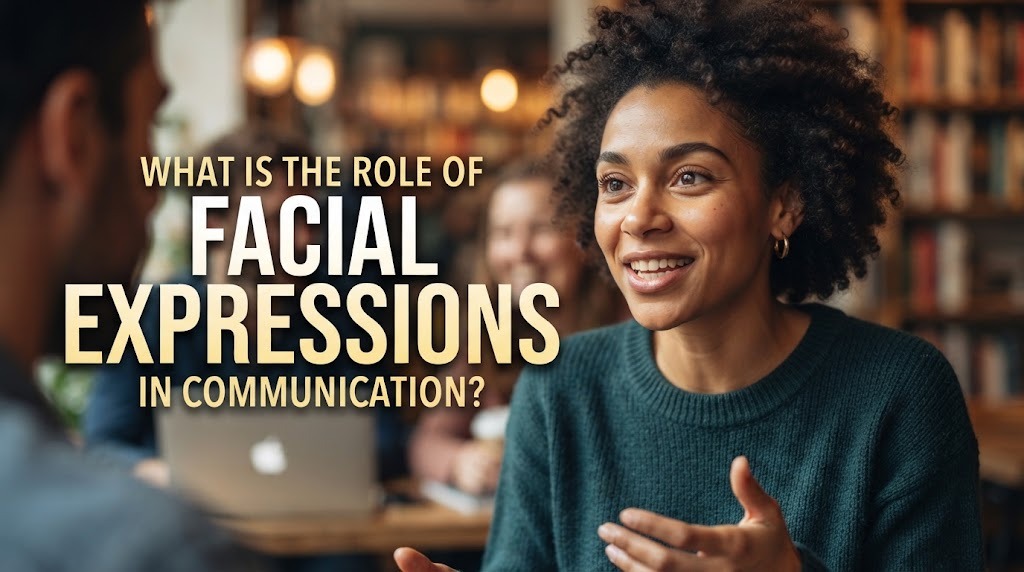
Facial expressions play an important role in communication because they help people show emotions, reactions, and attitudes without using words. A smile, frown, raised eyebrow, or serious look can provide additional meaning to a spoken message. Facial expressions are part of nonverbal communication and often help people understand how someone feels during an interaction. They can also influence how messages are received and interpreted by others.
In everyday life, people naturally use facial expressions when talking, listening, meeting someone, or responding to a situation. Understanding these expressions can make communication clearer and help people build better social relationships.
EXPRESS EMOTIONS WITHOUT WORDS
One of the main roles of facial expressions is to express emotions without spoken language. Happiness may be shown through a smile, while sadness can appear through a downturned mouth or a worried expression. Anger, surprise, fear, and confusion can also be communicated through changes in the eyes, eyebrows, and mouth. These expressions allow other people to recognize emotional reactions quickly.
Facial expressions can be especially useful when people cannot fully explain their feelings with words. For example, someone may say that everything is fine, but their worried facial expression may suggest otherwise. This does not always mean that the person is being dishonest, but it can encourage others to pay closer attention to the situation.
SUPPORT SPOKEN MESSAGES
Facial expressions can also strengthen the meaning of spoken communication. When a person says something positive while smiling naturally, the expression supports the words and creates a friendly impression. Similarly, a serious facial expression can emphasize the importance of a particular message. This combination of verbal and nonverbal signals can make communication easier to understand.
However, facial expressions can sometimes create a different impression from spoken words. For example, a person may say that they are happy about something while looking disappointed. In such situations, the listener may become uncertain about the person's actual feelings. Therefore, paying attention to both words and facial expressions can help people interpret messages more carefully.
SHOW REACTIONS AND ATTENTION
Facial expressions can show how someone reacts to information or a conversation. A person may raise their eyebrows when surprised, smile when they hear something interesting, or look confused when they do not understand an explanation. These reactions provide useful feedback to the person who is speaking.
Facial expressions can also show attention during communication. Nodding is mainly a body movement, but maintaining an interested facial expression can make a speaker feel that the listener is engaged. In conversations, these small signals can encourage people to continue speaking and create a more comfortable interaction.
BUILD SOCIAL CONNECTIONS
Facial expressions are important for building positive social relationships. A natural smile can communicate friendliness, openness, and warmth when meeting someone. A calm and attentive expression can also make another person feel more comfortable during a conversation. These simple nonverbal signals can influence first impressions and everyday interactions.
In professional, educational, and social environments, appropriate facial expressions can help create a positive communication atmosphere. For example, a teacher who uses an encouraging expression may make students feel more comfortable asking questions. Likewise, employees who show attentiveness during conversations can create a more respectful and cooperative environment.
CONTEXT AND CULTURE MATTER
Although many facial expressions are widely recognized, their meaning can depend on context, culture, and individual behavior. A smile may show happiness in one situation, but it can also be used to show politeness, nervousness, or friendliness. Similarly, limited eye contact or a serious expression does not always mean that someone is uninterested or unfriendly.
For this reason, facial expressions should not be interpreted by themselves. People should consider the situation, spoken words, body language, and relationship between the people involved. Avoiding quick judgments can help prevent misunderstandings and lead to more accurate communication.
HOW TO USE FACIAL EXPRESSIONS EFFECTIVELY
Using facial expressions effectively means allowing the face to naturally support the message being communicated. A relaxed expression can help create comfort, while a genuine smile can show friendliness. During serious conversations, maintaining an appropriate and attentive expression can demonstrate respect and understanding.
It is also important to avoid forcing expressions or using them in ways that may confuse others. People can improve their communication by becoming more aware of their own expressions and observing how others respond. Natural, appropriate, and context-sensitive facial expressions can make communication more effective.
CONCLUSION
Facial expressions have an important role in communication because they express emotions, support spoken messages, show reactions, and strengthen social connections. They provide information that words alone may not fully communicate. By understanding facial expressions together with verbal messages and other nonverbal signals, people can communicate more clearly and reduce misunderstandings.
Recent Posts

Bagaimana Sistem SKS pada Program Kuliah... 22.11.2026/40 View

How Does Technology Make Daily Evaluation... 21.11.2026/71 View

Apa Strategi Menghadapi Kesenjangan antara Kompetensi... 21.11.2026/73 View

Mengapa Inventaris Aset Penting bagi Kelancaran... 21.11.2026/69 View

When Should Musicians Join a Record... 21.11.2026/73 View
