

What Is the Role of Online Courses in Developing Human Resources?
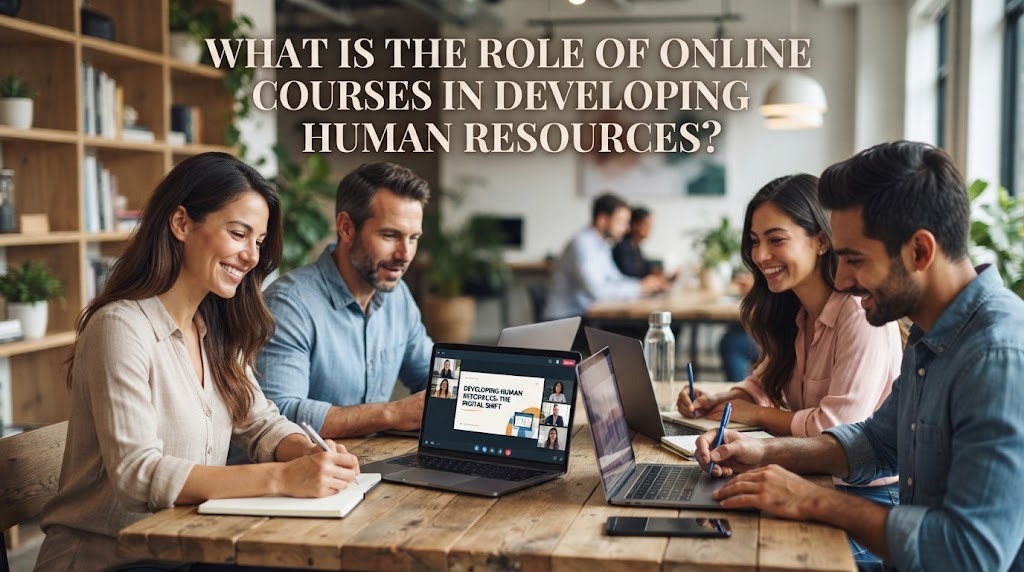
Online courses play an important role in developing human resources by providing accessible opportunities to gain knowledge and improve skills. People can learn without always having to attend traditional classrooms, making training more flexible for students, employees, and professionals. This flexibility is particularly useful for people who need to balance learning with work or other responsibilities.
Human resource development is not only about gaining academic knowledge. It also involves improving technical abilities, communication, problem solving, digital skills, and professional attitudes. Online courses can support these areas through structured lessons, practical assignments, discussions, and projects that encourage learners to apply what they have studied.
EXPANDING ACCESS TO EDUCATION AND TRAINING
One of the main roles of online courses is to make learning opportunities more accessible. Learners can join courses from different locations as long as they have the necessary internet access and learning devices. This can help people who have limited access to educational institutions or professional training programs. As a result, learning opportunities can reach a wider range of people.
Online learning also provides flexibility in terms of time. Employees can study after work, while students can learn additional subjects alongside their formal education. This flexibility makes professional development easier to integrate into everyday routines. With proper planning, people can continue developing their abilities without completely interrupting their existing activities.
IMPROVING PROFESSIONAL AND TECHNICAL SKILLS
Online courses can provide training in skills that are relevant to specific professions. Learners can study subjects such as programming, data analysis, digital marketing, project management, communication, finance, or business administration. Developing these skills can help individuals perform their responsibilities more effectively. The most useful courses are those that match current or future professional needs.
Practical activities can make skill development more effective. Assignments, projects, case studies, and simulations allow learners to apply concepts rather than simply memorize information. This helps connect learning with real workplace situations. Over time, repeated practice can improve competence and confidence.
STRENGTHENING DIGITAL COMPETENCE
Digital competence has become an important part of modern human resource development. Many organizations use digital platforms for communication, collaboration, data management, customer service, and other activities. Online courses can help learners become familiar with digital tools and understand how technology can support their work. This can make employees more prepared to work in increasingly digital environments.
Online courses can also introduce more advanced digital skills. Depending on their interests and careers, learners may study artificial intelligence, programming, cybersecurity, data analysis, cloud technology, or digital content creation. These skills can increase their ability to adapt to technological changes. Continuous digital learning is important because workplace technologies can develop rapidly.
DEVELOPING SOFT SKILLS
Human resource development also requires strong soft skills. Communication, teamwork, leadership, critical thinking, adaptability, and problem solving can influence how effectively people work with others. Online courses can support these skills through discussions, collaborative projects, presentations, and problem based activities. Such learning experiences encourage learners to communicate ideas and consider different perspectives.
Soft skills are especially important because technical knowledge alone may not be enough to succeed in a professional environment. An employee may have strong technical abilities but still need effective communication and teamwork to complete projects successfully. Online learning can provide opportunities to practice these abilities in a structured setting. When combined with real workplace experience, these skills can contribute to stronger professional performance.
SUPPORTING CAREER DEVELOPMENT
Online courses can help individuals prepare for career opportunities by allowing them to learn skills that match industry requirements. Students can use courses to explore potential career fields, while employees can develop abilities for new responsibilities or positions. Job seekers can also use relevant learning experiences to strengthen their professional profiles. This makes online courses useful at different stages of a person's career.
However, completing an online course does not automatically guarantee employment or promotion. The knowledge gained needs to be demonstrated through practical application and experience. Learners can strengthen the value of their training by completing projects, creating portfolios, or applying new skills in their work. This approach makes online education more closely connected to real career development.
ENCOURAGING LIFELONG LEARNING
Human resource development should continue throughout a person's career. Industries and professional requirements can change because of technological developments, economic conditions, and new working methods. Online courses make it easier for people to update their knowledge when these changes occur. This supports the development of a lifelong learning mindset.
Lifelong learning can also improve adaptability. People who regularly develop new skills may be better prepared when their responsibilities or career paths change. Instead of depending only on knowledge gained in the past, they can identify new learning needs and respond to them. This flexibility is valuable for both individuals and organizations.
SUPPORTING ORGANIZATIONAL DEVELOPMENT
The benefits of online courses can extend beyond individual employees. Organizations can use online training to help employees develop skills that support business objectives. Digital training can also make it easier to provide consistent learning materials to employees working in different locations. This can support a more organized approach to professional development.
When employees improve their knowledge and skills, organizations may benefit from better performance and greater adaptability. However, training should be relevant to actual organizational needs and followed by opportunities to apply the new skills. Organizations should also evaluate whether training improves performance rather than relying only on course completion. In this way, online courses can become part of a broader human resource development strategy.
CONCLUSION
Online courses play an important role in developing human resources by expanding access to education, improving technical and digital skills, strengthening soft skills, and supporting career development. They also encourage lifelong learning, which is increasingly important as professional requirements and technologies continue to change.
The effectiveness of online learning depends on the relevance and quality of the course as well as the learner's commitment to applying new knowledge. When learning is combined with practice, real work experience, and continuous evaluation, online courses can help individuals become more capable and adaptable. At the organizational level, this development can contribute to a stronger and more competitive human resource base.
Recent Posts

Bagaimana Sistem SKS pada Program Kuliah... 22.11.2026/35 View

How Does Technology Make Daily Evaluation... 21.11.2026/69 View

Apa Strategi Menghadapi Kesenjangan antara Kompetensi... 21.11.2026/70 View

Mengapa Inventaris Aset Penting bagi Kelancaran... 21.11.2026/67 View

When Should Musicians Join a Record... 21.11.2026/69 View
