

What Is the Role of Reaction Speed in Athletics?
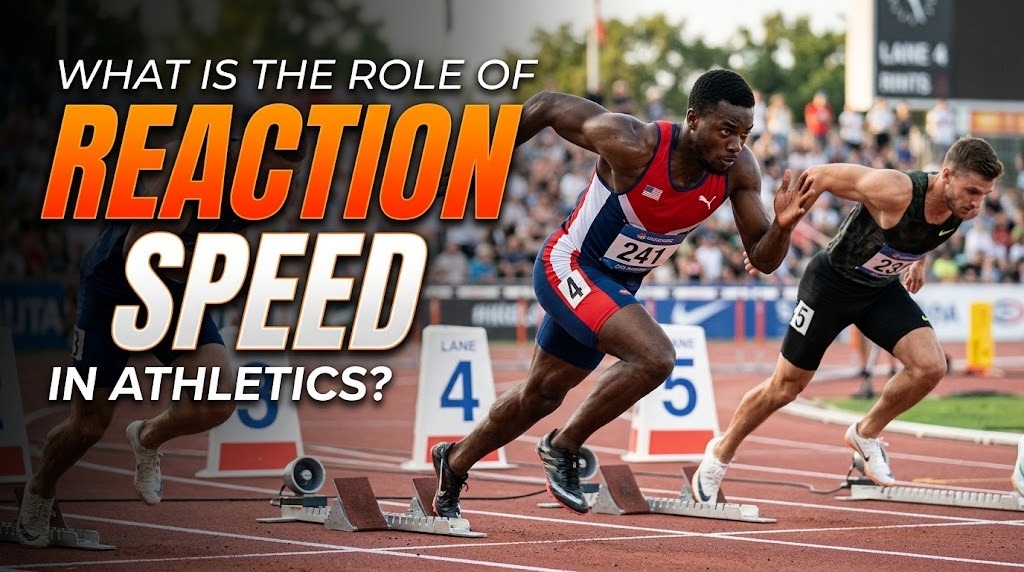
Reaction speed is an important ability in athletics because it helps athletes respond quickly to signals, opponents, and changing situations. In sprinting, for example, a runner must react to the starting signal before accelerating toward the finish line. Other athletic events also require quick responses, precise timing, and effective coordination. By developing reaction speed alongside strength, technique, and physical fitness, athletes can improve their readiness and performance during competition.
UNDERSTANDING REACTION SPEED IN ATHLETICS
Reaction speed refers to how quickly an athlete responds after detecting a stimulus. This stimulus may be an auditory signal, a visual cue, or a movement that requires an immediate response. Reaction time is the measurable interval between detecting the stimulus and initiating the response. Although these terms are closely related, reaction speed is often used more generally to describe an athlete's ability to respond quickly during sports activities.
THE IMPORTANCE OF REACTION SPEED IN SPRINTING
Reaction speed is particularly important in short-distance running because athletes must respond promptly to the starting signal. A delayed response can affect the time taken to begin the race. However, a fast reaction alone does not guarantee victory because acceleration, maximum running speed, and technique also influence the final result. Athletes must react within the competition rules, as an illegal start can lead to disqualification.
IMPROVING STARTING PERFORMANCE
A quick response helps sprinters begin their movement promptly after the starting signal. Athletes can practice starting-block drills and respond to different auditory cues to develop familiarity with the starting procedure. These exercises also help them coordinate their initial movements with their running technique. Regular practice can improve consistency, but athletes should prioritize legal starts rather than attempting to react before the signal.
SUPPORTING COORDINATION AND TIMING
Reaction speed works together with coordination and timing during athletic movements. Athletes must not only detect a signal but also organize their bodies to respond effectively. For example, a sprinter needs to coordinate the legs, arms, and torso during acceleration after leaving the starting blocks. Better coordination helps athletes convert a quick response into an efficient physical movement.
THE ROLE OF REACTION SPEED IN FIELD EVENTS
Reaction speed can also support performance in field events such as long jump, high jump, shot put, and javelin throw. Athletes must respond to coaching cues, competition instructions, and changes in their own movement patterns. However, these events generally depend more heavily on technical execution, strength, power, and timing than on simple reaction time alone. Practicing event-specific movements helps athletes respond appropriately while maintaining control and following competition rules.
FACTORS THAT AFFECT REACTION SPEED
Several factors can influence how quickly an athlete responds. Concentration, fatigue, sleep quality, familiarity with a stimulus, and the complexity of the required movement may all affect reaction time. Physical fitness and coordination can also influence how effectively the athlete carries out the response after detecting a signal. Understanding these factors helps athletes identify areas that may benefit from better preparation and training.
TRAINING METHODS TO IMPROVE REACTION SPEED
Athletes can practice reaction speed through exercises that require them to respond to unpredictable or changing cues. Examples include starting drills, visual signal exercises, and partner-led movement activities. These exercises should match the athlete's sport and include enough variation to encourage attention and quick decision-making. Progress should be measured consistently, and reaction drills should complement rather than replace technical and physical training.
THE CONNECTION BETWEEN REACTION SPEED AND MENTAL FOCUS
Mental focus helps athletes recognize important signals and respond without unnecessary hesitation. During competition, distractions or excessive nervousness can make it harder to concentrate on the task. Athletes can develop focus through familiar warm-up routines, visualization, and practice under realistic competition conditions. These methods may help them feel more prepared and maintain attention when a quick response is required.
AVOIDING COMMON REACTION TRAINING MISTAKES
One common mistake is practicing only predictable signals, which may allow athletes to anticipate the cue rather than respond naturally. Another is performing reaction drills while excessively tired, when attention and movement quality may decline. Athletes should use varied but appropriate exercises, allow sufficient recovery, and maintain correct technique. They should also remember that reaction time is only one component of athletic performance.
CONCLUSION
Reaction speed helps athletes respond promptly to signals and changing situations, particularly during sprint starts and activities that require rapid movement decisions. It works alongside coordination, concentration, physical fitness, and technical skill to support effective performance. Athletes can develop this ability through structured reaction drills and sport-specific practice. Combining these exercises with proper training, rest, and mental preparation helps athletes become more prepared for competition.
Recent Posts

Bagaimana Sistem SKS pada Program Kuliah... 22.11.2026/50 View

How Does Technology Make Daily Evaluation... 21.11.2026/79 View

Apa Strategi Menghadapi Kesenjangan antara Kompetensi... 21.11.2026/79 View

Mengapa Inventaris Aset Penting bagi Kelancaran... 21.11.2026/75 View

When Should Musicians Join a Record... 21.11.2026/80 View
