

What Is the Role of Teachers in Preparing Students for Semester Evaluation?
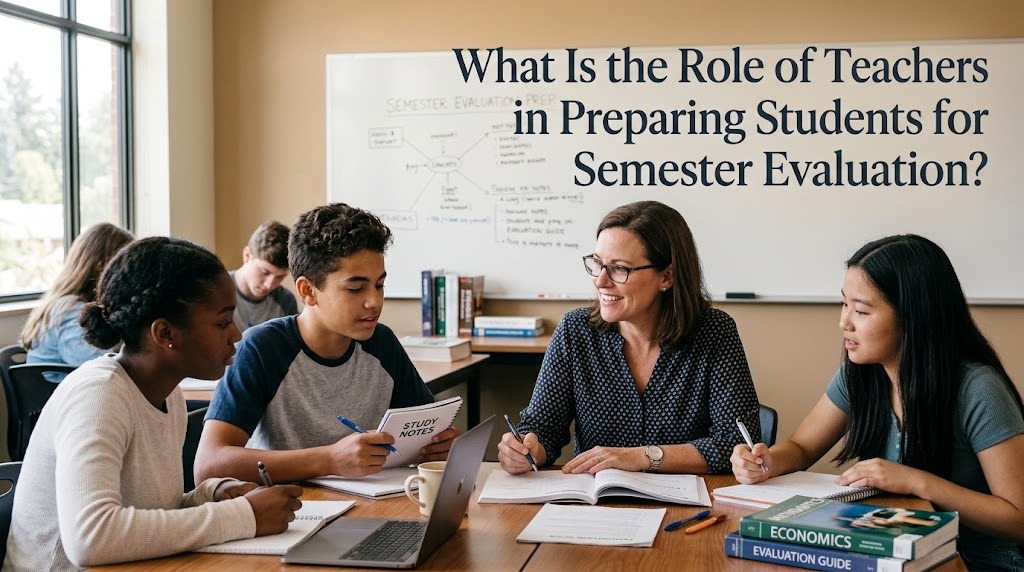
Teachers play an important role in preparing students for semester evaluation by guiding their learning, explaining difficult concepts, and helping them understand examination expectations. Semester evaluation is not only a way to measure academic achievement but also an opportunity to identify students' strengths and areas that need improvement. Through effective teaching methods, regular feedback, and appropriate learning activities, teachers can help students prepare more confidently. Their support also encourages students to develop good study habits, manage examination stress, and take greater responsibility for their learning. When teachers provide clear guidance and a supportive learning environment, students have a better opportunity to demonstrate their knowledge and improve their academic performance.
EXPLAINING LEARNING OBJECTIVES AND EXAMINATION MATERIAL
One of the main responsibilities of teachers is to explain the learning objectives and material that students need to understand before semester evaluation. Clear learning objectives help students recognize the knowledge and skills they are expected to demonstrate. Teachers can identify important topics, explain essential concepts, and clarify the relationship between lessons covered throughout the semester. This guidance allows students to organize their preparation instead of studying without a clear direction. Teachers should also explain the examination format, including the types of questions students may encounter, when this information is available.
Providing clear information does not mean giving students the answers to examination questions. Instead, teachers should help them understand the scope of learning and the standards they are expected to achieve. Study guides, topic summaries, and review materials can make the preparation process more organized. Teachers can also remind students to review previous lessons because semester evaluations often assess knowledge accumulated over an extended period. With clear expectations, students can prepare more efficiently and focus on developing genuine understanding.
PROVIDING EFFECTIVE LEARNING MATERIALS
Teachers support semester evaluation preparation by providing learning materials that match the curriculum and students' learning needs. These materials may include textbooks, class notes, worksheets, practice questions, presentations, and summaries of important concepts. Well-organized resources help students review lessons independently and revisit topics they find difficult. Teachers should ensure that the materials are accurate, relevant, and appropriate for the students' academic level. Providing different types of resources can also accommodate students who benefit from reading, visual explanations, or practical exercises.
In addition to distributing materials, teachers should explain how students can use them effectively. For example, students can use summaries to review key ideas and practice questions to check their understanding. Teachers may also recommend additional exercises for topics that require more practice. Digital learning platforms can make resources easier to access and allow students to review materials outside the classroom. By providing useful and accessible resources, teachers help students become more independent and better prepared for semester evaluation.
IDENTIFYING STUDENT STRENGTHS AND LEARNING DIFFICULTIES
Teachers are in a strong position to identify students' learning progress through classroom participation, assignments, quizzes, and other assessments conducted throughout the semester. These activities provide information about concepts students understand well and areas where they need additional support. By reviewing this information, teachers can recognize learning difficulties before the final evaluation takes place. Early identification is important because students have more time to correct misunderstandings and strengthen their knowledge. It also helps teachers determine which topics may require additional explanations or practice.
Different students may experience different challenges even when they study the same subject. Some may understand theoretical concepts but struggle with practical applications, while others may need more time to understand basic principles. Teachers can respond by offering individual guidance, additional exercises, or small-group discussions. They should also encourage students to ask questions without feeling embarrassed about making mistakes. This supportive approach helps students address learning gaps and prepare for examinations with a stronger understanding of the material.
TEACHING EFFECTIVE STUDY STRATEGIES
Another important role of teachers is helping students develop effective study strategies that improve understanding and memory retention. Teachers can demonstrate how to summarize lessons, create concept maps, organize notes, and divide large amounts of material into manageable sections. They can also encourage active recall, which involves remembering information without immediately looking at notes. Practice quizzes and spaced revision can help students identify knowledge gaps and strengthen long-term learning. These techniques are generally more effective when students apply them consistently rather than relying only on repeated reading.
Teachers should also explain how students can create realistic study schedules. Dividing preparation across several days can reduce last-minute pressure and allow enough time to review difficult subjects. Students can prioritize topics based on their level of understanding and the amount of material that needs attention. Teachers may provide sample schedules or demonstrate how to set specific learning goals. By teaching these practical skills, teachers help students prepare for semester evaluation while developing habits that remain useful throughout their education.
ORGANIZING PRACTICE TESTS AND REVIEW SESSIONS
Practice tests and review sessions give students opportunities to apply what they have learned before the actual semester evaluation. Teachers can prepare exercises that reflect the relevant learning objectives and include different question formats. These activities help students become familiar with examination instructions, question structures, and time limitations. Practice tests also allow teachers to observe how well students apply concepts independently. As a result, both teachers and students can identify areas that require further attention.
Review sessions provide opportunities to revisit important topics and clarify common misunderstandings. Teachers can discuss difficult questions, explain alternative problem-solving methods, and invite students to participate in group discussions. However, review sessions should focus on understanding concepts rather than simply memorizing predicted answers. Teachers can also use short quizzes to check whether students have understood the explanations. When practice activities are followed by meaningful discussion, students can learn from their mistakes and approach the actual examination more confidently.
GIVING CONSTRUCTIVE FEEDBACK AND GUIDANCE
Constructive feedback helps students understand their progress and recognize how they can improve before semester evaluation. Teachers should explain what students have done well, identify specific mistakes, and suggest practical steps for improvement. Feedback is more useful when it focuses on learning objectives and provides clear guidance rather than simply assigning a score. For example, a teacher may explain that a student understands the main concept but needs more practice applying it to unfamiliar problems. This information gives the student a clearer direction for future study.
Teachers should provide feedback in a timely and respectful manner so students can use it during their preparation. They can encourage students to review incorrect answers, correct their work, and attempt similar questions again. Recognizing improvement is also important because it helps students maintain motivation. Students should be encouraged to view mistakes as opportunities to learn rather than evidence of failure. With consistent guidance, they can develop greater confidence and take a more active role in improving their academic performance.
SUPPORTING STUDENT MOTIVATION AND EMOTIONAL WELL BEING
Semester evaluation can create pressure, especially for students who are worried about their grades or uncertain about their abilities. Teachers can help reduce this pressure by creating a supportive classroom environment where students feel comfortable asking questions and discussing difficulties. Clear explanations, realistic expectations, and encouragement can help students approach examinations with a more positive attitude. Teachers should also remind students that an evaluation measures performance at a particular time and does not define their entire potential. This perspective can help students focus on learning and improvement rather than fear of failure.
Teachers can support emotional well-being by teaching practical ways to manage examination stress. These may include breaking tasks into smaller goals, preparing early, taking short breaks, and maintaining healthy sleep habits. They can also encourage students to seek assistance when anxiety interferes with studying or daily activities. When appropriate, teachers may work with school counselors and families to provide additional support. By addressing both academic and emotional needs, teachers help students prepare for semester evaluation in a more balanced and productive way.
EVALUATING LEARNING PROGRESS AND IMPROVING TEACHING METHODS
Teachers also use semester evaluation to understand how effectively their teaching methods support student learning. Assessment results can reveal patterns, such as topics that many students understand well or concepts that remain difficult for a large part of the class. Teachers can analyze these patterns to determine whether certain lessons need clearer explanations, additional practice, or different teaching approaches. This process helps ensure that evaluation contributes to learning improvement rather than serving only as a grading activity. However, teachers should consider classroom performance, assignments, and other relevant evidence instead of relying exclusively on one examination score.
After reviewing assessment results, teachers can provide follow-up activities based on students' needs. Students who struggle with particular concepts may benefit from additional explanations, while those who demonstrate strong understanding can be challenged with more advanced applications. Teachers can also invite students to reflect on their preparation methods and identify strategies that worked well. This information can guide both future teaching plans and individual study routines. By using evaluation results thoughtfully, teachers can improve instruction and help students prepare more effectively for subsequent assessments.
CONCLUSION
Teachers play a vital role in preparing students for semester evaluation by explaining learning objectives, providing suitable materials, identifying learning difficulties, and teaching effective study strategies. They also organize practice tests, provide constructive feedback, and support students' motivation and emotional well-being. In addition, assessment results help teachers evaluate the effectiveness of their teaching methods and identify opportunities for improvement. Successful preparation requires cooperation between teachers and students, with teachers providing guidance and students taking responsibility for consistent learning. Through clear instruction, regular support, and meaningful evaluation, teachers can help students build confidence, strengthen their knowledge, and achieve better academic outcomes.
Recent Posts

Bagaimana Sistem SKS pada Program Kuliah... 22.11.2026/60 View

How Does Technology Make Daily Evaluation... 21.11.2026/87 View

Apa Strategi Menghadapi Kesenjangan antara Kompetensi... 21.11.2026/85 View

Mengapa Inventaris Aset Penting bagi Kelancaran... 21.11.2026/83 View

When Should Musicians Join a Record... 21.11.2026/87 View
