

What Is the Role of Urban Planning in Managing Population Density?
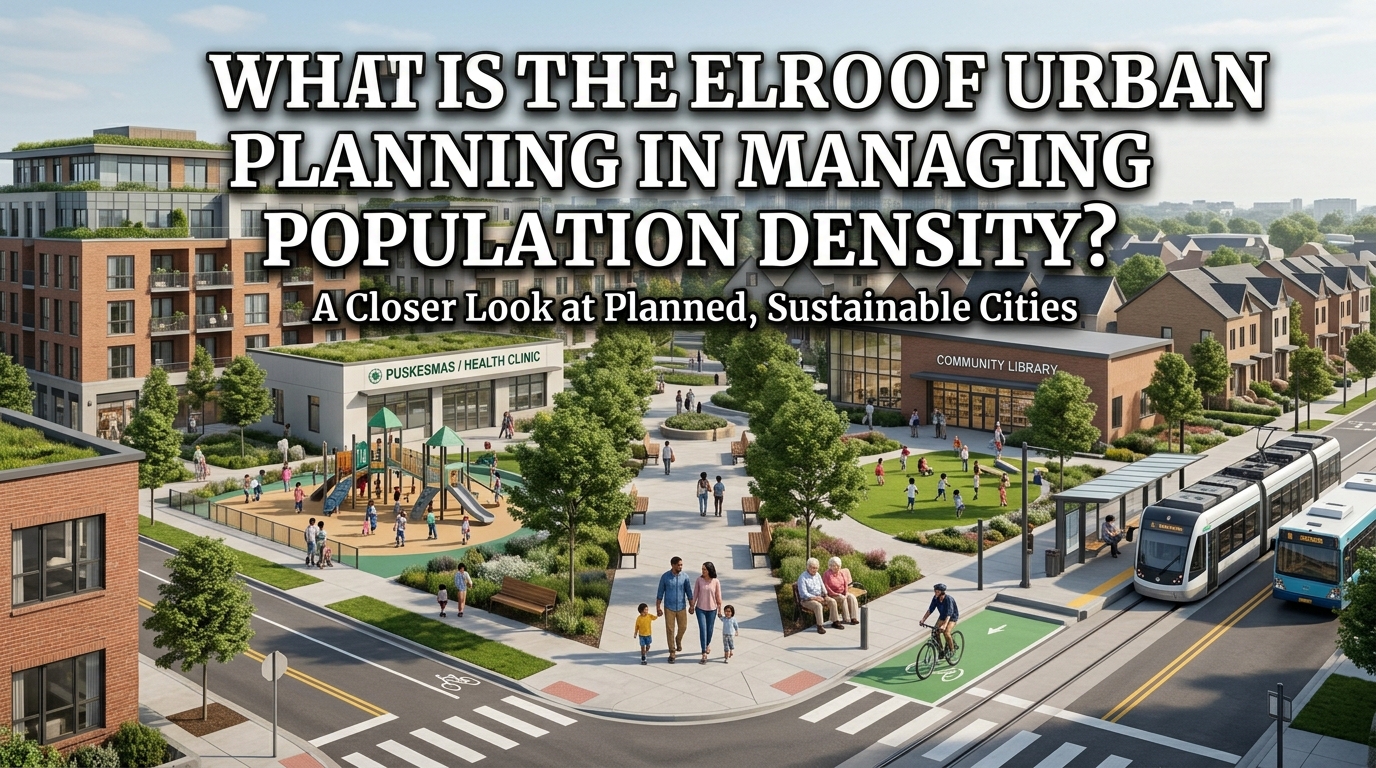
Population density is an important factor that influences how cities develop and how people experience their daily lives. As more people move to urban areas in search of employment, education, healthcare, and better living conditions, cities face increasing pressure on land, housing, transportation, and public facilities. Without proper management, high population density can lead to traffic congestion, overcrowded neighborhoods, housing shortages, pollution, and unequal access to essential services.
This is where urban planning plays an important role. Urban planning helps governments organize land use, develop infrastructure, distribute public facilities, and manage residential areas according to the needs of growing populations. Through effective planning, cities can accommodate more residents while maintaining a comfortable, safe, and sustainable environment. Understanding the role of urban planning in managing population density is essential for building cities that support both economic development and people's quality of life.
UNDERSTANDING URBAN PLANNING AND POPULATION DENSITY
Urban planning is the process of organizing and managing the physical development of cities and surrounding areas. It involves decisions about residential zones, commercial districts, industrial areas, transportation networks, public spaces, and essential infrastructure. The main purpose is to ensure that land and resources are used efficiently while meeting the needs of residents. Urban planning also considers long-term population growth, environmental protection, and economic development.
Meanwhile, population density refers to the number of people living within a specific unit of land area, usually measured in people per square kilometer. High population density means that many residents occupy a relatively small geographical area. When population growth is not supported by adequate infrastructure and public services, urban problems can become more serious. Therefore, urban planning helps manage population concentration by ensuring that development follows a structured and sustainable approach.
CONTROLLING LAND USE AND RESIDENTIAL DEVELOPMENT
One of the main roles of urban planning is land-use management. Governments and urban planners determine how different areas should be used, including residential neighborhoods, commercial centers, industrial zones, and public facilities. Proper land-use planning prevents uncontrolled construction and reduces conflicts between different activities. For example, industrial facilities can be located away from residential neighborhoods to minimize noise, pollution, and health risks.
Urban planning also helps organize residential development according to population needs. In densely populated areas, apartments and high-rise buildings can provide housing for more people without requiring excessive land expansion. However, these developments must be supported by sufficient roads, drainage systems, water supplies, and public facilities. Balanced residential planning helps prevent overcrowding while ensuring that housing remains safe, accessible, and suitable for different income groups.
IMPROVING PUBLIC TRANSPORTATION AND ROAD INFRASTRUCTURE
High population density often increases the number of people traveling to workplaces, schools, shopping centers, and other destinations. Without proper transportation planning, roads can become overcrowded and traffic congestion may increase. Urban planning addresses this problem by developing integrated transportation systems that connect residential areas with important destinations. These systems may include buses, commuter trains, metro services, pedestrian pathways, and cycling facilities.
An effective transportation network can reduce dependence on private vehicles and make daily travel more efficient. Public transportation also helps people access employment opportunities, education, and healthcare without needing to own a car or motorcycle. In addition, well-designed roads, intersections, and pedestrian facilities can improve traffic safety. Sustainable transportation planning is therefore essential for managing the mobility needs of densely populated cities.
PROVIDING ADEQUATE PUBLIC FACILITIES AND SERVICES
Urban planning ensures that public facilities are distributed according to the size and needs of the population. Schools, hospitals, healthcare centers, parks, government offices, and community facilities should be located where residents can access them conveniently. When population density increases, these facilities may need to be expanded or additional facilities may need to be constructed. Without proper planning, existing services can become overcrowded and less effective.
For example, a neighborhood with a rapidly growing population may require additional schools and healthcare centers to serve its residents. Governments must also ensure that clean water, electricity, sanitation, and waste collection systems have enough capacity. Equal access to public facilities is important because all residents, regardless of income or neighborhood, should have opportunities to receive essential services. Proper distribution can improve living standards and reduce pressure on already crowded urban centers.
DEVELOPING AFFORDABLE AND SUITABLE HOUSING
Housing is one of the most important issues associated with increasing population density. As more people move into cities, demand for residential properties often rises, which can increase rental costs and property prices. Urban planning helps address this challenge by identifying suitable residential areas and encouraging housing development based on population needs. Governments can also introduce affordable housing programs for low- and middle-income households.
Another important approach is developing mixed-use neighborhoods, where residential buildings are located near shops, offices, schools, and public transportation. This arrangement allows residents to reach many daily destinations without traveling long distances. It can also reduce transportation demand and encourage more efficient land use. However, housing projects must include adequate green spaces, sanitation, drainage, and other supporting facilities to ensure comfortable living conditions.
PROTECTING THE ENVIRONMENT AND GREEN SPACES
Managing population density is not only about accommodating more residents but also about protecting the urban environment. High population concentration can increase household waste, wastewater, energy consumption, and demand for natural resources. Without effective environmental planning, cities may experience air pollution, water contamination, flooding, and the loss of natural habitats. Urban planning helps reduce these risks by integrating environmental protection into development decisions.
One important strategy is preserving green spaces, such as public parks, urban forests, and recreational areas. These spaces help improve air quality, absorb rainwater, reduce urban temperatures, and provide places for physical activity. Planners can also encourage energy-efficient buildings, proper waste management, and sustainable drainage systems. By combining development with environmental protection, cities can accommodate growing populations without placing excessive pressure on natural resources.
REDUCING URBAN SPRAWL AND BALANCING POPULATION DISTRIBUTION
Urban sprawl occurs when cities expand outward into surrounding areas, often through low-density and poorly coordinated development. This pattern can consume agricultural land, increase commuting distances, and create greater dependence on private vehicles. Urban planning helps control urban sprawl by setting development boundaries, protecting important land areas, and encouraging more efficient use of existing urban spaces. Compact and well-connected neighborhoods can support a larger population with less unnecessary land expansion.
Urban planning can also encourage more balanced development between city centers, suburbs, and smaller towns. Governments can support economic activities and improve public facilities outside major metropolitan areas so that residents have more choices about where to live and work. This can reduce excessive population concentration in central urban areas. Balanced regional development helps distribute economic opportunities and infrastructure more evenly while reducing pressure on overcrowded cities.
USING TECHNOLOGY AND DATA FOR SMART URBAN PLANNING
Modern urban planning increasingly uses technology and population data to make better development decisions. Governments can analyze demographic information, housing demand, transportation patterns, land availability, and environmental conditions before approving major projects. Geographic Information Systems (GIS), for example, can help planners identify areas with high population concentration and determine where additional infrastructure is needed. Accurate data makes it easier to anticipate future challenges rather than simply responding to existing problems.
Technology can also improve the management of urban services. Smart traffic systems can monitor road conditions, while digital platforms can help governments manage public transportation, electricity, and water distribution. Population projections can provide useful estimates of future demand for schools, hospitals, and housing. However, technology must be supported by reliable data, adequate funding, and effective public policies to produce meaningful results. Community participation is also important because residents understand many of the practical challenges in their neighborhoods.
THE ROLE OF GOVERNMENT AND COMMUNITY PARTICIPATION
Successful urban planning requires cooperation between local governments, national authorities, private developers, experts, and local communities. Governments are responsible for preparing development plans, regulating land use, providing infrastructure, and ensuring that public facilities meet community needs. They must also monitor development projects to ensure that construction follows applicable regulations and environmental standards. Strong coordination helps prevent unplanned growth and inefficient use of public resources.
Community participation is equally important because urban development directly affects residents' daily lives. People should have opportunities to express their needs and provide feedback on housing projects, transportation systems, public spaces, and neighborhood improvements. Their involvement can help planners identify local problems and develop solutions that are more practical and inclusive. Transparent decision-making and public cooperation can make urban planning more effective and ensure that development benefits the wider community.
CONCLUSION
Urban planning plays an essential role in managing population density by organizing land use, improving transportation, providing adequate housing, and ensuring access to public facilities. It helps cities accommodate growing populations while reducing problems such as traffic congestion, overcrowding, pollution, and uncontrolled urban expansion. Through proper planning, governments can use available land and resources more efficiently.
However, successful population management requires more than constructing buildings and expanding infrastructure. Affordable housing, sustainable transportation, environmental protection, balanced regional development, and community participation must also become important priorities. With effective urban planning and long-term cooperation, densely populated cities can become more organized, inclusive, and comfortable places to live.
Recent Posts

Bagaimana Sistem SKS pada Program Kuliah... 22.11.2026/30 View

How Does Technology Make Daily Evaluation... 21.11.2026/66 View

Apa Strategi Menghadapi Kesenjangan antara Kompetensi... 21.11.2026/65 View

Mengapa Inventaris Aset Penting bagi Kelancaran... 21.11.2026/64 View

When Should Musicians Join a Record... 21.11.2026/64 View
