

What Is Trans Pelajar and Who Can Ride It?
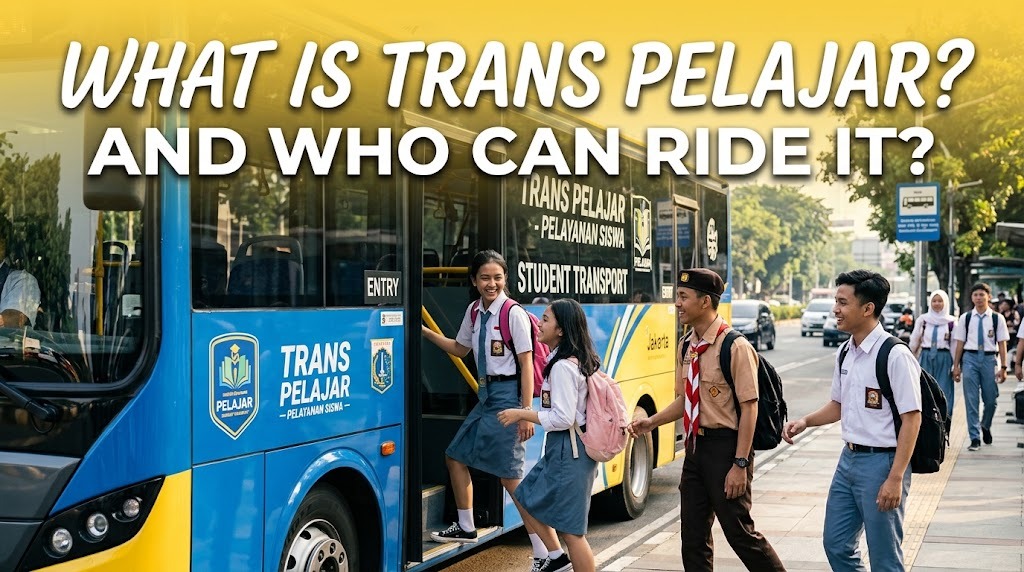
Getting to school safely and on time is a daily challenge for many students, especially those who live far from campus. Some ride motorbikes before they are old enough to hold a license, while others depend on expensive rides from parents or online drivers. Trans Pelajar is one answer to this problem. It is a public transport service designed around the needs of students. This article explains what it is, why it exists, who can ride it, and what you should prepare before boarding.
WHAT IS TRANS PELAJAR
Trans Pelajar is a transport service that helps students travel between home and school. In Indonesian, "pelajar" means student, so the name simply points to its target passengers. The service usually runs as buses or other mass transit vehicles managed by a local government or an appointed operator. Its main goal is to provide safe, organized, and affordable travel for students.
The name and format of the service can differ from one city or region to another. Some areas run it as a dedicated student bus, while others offer student fares on existing public transport. Routes typically connect residential areas, schools, and major transit points. Schedules are usually set around school start and finish times, so students are less likely to be late or stranded.
WHY THIS SERVICE EXISTS
One of the biggest reasons is student safety on the road. Many students ride motorbikes without a license or without proper supervision, which raises the risk of accidents. A dedicated student service gives them a safer option, driven by trained operators on fixed routes. This also reassures parents who worry about their children traveling alone.
Another reason is cost. Daily transport costs add up quickly, especially for families with more than one child in school. Student services often offer low fares, and in some regions they are subsidized or even free. Local governments also hope the service will reduce traffic jams around schools during rush hour, since one bus can replace dozens of private vehicles.
WHO CAN RIDE TRANS PELAJAR
The main passengers are active students from elementary, junior high, and senior high or vocational school. In some areas, university students may also qualify for the same service or for similar student fares. Riders are usually asked to show proof of student status, such as a student ID card or a school uniform. This helps operators make sure the special fare or subsidy goes to the right people.
Rules about who can ride vary by region, so there is no single national standard. Some services only serve students who live or study in a specific city, while others are open to students from nearby areas. A few services also allow regular passengers, seniors, or people with disabilities, usually under different fares or conditions. For this reason, it is wise to check the official rules from the local transportation agency before you plan to ride.
REQUIREMENTS AND DOCUMENTS TO PREPARE
The most common requirement is a valid student ID card. This card shows that you are currently enrolled and is often used to receive student pricing or free rides. Some schools also issue a certificate or a digital ID that works the same way. It is a good habit to carry your ID every day, because operators may refuse boarding without proof.
Some services ask students to register first, either through their school or through an official app. After registration, you may receive a special card or a digital code to use when paying. Other services simply check your ID on the bus and collect the fare there. The safest approach is to ask your school or the local transport office about the current process, since procedures can change.
FARES, ROUTES, AND SCHEDULES
Fares for student transport are usually lower than regular public transport. In some places, students pay a small fixed amount per trip, while in others the service is fully subsidized for a period of time. Payment methods can include cash, prepaid cards, or mobile apps, depending on the local system. Since subsidies and prices can change from year to year, always check the latest fare information from official channels.
Before your first ride, learn the route, the stop locations, and the operating hours. Many local transport agencies publish this information on their websites, social media pages, or at the stops themselves. Try to arrive at the stop a few minutes early so you do not miss the bus. Knowing your route in advance also helps you plan a backup option in case of delays.
TIPS FOR RIDING SAFELY AND COMFORTABLY
Good manners make every trip smoother for everyone. Line up politely, avoid pushing, and offer your seat to elderly passengers, pregnant women, or people with disabilities. Keep your bag close to you so it does not block the aisle. Avoid standing near the door while the vehicle is moving, and hold on to a handrail whenever you stand.
Parents can also help by walking the route with their child before the first solo trip. Make sure your child carries a student ID, payment method, and an emergency contact number. Remind them to keep valuables such as phones and wallets safe. If something goes wrong, students should tell the driver, staff, or a trusted adult right away.
CONCLUSION
Trans Pelajar is a student-focused transport service that aims to make school travel safer, cheaper, and more reliable. It is mainly meant for active students, who usually need to show a student ID to ride. However, the exact rules, fares, and routes differ by region, so local information is always the best guide. Understanding the basics helps students and parents use the service with confidence.
If you plan to use it, start by checking the official rules, routes, and schedules in your area. Prepare your documents, learn the nearest stops, and arrive early. By riding responsibly, you help keep the service safe and pleasant for everyone. In the end, a reliable ride to school gives students more time and energy to focus on learning.
Recent Posts

Bagaimana Sistem SKS pada Program Kuliah... 22.11.2026/54 View

How Does Technology Make Daily Evaluation... 21.11.2026/83 View

Apa Strategi Menghadapi Kesenjangan antara Kompetensi... 21.11.2026/82 View

Mengapa Inventaris Aset Penting bagi Kelancaran... 21.11.2026/78 View

When Should Musicians Join a Record... 21.11.2026/84 View
