

What Makes a Teacher’s Teaching Method More Memorable?
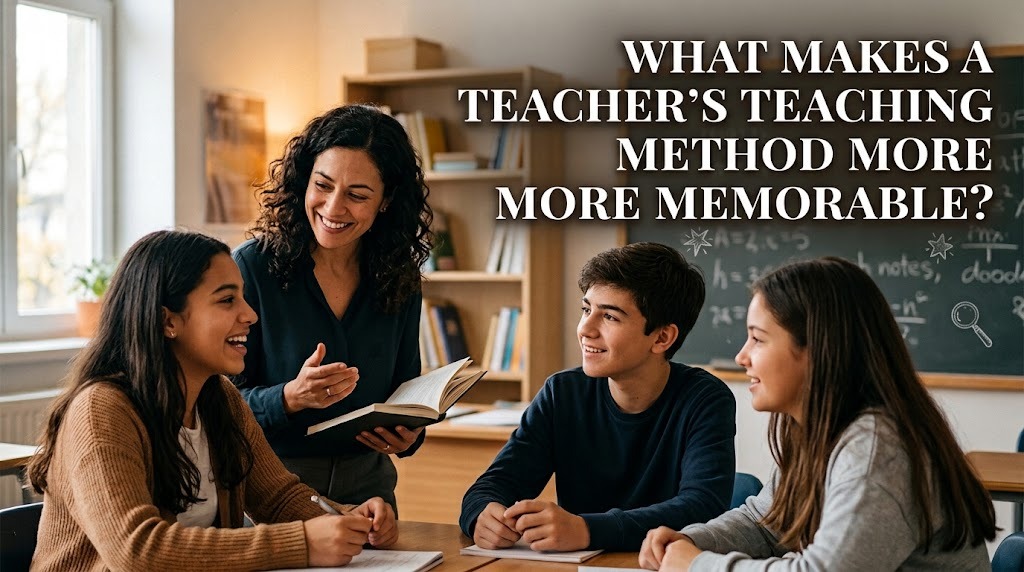
A memorable teaching method helps students understand lessons, retain important information, and apply their knowledge in different situations. In modern education, students often encounter large amounts of information, making it important for teachers to present lessons in ways that capture attention and encourage active participation. Effective teaching involves more than delivering explanations; it also requires creating meaningful experiences that connect new knowledge with students' existing understanding. Through creative activities, clear communication, practical examples, and supportive classroom interactions, teachers can make learning more engaging and easier to remember. These approaches help students develop a deeper understanding of their subjects and maintain their interest in learning.
CONNECT LESSONS WITH REAL-LIFE EXPERIENCES
Students often remember information more easily when they understand how it relates to everyday situations. Teachers can use familiar examples, practical demonstrations, and realistic problems to explain abstract concepts. For instance, a business teacher can explain marketing principles through examples of products students encounter in shops or on social media. These connections help students recognize the practical value of what they learn in class. By relating academic knowledge to real experiences, teachers make lessons more relevant and meaningful.
USE CREATIVE AND INTERACTIVE TEACHING METHODS
Creative teaching methods can make lessons more engaging by encouraging students to participate instead of simply listening. Teachers may use educational games, quizzes, role-playing, group discussions, and classroom simulations to introduce or reinforce important concepts. These activities give students opportunities to apply information, exchange ideas, and receive immediate feedback. Interactive lessons can also reveal misunderstandings that might remain unnoticed during traditional lectures. When students actively participate in the learning process, they gain more opportunities to understand and remember key concepts.
EXPLAIN COMPLEX MATERIAL CLEARLY
A memorable lesson begins with an explanation that students can understand. Teachers should organize information logically, introduce essential concepts before advanced material, and avoid unnecessary jargon when simpler language is more effective. Visual aids, diagrams, comparisons, and step-by-step demonstrations can make difficult subjects easier to follow. Teachers can also pause to check understanding before moving to the next topic. Clear explanations help students build a strong foundation and reduce confusion that might interfere with later learning.
ENCOURAGE STUDENT PARTICIPATION
Students are more likely to engage with lessons when they have opportunities to ask questions, express opinions, and contribute ideas. Teachers can encourage participation through open-ended questions, short presentations, collaborative tasks, and discussions that welcome different perspectives. They should create a classroom atmosphere where students feel comfortable making mistakes and learning from feedback. Participation allows teachers to discover what students understand and where additional explanations may be necessary. It also helps learners develop communication skills and take greater responsibility for their education.
USE STORIES AND MEANINGFUL EXAMPLES
Stories can make educational content easier to follow by placing information within a clear and relatable context. Teachers can introduce historical events through personal experiences, explain scientific discoveries through stories of investigation, or illustrate business concepts with examples of real challenges. A well-chosen story gives students a framework for understanding how different ideas connect. Teachers should ensure that stories remain accurate and support the lesson's objectives. When information is presented through meaningful examples, students may find it easier to recall the central ideas later.
COMBINE DIFFERENT LEARNING RESOURCES
Using a variety of learning resources can help teachers explain concepts from multiple perspectives. Textbooks, diagrams, videos, demonstrations, presentations, and digital learning platforms can complement one another when selected carefully. For example, a teacher might introduce a concept verbally, demonstrate it visually, and then ask students to apply it in a short activity. This combination can help students who need additional ways to understand the material. However, resources should be chosen according to the lesson's purpose rather than used simply to make the classroom look more modern.
PROVIDE OPPORTUNITIES FOR PRACTICE AND REVIEW
Students generally need more than one exposure to new information to develop lasting understanding. Teachers can strengthen learning through practice questions, short review sessions, quizzes, and activities that require students to recall previous lessons. Revisiting important ideas at spaced intervals can help students retain information more effectively than relying only on a single explanation. Teachers can also ask students to summarize a lesson in their own words or explain a concept to a classmate. These activities help learners identify knowledge gaps and strengthen their understanding over time.
GIVE CONSTRUCTIVE FEEDBACK
Feedback helps students understand whether their approach is effective and what they should do next. Teachers can make feedback more useful by identifying specific strengths, explaining errors, and suggesting practical improvements. Instead of simply telling a student that an answer is incorrect, a teacher can explain the reasoning behind the correction and provide an example. Timely feedback also gives students an opportunity to apply suggestions while the lesson remains familiar. This process turns mistakes into learning opportunities and helps students develop stronger academic skills.
BUILD POSITIVE TEACHER-STUDENT RELATIONSHIPS
The way teachers interact with students can influence how learners experience and remember their lessons. Teachers who demonstrate respect, patience, fairness, and genuine interest can create an environment where students feel comfortable seeking help. A supportive relationship makes it easier for students to admit confusion and participate without excessive fear of criticism. Teachers can also acknowledge student progress and encourage learners who need additional support. When students feel respected, they may become more engaged with both the lesson and the learning process.
ADAPT TEACHING METHODS TO STUDENT NEEDS
A teaching method that works well for one group may not be equally effective for another. Teachers should consider students' existing knowledge, interests, abilities, and learning goals when planning lessons. They can adjust the pace of instruction, provide additional examples, offer different activities, or introduce more challenging tasks when appropriate. Checking understanding throughout the lesson helps teachers decide when to review material or move forward. Adapting instruction makes learning more responsive and gives students better opportunities to understand and remember what they study.
CONCLUSION
A teacher's teaching method becomes more memorable when it combines clear explanations, real-life connections, active participation, creative activities, and meaningful practice. Constructive feedback and positive classroom relationships further support students' confidence and engagement. Teachers should also review lessons regularly and adapt their approaches to students' needs rather than relying on a single method for every situation. The goal is not simply to make lessons entertaining but to help students understand, retain, and apply knowledge. Through thoughtful teaching strategies, educators can create learning experiences that remain useful long after the lesson ends.
Recent Posts

Bagaimana Sistem SKS pada Program Kuliah... 22.11.2026/57 View

How Does Technology Make Daily Evaluation... 21.11.2026/86 View

Apa Strategi Menghadapi Kesenjangan antara Kompetensi... 21.11.2026/84 View

Mengapa Inventaris Aset Penting bagi Kelancaran... 21.11.2026/82 View

When Should Musicians Join a Record... 21.11.2026/86 View
