

What Makes A Vocational Curriculum Truly Responsive To Market Needs?
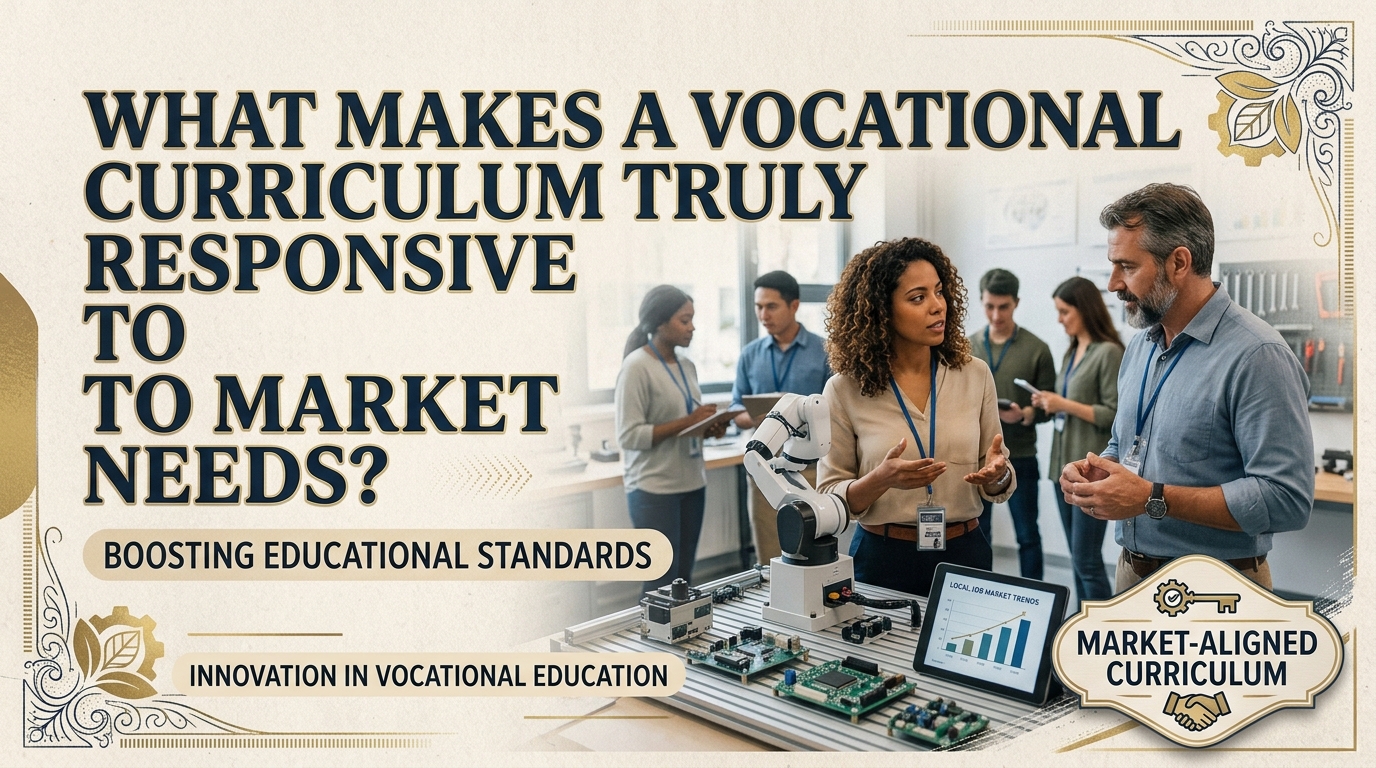
The rapidly changing global economy requires educational frameworks to remain synchronized with real-world employment demands. High schools, polytechnics, and technical academies face continuous pressure to update their learning modules. Building a market-responsive vocational curriculum bridges the gap between traditional academic instruction and dynamic corporate expectations. When academic institutions align their training programs with actual industrial needs, graduates secure rewarding employment opportunities quickly. However, rigid educational structures often struggle to keep pace with fast-evolving technological trends.
DYNAMIC INDUSTRY COLLABORATION AND REAL TIME FEEDBACK
Creating an effective educational model requires continuous collaboration with leading corporate enterprises and private sector employers. Implementing active industry partnerships enables corporate specialists to participate directly in syllabus design and practical module evaluations. Industry leaders provide real-time updates regarding emerging technologies, operational software, and essential workplace competencies.
Consequently, educational institutions can eliminate obsolete learning materials and introduce updated technical skills immediately. Routine feedback mechanisms ensure that classroom instruction accurately reflects current commercial workflows and industrial standards. This collaborative strategy ensures students acquire relevant practical knowledge requested by hiring managers worldwide.
FLEXIBLE MODULAR LEARNING AND INDUSTRY CERTIFICATIONS
Structuring study programs into adaptable modular units allows institutions to update specific courses without overhauling entire educational systems. Introducing modular skill credentials enables students to earn recognized certifications in specialized fields like automation, cloud computing, or digital management. This targeted approach gives graduates a distinct competitive advantage when entering the job market.
Furthermore, incorporating interactive digital simulation tools and online learning platforms enhances student engagement during practical training sessions. Hybrid learning options allow schools to deliver newly developed technical modules rapidly and cost-effectively. As a result, students acquire both strong foundational knowledge and practical operational capabilities.
EMPHASIZING HANDS ON WORKPLACE PRACTICE AND APPRENTICESHIPS
Theoretical instruction must be paired with extensive physical practice to build true technical confidence in young learners. Prioritizing practical workplace training allows students to master professional machinery, tools, and industry-standard software applications directly. Experiencing real-world trial and error during practical exercises reinforces learning far better than passive classroom lectures.
Additionally, structured apprenticeship initiatives enable students to split time between school laboratories and real corporate working environments. Direct exposure to corporate workplace cultures helps learners develop essential soft skills alongside practical technical mastery. Strong apprenticeship links guarantee that graduates enter the workforce fully prepared for immediate productivity.
CONTINUOUS FACULTY DEVELOPMENT AND FACILITY UPGRADES
An adaptable educational system depends heavily on well-trained teaching staff who understand current industrial practices thoroughly. Vocational centers must prioritize continuous teacher upskilling to ensure instructors remain competent in using modern tools and advanced equipment. Knowledgeable educators effectively guide students through complex practical exercises and rigorous technical assessments.
Simultaneously, educational institutions must continuously upgrade laboratory facilities, workshop tools, and professional software licenses. Practicing on state-of-the-art machinery ensures students gain authentic operational experience during their studies. Investing in faculty expertise and facility infrastructure guarantees high instructional quality and long-term graduate success.
CONCLUSION
A vocational curriculum becomes truly responsive to market needs through active industry collaboration, modular certifications, and hands-on training. Upgrading campus infrastructure and prioritizing continuous teacher development creates a resilient, future-ready educational system. While updating facilities and study plans requires sustained effort and investment, the long-term benefits for students and employers are immense. Educational leaders must act decisively today to modernize technical learning programs and eliminate workforce skill mismatches. Empowering graduates with market-aligned skills ensures long-term economic growth and professional success worldwide.
Recent Posts

Bagaimana Sistem SKS pada Program Kuliah... 22.11.2026/54 View

How Does Technology Make Daily Evaluation... 21.11.2026/83 View

Apa Strategi Menghadapi Kesenjangan antara Kompetensi... 21.11.2026/82 View

Mengapa Inventaris Aset Penting bagi Kelancaran... 21.11.2026/78 View

When Should Musicians Join a Record... 21.11.2026/84 View
