

What Makes Javelin Throw Require High Accuracy?
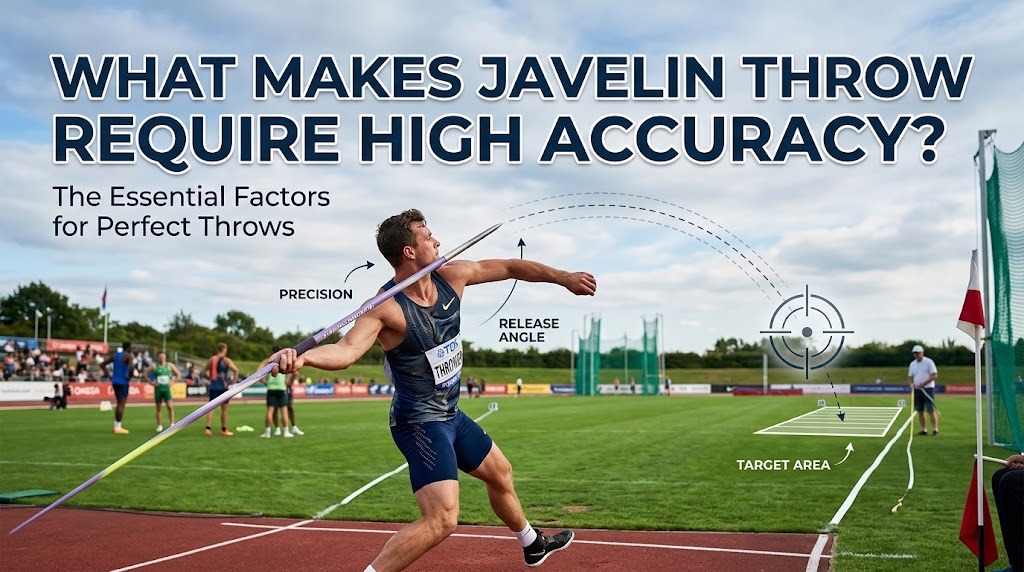
Javelin throw is a field event in athletics that requires athletes to throw a spear-shaped implement as far as possible within a designated landing sector. Although strength and speed are important, accuracy is equally essential because the javelin must travel in the correct direction and land within the legal sector. Athletes need to coordinate their approach run, throwing movement, release angle, and body position to achieve an effective throw. Understanding these factors helps athletes improve their performance and maintain consistency during competitions.
UNDERSTANDING ACCURACY IN JAVELIN THROW
Accuracy in javelin throw refers to the ability to direct the implement toward the legal landing sector while maintaining a controlled throwing movement. A powerful throw may still be invalid if the javelin lands outside the sector or the athlete violates competition rules. Athletes must therefore combine throwing power with directional control. Consistent practice helps them develop the coordination needed to achieve valid and effective throws.
THE IMPORTANCE OF THROWING DIRECTION
Throwing direction determines whether the javelin travels toward the designated landing area. Athletes must align their bodies and throwing arms appropriately before releasing the implement. If the throwing direction is incorrect, the javelin may land outside the sector, reducing the chance of recording a valid result. Practicing alignment and controlled throws helps athletes improve directional accuracy.
THE ROLE OF THE APPROACH RUN
The approach run allows javelin throwers to build momentum before releasing the implement. During this phase, athletes accelerate while carrying the javelin in a controlled position. They must maintain their running rhythm and prepare their bodies for the final throwing action. If the approach becomes irregular, it can disrupt balance, timing, and throwing direction.
RELEASE ANGLE AND THROWING DISTANCE
The release angle influences the trajectory of the javelin after it leaves the athlete’s hand. An angle that is too low may cause the implement to travel close to the ground, while an excessively high angle may reduce the distance achieved under real throwing conditions. The most effective release angle depends on factors such as release speed, wind, and the javelin’s aerodynamic properties. Athletes need to practice finding a release angle that supports both distance and a controlled flight path.
THE IMPORTANCE OF RELEASE SPEED
Release speed is a major factor affecting how far the javelin travels. Athletes generate speed through coordinated movements involving the legs, hips, torso, shoulder, and throwing arm. Proper sequencing helps transfer momentum from the approach into the implement. However, increasing release speed without maintaining control can lead to inconsistent direction or poor throwing mechanics.
BODY COORDINATION AND BALANCE
Javelin throw requires the whole body to work together during the throwing action. The legs and hips help generate momentum, while the torso and arm contribute to transferring force into the javelin. Balance allows athletes to control these movements and maintain a stable throwing position. Good coordination improves the consistency of each attempt and helps athletes avoid unnecessary movements that may affect accuracy.
WIND AND ENVIRONMENTAL CONDITIONS
Wind can influence the flight of a javelin because the implement is relatively light and designed to move through the air. A headwind or tailwind may affect its trajectory and distance, depending on the conditions and release characteristics. Athletes must learn how environmental factors influence their throws without making sudden technical changes that reduce control. Coaches can help them adapt their approach and release technique during different weather conditions.
TRAINING METHODS TO IMPROVE ACCURACY
Athletes can develop accuracy through technical drills, controlled throws, and consistent practice. They may begin with lighter implements or short-distance drills to focus on grip, body alignment, and release direction. Video analysis can help identify changes in throwing mechanics, while repeated measurements provide feedback on consistency. As technique improves, athletes can gradually increase throwing intensity while maintaining proper form.
COMMON MISTAKES THAT REDUCE ACCURACY
Common mistakes include releasing the javelin at an inconsistent angle, losing balance during the final steps, and failing to coordinate the throwing arm with the rest of the body. Athletes may also focus too much on throwing as hard as possible and neglect directional control. These problems can be addressed by practicing the approach and release separately before combining them into a complete throw. Regular coaching and constructive feedback help athletes correct errors and develop reliable technique.
SAFETY AND COMPETITION RULES
Safety is especially important in javelin throw because the implement has a pointed tip and can cause serious injuries. Athletes should throw only when the landing sector is clear and follow the instructions of coaches or officials. They must also remain behind the designated throwing boundary and comply with the rules governing valid attempts. Practicing in an appropriate facility with proper supervision helps protect athletes and other people nearby.
CONCLUSION
Javelin throw requires high accuracy because athletes must direct the implement into the legal landing sector while generating enough speed and power to achieve a long throw. Throwing direction, release angle, approach rhythm, body coordination, and environmental conditions all influence performance. Through consistent technical practice and careful attention to safety, athletes can improve their throwing control and achieve more reliable results. Combining accuracy with strength and speed is essential for successful javelin throwing.
Recent Posts

Bagaimana Sistem SKS pada Program Kuliah... 22.11.2026/50 View

How Does Technology Make Daily Evaluation... 21.11.2026/80 View

Apa Strategi Menghadapi Kesenjangan antara Kompetensi... 21.11.2026/79 View

Mengapa Inventaris Aset Penting bagi Kelancaran... 21.11.2026/75 View

When Should Musicians Join a Record... 21.11.2026/80 View
