

What Makes Robotic Drilling Safer in Deep Mines?
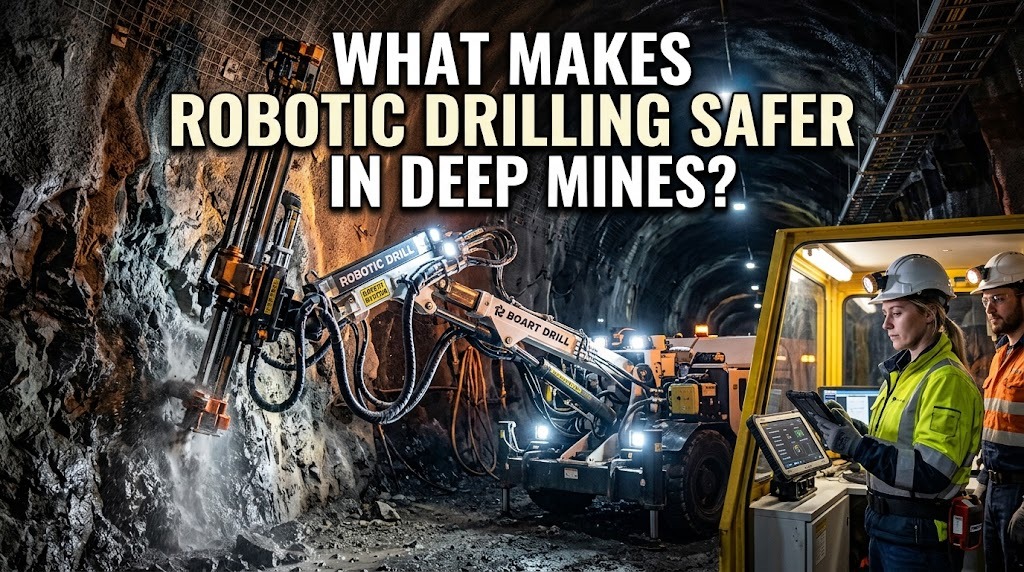
Deep mining exposes workers to hazardous conditions, including rock instability, extreme temperatures, dust, harmful gases, and limited escape routes. Traditional drilling operations can increase these risks when workers must operate heavy machinery close to unstable rock formations. Robotic drilling systems help improve safety by allowing operators to control equipment remotely, automate repetitive tasks, and monitor underground conditions. When combined with effective safety procedures, these technologies can reduce human exposure to dangerous environments.
REMOTE-CONTROLLED DRILLING OPERATIONS
Remote-controlled drilling allows operators to manage drilling equipment from a protected control room or another location away from the immediate work area. This reduces the need for workers to remain near drilling machinery, unstable rock surfaces, or areas with potentially hazardous conditions.
Operators can adjust drilling parameters, monitor equipment status, and stop operations when unusual conditions arise. Reliable communication systems are essential because signal interruptions may delay commands or reduce visibility into underground operations. Backup controls and clearly defined emergency procedures help manage these risks.
AUTOMATED DRILLING SYSTEMS
Automated drilling systems use programmed sequences and control software to perform tasks such as positioning drill heads, adjusting feed rates, and maintaining drilling parameters. Automation reduces the need for constant manual intervention and helps maintain consistent operating procedures.
Robots can also repeat drilling patterns with high precision, reducing errors caused by fatigue or inconsistent manual operation. However, automated systems must be configured for the specific geological conditions and drilling equipment. Human supervision remains necessary to respond to unexpected changes that the system cannot handle safely.
REAL-TIME ENVIRONMENTAL MONITORING
Deep mines can contain hazardous gases, airborne dust, high temperatures, and poor ventilation. Robotic drilling equipment can work alongside environmental sensors that measure conditions such as gas concentrations, temperature, and air quality.
When readings exceed predefined safety limits, monitoring systems can trigger alarms or initiate protective responses. This information helps mine operators decide whether drilling should continue, pause, or move to a safer location. Sensors must be calibrated and maintained regularly to ensure that readings remain reliable.
DETECTING GEOLOGICAL INSTABILITY
Rock movement, fractures, and unexpected changes in geological structure can create serious hazards during drilling. Robotic systems can incorporate cameras, vibration sensors, pressure measurements, and other instruments to help identify changing conditions.
Data from these sensors may reveal unusual vibrations, unexpected resistance, or changes in drilling performance. Such signals can prompt further inspection before a problem becomes more serious. Although these technologies improve situational awareness, they cannot guarantee that every rockfall or geological failure will be detected in advance.
PRECISION CONTROL AND COLLISION PREVENTION
Accurate positioning helps robotic drilling systems keep drill heads aligned with planned locations and avoid unintended contact with nearby equipment. Position sensors, digital mine maps, and control algorithms can help maintain safe operating distances.
Collision detection systems may also identify nearby machinery or personnel and stop movement when necessary. These protections are particularly important in narrow underground tunnels where space is limited. Safety zones, movement restrictions, and reliable personnel-detection systems should complement automated controls.
REDUCING HUMAN EXPOSURE TO PHYSICAL HAZARDS
Drilling operations can expose workers to noise, vibration, dust, heavy lifting, and repetitive physical activity. Robotic equipment can perform selected tasks that would otherwise require workers to remain close to these hazards.
Reducing direct exposure can lower the likelihood of certain occupational injuries and improve working conditions. However, remote operation does not eliminate every risk. Workers may still need to inspect, repair, transport, or recover equipment, so appropriate protective equipment and safe maintenance procedures remain essential.
PREDICTIVE MAINTENANCE AND EQUIPMENT RELIABILITY
Unexpected equipment failures can create dangerous conditions underground. Robotic drilling systems can monitor motor temperatures, vibration levels, hydraulic pressure, and other operating indicators to identify possible signs of deterioration.
Predictive maintenance software analyzes these measurements to estimate when components may require inspection or replacement. Addressing developing faults before equipment failure can reduce unplanned shutdowns and help prevent secondary hazards. Maintenance recommendations should still be verified by qualified technicians.
EMERGENCY SHUTDOWN AND FAIL-SAFE SYSTEMS
A safe robotic drilling system needs reliable mechanisms for responding to equipment faults, communication loss, excessive temperatures, and other emergencies. Emergency stops, automatic shutdown procedures, and interlocks can prevent certain unsafe actions when dangerous conditions are detected.
Fail-safe behavior should be designed so that loss of power or communication does not cause uncontrolled movement. Operators must understand how to stop the equipment, isolate energy sources, and recover the system safely. Regular emergency drills and system testing are necessary to verify that protective mechanisms work as intended.
CONCLUSION
Robotic drilling becomes safer in deep mines through remote operation, automation, environmental monitoring, geological sensing, precision control, and predictive maintenance. These technologies can reduce workers' exposure to hazardous conditions while improving drilling consistency and equipment reliability. Nevertheless, effective protection requires human supervision, verified safety systems, regular maintenance, and procedures designed for the specific risks of each mine.
Recent Posts

Bagaimana Sistem SKS pada Program Kuliah... 22.11.2026/49 View

How Does Technology Make Daily Evaluation... 21.11.2026/77 View

Apa Strategi Menghadapi Kesenjangan antara Kompetensi... 21.11.2026/78 View

Mengapa Inventaris Aset Penting bagi Kelancaran... 21.11.2026/74 View

When Should Musicians Join a Record... 21.11.2026/79 View
