

What Makes Science Olympiad Training Effective for Young Learners?
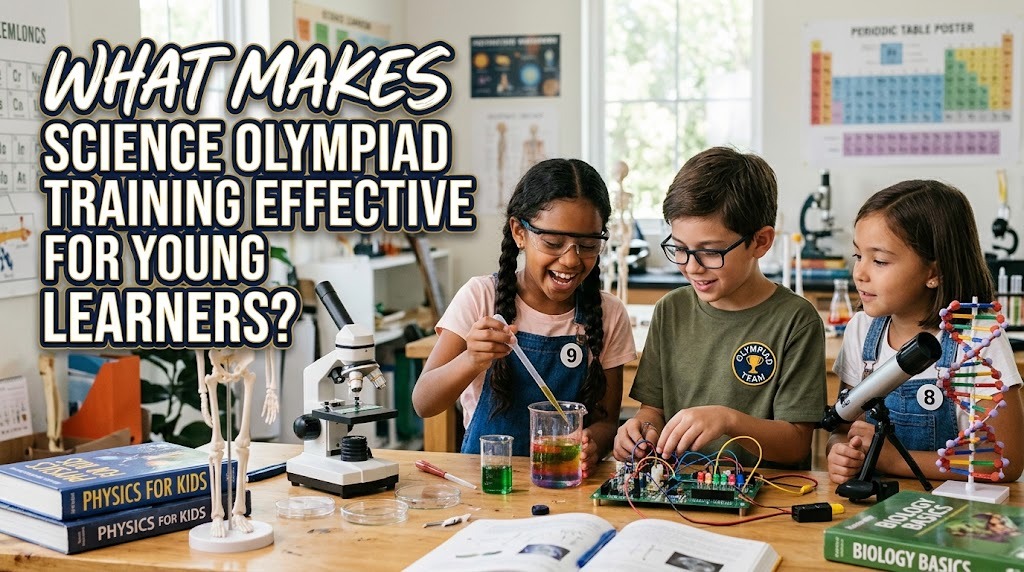
Science Olympiad training helps young learners develop scientific knowledge, strengthen problem-solving abilities, and explore their curiosity about the world. Through structured learning activities, students can understand complex concepts and practice applying them to different situations. However, effective training requires more than completing difficult questions or memorizing scientific theories. It should provide engaging lessons, appropriate challenges, consistent guidance, and opportunities for practical exploration. When designed according to students' abilities and learning needs, Science Olympiad training can support both academic development and personal growth.
BUILDING STRONG SCIENTIFIC FOUNDATIONS
A strong understanding of basic scientific concepts is the foundation of effective Olympiad training. Young learners need to understand essential principles before studying more advanced topics. For example, students preparing for biology competitions should first become familiar with cells, living organisms, and basic biological processes. In physics, understanding motion, force, and energy can help them approach more complicated problems. When fundamental concepts are taught clearly, students can connect new information with what they already know and develop a deeper understanding of science.
USING AGE-APPROPRIATE LEARNING METHODS
Training methods should match students' ages, abilities, and levels of understanding. Young learners may find abstract scientific theories difficult without clear examples or practical demonstrations. Teachers can introduce challenging concepts through simple explanations, illustrations, experiments, and everyday situations. Gradually increasing the difficulty of learning materials allows students to develop their abilities without feeling overwhelmed. Age-appropriate instruction also helps maintain interest and encourages students to participate actively.
ENCOURAGING ACTIVE LEARNING AND EXPERIMENTS
Active learning makes Science Olympiad training more engaging because students participate directly in the learning process. Instead of only listening to explanations, they can conduct simple experiments, observe scientific phenomena, and discuss their findings. Practical activities help connect theoretical knowledge with real-world applications. For example, students can investigate how temperature affects certain materials or observe how plants respond to different environmental conditions. These experiences encourage curiosity and help learners understand scientific concepts through direct observation.
DEVELOPING CRITICAL THINKING AND PROBLEM-SOLVING SKILLS
Effective Science Olympiad training encourages students to analyze information and develop logical solutions. Competition questions often require participants to understand unfamiliar situations rather than simply recall memorized facts. Teachers can help students develop critical thinking by asking questions that require explanations, comparisons, and evidence-based conclusions. Breaking complex problems into smaller steps also makes them easier to understand. Regular practice helps young learners become more confident when facing challenging academic tasks.
PROVIDING GUIDANCE FROM EXPERIENCED TEACHERS
Teachers and mentors play an important role in helping students prepare for Science Olympiad competitions. They can explain difficult concepts, recommend appropriate learning materials, and identify areas that require improvement. Experienced mentors can also introduce students to different problem-solving methods and provide feedback on their progress. Effective guidance should encourage students to think independently rather than depend entirely on ready-made answers. A supportive learning environment allows young participants to ask questions and develop their abilities at a comfortable pace.
CREATING A CONSISTENT TRAINING SCHEDULE
Consistency is essential for developing scientific knowledge and competition skills. A structured training schedule helps students organize their study time and review important topics regularly. Training sessions can include concept discussions, problem-solving exercises, practical activities, and evaluation periods. However, the schedule should remain realistic and allow sufficient time for school assignments, rest, and other activities. Balanced preparation helps students maintain motivation without experiencing unnecessary academic pressure.
USING PRACTICE QUESTIONS AND MOCK COMPETITIONS
Practice questions help students become familiar with the structure and difficulty of Science Olympiad examinations. By working through different problems, learners can identify topics they understand well and areas that need additional attention. Mock competitions provide an opportunity to practice under time limits and experience conditions similar to an actual examination. After each session, students should review their answers and understand the reasoning behind their mistakes. This process makes training more focused and helps measure progress over time.
PROMOTING COLLABORATION AND DISCUSSION
Group learning can make Science Olympiad preparation more interactive and meaningful. Students can discuss difficult questions, exchange ideas, and explain scientific concepts to one another. Listening to different perspectives helps them understand that a problem may have more than one possible approach. Team activities also develop communication, cooperation, and respect for others' opinions. Although individual practice remains important, collaboration can provide additional opportunities for learning and intellectual growth.
BUILDING CONFIDENCE AND LEARNING MOTIVATION
Young learners need encouragement to remain interested in challenging scientific subjects. Effective training recognizes individual progress instead of focusing only on competition results. Teachers can provide constructive feedback, celebrate improvements, and help students understand that mistakes are part of the learning process. Setting realistic goals also gives participants a clear direction during preparation. When students feel supported, they are more likely to develop confidence and continue exploring scientific topics.
EVALUATING PROGRESS AND IMPROVING TRAINING METHODS
Regular evaluation helps teachers understand whether their training methods are effective. Students can be assessed through practice examinations, classroom discussions, experimental activities, and problem-solving assignments. The results can reveal difficulties in understanding specific concepts or applying scientific methods. Teachers can then adjust learning materials, provide additional explanations, or introduce different exercises. Continuous evaluation ensures that training responds to students' needs rather than following the same approach regardless of their progress.
CONCLUSION
Effective Science Olympiad training for young learners combines strong scientific foundations, age-appropriate teaching methods, practical experiments, and consistent guidance. It also encourages critical thinking, problem-solving, collaboration, and independent learning. Regular practice and constructive evaluation help students recognize their progress and improve their abilities gradually. Most importantly, training should create a supportive environment where curiosity and a genuine interest in science can grow. With balanced preparation, young learners can develop valuable academic skills and approach competitions with greater confidence.
Recent Posts

Bagaimana Sistem SKS pada Program Kuliah... 22.11.2026/48 View

How Does Technology Make Daily Evaluation... 21.11.2026/76 View

Apa Strategi Menghadapi Kesenjangan antara Kompetensi... 21.11.2026/78 View

Mengapa Inventaris Aset Penting bagi Kelancaran... 21.11.2026/73 View

When Should Musicians Join a Record... 21.11.2026/78 View
