

What Makes Someone Enjoy Putting Others Down?
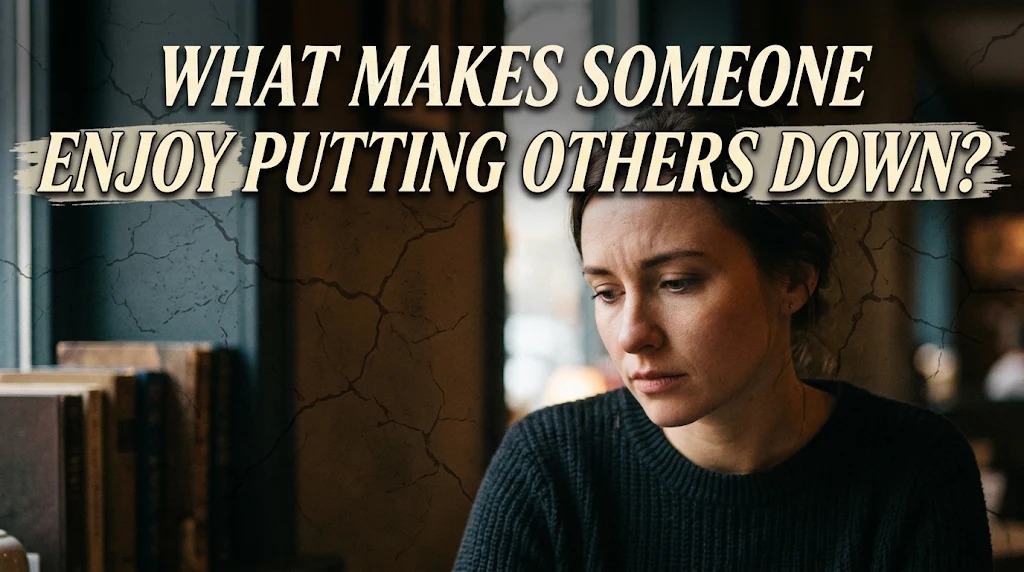
Some people seem to enjoy making others feel embarrassed, inferior, or unsuccessful. They may frequently make sarcastic remarks, criticize personal decisions, mock achievements, or highlight other people's weaknesses. This behavior can occur in friendships, workplaces, schools, families, and social media interactions.
Putting others down is different from offering constructive criticism. While helpful feedback aims to encourage improvement, hurtful comments often make someone feel less valuable. There are several possible reasons behind this behavior, including personal insecurity, jealousy, the desire for control, and learned communication habits. Understanding these factors can help people recognize unhealthy behavior and respond appropriately.
FEELING INSECURE ABOUT THEMSELVES
Personal insecurity is one possible reason someone enjoys putting others down. People who feel uncertain about their abilities, appearance, or achievements may compare themselves with others and become uncomfortable when someone receives attention or recognition.
By highlighting another person's weaknesses, they may temporarily feel more confident or important. However, this behavior does not resolve their own insecurities. Genuine confidence develops through self-acceptance and personal growth rather than making others feel inferior.
WANTING TO FEEL SUPERIOR
Some individuals use negative comments to create a sense of superiority. They may believe that criticizing someone else's mistakes makes them appear more intelligent, experienced, or successful.
This attitude can create an unhealthy social environment because conversations become focused on competition rather than mutual respect. People who constantly need to feel superior may struggle to appreciate the achievements and abilities of others.
EXPERIENCING JEALOUSY
Jealousy can influence how someone responds to another person's success. When an individual sees someone receiving praise, achieving goals, or gaining opportunities, they may feel dissatisfied with their own situation.
Instead of using that feeling as motivation, they might attempt to diminish the other person's achievements through sarcastic remarks or unfair comparisons. Recognizing jealousy as an emotion can be useful, but using it to hurt others can damage relationships and trust.
SEEKING ATTENTION AND RECOGNITION
Some people put others down because they want to become the center of attention. Making jokes at someone else's expense or criticizing them in public may attract reactions from surrounding people.
In certain social environments, negative comments can even become a way to gain popularity or appear entertaining. However, attention gained through humiliation can harm someone's reputation and make others feel uncomfortable.
TRYING TO CONTROL OTHER PEOPLE
Putting others down can sometimes become a method of controlling their behavior. Repeated criticism, humiliation, and negative comparisons may make someone question their abilities and become less willing to express their opinions.
In relationships, this behavior can create an unequal dynamic in which one person feels powerful while the other loses confidence. When criticism becomes a repeated pattern of intimidation or humiliation, it should be recognized as a serious interpersonal problem rather than dismissed as ordinary disagreement.
PROJECTING PERSONAL FRUSTRATIONS
Projection is a psychological concept involving the attribution of one's own uncomfortable feelings or characteristics to another person. Someone experiencing personal frustration may criticize others for weaknesses that they also find difficult to accept in themselves.
For example, a person who feels dissatisfied with their own achievements might frequently describe others as unsuccessful. This does not explain every instance of hurtful behavior, but personal frustrations can sometimes influence how people judge those around them.
GROWING UP IN A NEGATIVE ENVIRONMENT
A person's communication habits can be influenced by their family, friendships, and social surroundings. Individuals who frequently experience insults, ridicule, or harsh criticism may learn to treat similar behavior as normal.
If negative comments are consistently accepted within a social group, members may repeat them without considering their emotional effects. Developing healthier communication requires learning empathy, respecting differences, and understanding the consequences of hurtful words.
LACKING EMPATHY
Empathy helps people understand how their words and actions may affect others. When someone struggles to consider another person's feelings, they may make insulting remarks without recognizing the emotional consequences.
A lack of empathy can lead to repeated humiliation, insensitive jokes, and dismissive responses. Developing empathy involves listening carefully, considering different perspectives, and recognizing that every individual deserves respectful treatment.
ENJOYING SOCIAL COMPARISON
Some individuals constantly compare themselves with other people. They may evaluate success, appearance, popularity, or financial circumstances as though life were a competition.
When someone else appears to have an advantage, they may attempt to restore their sense of importance by pointing out that person's weaknesses. This habit can create unnecessary rivalry and prevent people from appreciating their own progress.
HOW TO RESPOND TO SOMEONE WHO PUTS OTHERS DOWN
Dealing with someone who repeatedly makes hurtful comments requires calmness and clear boundaries. It is not always necessary to argue or prove that the person's judgment is wrong.
Several practical approaches can help:
- Stay calm: Avoid reacting immediately when someone makes an insulting remark.
- Set clear boundaries: Explain that disrespectful comments are unacceptable.
- Avoid unnecessary comparisons: Focus on personal development rather than competing for approval.
- Do not internalize insults: Remember that another person's negative judgment does not automatically represent the truth.
- Limit harmful interactions: Reduce contact when someone repeatedly creates an unhealthy environment.
- Seek support: Talk to trusted people if the behavior affects your emotional well-being.
If the behavior involves persistent bullying, intimidation, or harassment, document relevant incidents and seek help from appropriate people or institutions.
CONCLUSION
Someone may enjoy putting others down because of insecurity, jealousy, a desire for superiority, attention-seeking, or learned negative communication habits. In some situations, the behavior may also involve attempts to control others or a lack of empathy.
Although understanding these possible reasons can provide useful insight, it does not justify humiliating or disrespecting another person. Healthy relationships require mutual respect, emotional awareness, and constructive communication. Everyone deserves to develop their abilities without being made to feel inferior by someone else's words.
Recent Posts

Bagaimana Sistem SKS pada Program Kuliah... 22.11.2026/28 View

How Does Technology Make Daily Evaluation... 21.11.2026/65 View

Apa Strategi Menghadapi Kesenjangan antara Kompetensi... 21.11.2026/65 View

Mengapa Inventaris Aset Penting bagi Kelancaran... 21.11.2026/62 View

When Should Musicians Join a Record... 21.11.2026/63 View
