

What Makes Startup Business Plans Different From SME Plans?
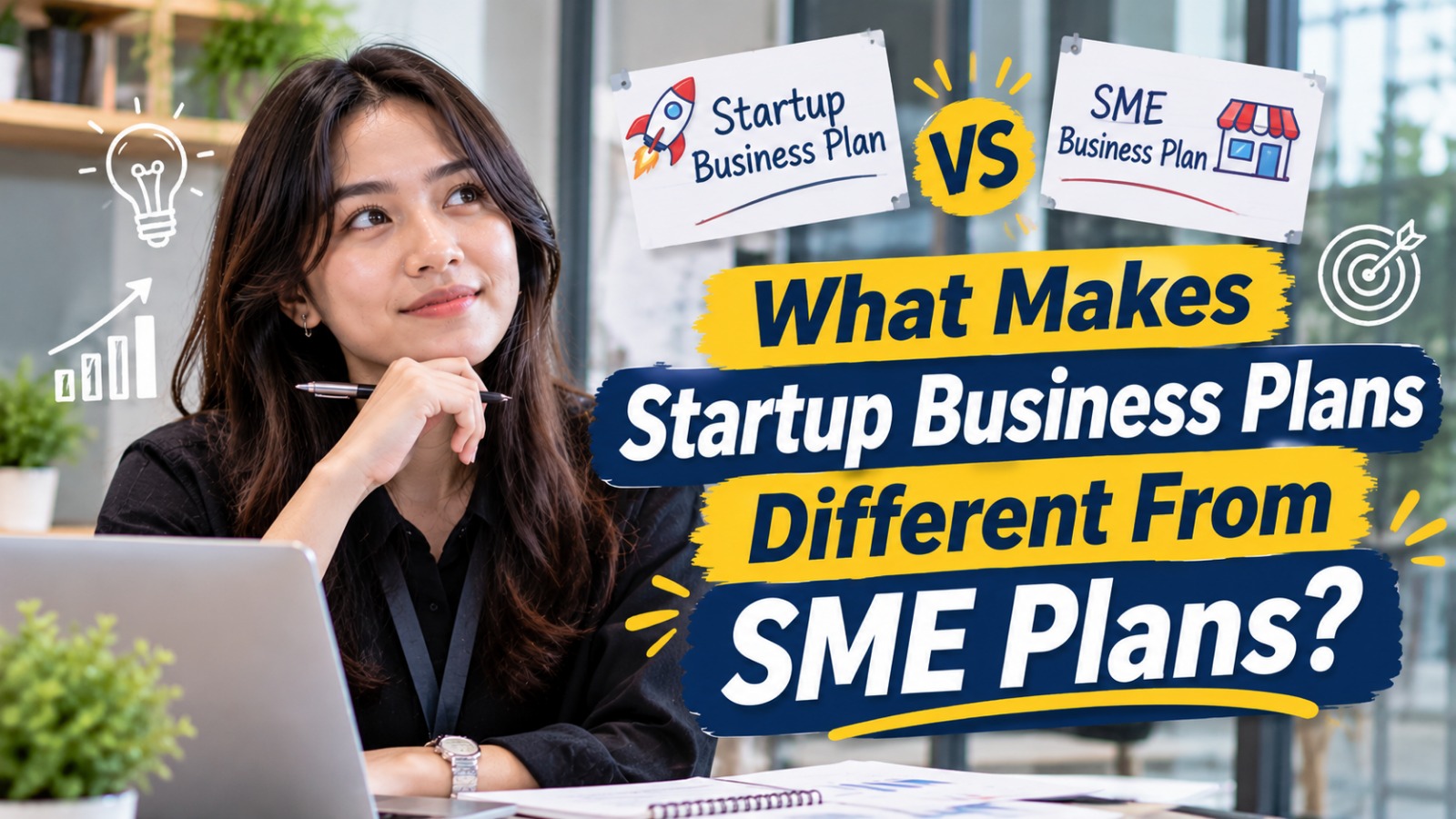
Business plans help entrepreneurs organize their goals, strategies, financial expectations, and operational activities. However, not every business requires the same type of planning. Startups and small and medium-sized enterprises (SMEs) have different business conditions, development stages, and priorities. These differences influence how their business plans are prepared and implemented.
Startup business plans generally focus on introducing new business ideas, validating market demand, attracting investors, and establishing initial operations. In contrast, SME business plans often emphasize maintaining existing operations, improving profitability, strengthening customer relationships, and expanding gradually. Understanding these differences helps entrepreneurs create plans that reflect their business needs and available resources.
DIFFERENCES IN BUSINESS DEVELOPMENT STAGES
One major difference between startup and SME business plans is the stage of business development. Startups are often in the early stages of establishing their products, services, and business models. Their plans must explain how an idea can become a functioning business and gain acceptance in the market.
SMEs usually have established operations, existing customers, and some level of market experience. Their business plans can therefore rely on historical performance and operational knowledge. Instead of focusing entirely on launching a new business, they often concentrate on improving current activities and achieving sustainable development.
DIFFERENT BUSINESS OBJECTIVES
Startups and SMEs also have different priorities when setting business objectives. Startups commonly aim to validate their ideas, acquire initial customers, develop products, and establish a market presence. Their objectives may change as they receive feedback and discover new opportunities.
SMEs generally focus on maintaining financial stability, increasing sales, improving productivity, and strengthening their competitive position. Their objectives often involve measurable improvements in existing business activities. These differences influence the strategies and performance indicators included in each business plan.
APPROACHES TO FINANCIAL PLANNING
Financial planning is another important distinction between startup and SME business plans. Startups may have limited financial history, making it difficult to estimate future revenue and expenses accurately. Their financial projections often depend on market research, expected customer demand, product development costs, and different business scenarios.
SMEs can usually use previous financial records to prepare more informed projections. Historical sales, operating expenses, cash flow, and profit margins provide useful references for future planning. Although SMEs still face financial uncertainty, their existing data can make budgeting and forecasting more structured.
DIFFERENCES IN FUNDING REQUIREMENTS
Startups may require external funding to develop products, conduct market testing, build technology, recruit employees, and introduce their offerings. Their business plans often include detailed funding requirements and explanations of how investment capital will support business development. Investors may examine these details to evaluate the startup's growth potential and financial risks.
SMEs may rely on internal savings, business revenue, bank loans, or other financing arrangements. Their funding requirements often involve purchasing equipment, increasing inventory, improving facilities, or expanding operations. As a result, SME business plans usually explain how additional financing will improve existing business performance.
MARKET RESEARCH AND CUSTOMER VALIDATION
Startups often need extensive market research because their products or services may not yet have an established customer base. Their business plans should demonstrate that a real customer problem exists and that the proposed solution has potential demand. Product testing, surveys, interviews, and early customer feedback can help validate the business concept.
SMEs generally have more direct experience with their customers. They can use previous sales records, customer complaints, repeat purchases, and feedback to understand market preferences. Their research may focus more on identifying new customer segments, responding to competitors, and improving existing products or services.
BUSINESS MODEL DEVELOPMENT
A startup business plan often explains how the company intends to create, deliver, and capture value. The business model may still be under development, especially when the company is testing different pricing structures, distribution methods, or revenue sources. Entrepreneurs need to demonstrate how the proposed model can become financially sustainable.
SMEs usually operate with an established business model. Their plans are more likely to focus on improving existing revenue sources, reducing operating costs, and increasing business efficiency. However, SMEs may still need to adjust their models when customer behavior, technology, or market conditions change.
APPROACHES TO RISK MANAGEMENT
Startups and SMEs face different types of business risks. Startups may encounter uncertainty related to product acceptance, limited capital, customer acquisition, technology development, and the absence of established operations. Their business plans should identify these challenges and provide practical ways to manage them.
SMEs may face risks involving cash flow, rising operating costs, employee management, supply chain disruptions, and stronger competition. Since they already have established operations, their risk management strategies often focus on protecting business continuity and maintaining stable performance. Both types of businesses need contingency plans that reflect their specific conditions.
MANAGEMENT STRUCTURE AND HUMAN RESOURCES
Startup teams are often relatively small, with founders taking responsibility for several business functions. Their business plans should explain the roles of the founding team, essential skills, recruitment priorities, and how responsibilities will develop as the company grows.
SMEs may have established departments, supervisors, and employees with defined responsibilities. Their business plans often emphasize improving workforce productivity, developing employee skills, strengthening management systems, and maintaining effective coordination. The level of organizational detail depends on the size and complexity of the business.
GROWTH STRATEGIES AND EXPANSION PLANS
Startups frequently include growth strategies that focus on acquiring customers, increasing market acceptance, developing products, and entering new markets. Some startups also plan to expand rapidly after validating their business models. However, growth targets must remain consistent with their financial resources and operational capabilities.
SMEs often pursue more gradual expansion based on existing revenue, customer relationships, and available resources. Their strategies may involve opening additional branches, introducing new products, increasing production capacity, or reaching customers in nearby locations. Their plans generally need to balance expansion with financial stability.
PERFORMANCE MEASUREMENT AND BUSINESS EVALUATION
Performance indicators in startup business plans often measure early business progress. These may include product development milestones, customer acquisition, user engagement, market validation, revenue growth, and funding utilization. Such indicators help entrepreneurs determine whether their business assumptions are supported by actual results.
SMEs commonly monitor indicators such as monthly revenue, profit margins, customer retention, inventory turnover, operating expenses, and employee productivity. These measurements help business owners evaluate established operations and identify areas that require improvement. Both startups and SMEs benefit from reviewing their performance regularly and adjusting their plans when necessary.
CONCLUSION
Startup business plans differ from SME plans because the two types of businesses have different development stages, objectives, financial conditions, and operational priorities. Startups generally focus on validating business ideas, attracting initial customers, securing funding, and establishing sustainable business models. SMEs, meanwhile, tend to prioritize operational efficiency, financial stability, customer retention, and gradual expansion.
Despite these differences, both types of business plans require clear objectives, realistic financial projections, market research, and effective risk management. Entrepreneurs should adapt their planning approach to their business conditions rather than using the same strategy for every company. A suitable business plan provides a practical direction for making decisions and supporting long-term business development.
Recent Posts

Bagaimana Sistem SKS pada Program Kuliah... 22.11.2026/4 View

How Does Technology Make Daily Evaluation... 21.11.2026/63 View

Apa Strategi Menghadapi Kesenjangan antara Kompetensi... 21.11.2026/64 View

Mengapa Inventaris Aset Penting bagi Kelancaran... 21.11.2026/61 View

When Should Musicians Join a Record... 21.11.2026/59 View
