

What Mitigation Strategies Reduce Disaster Risks in Dense Settlements?
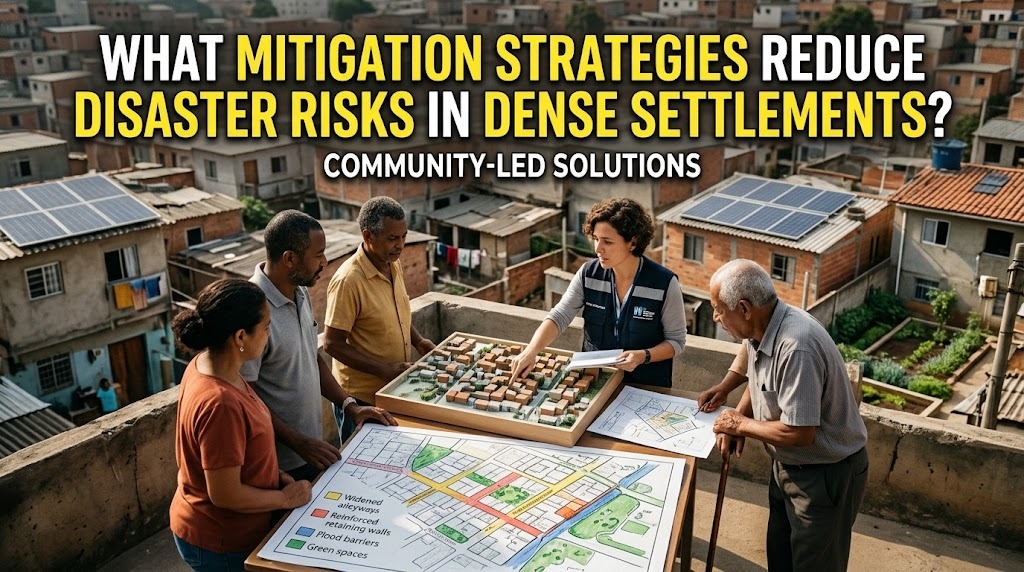
Dense settlements are residential areas where many people live within limited spaces, often with closely packed houses, narrow roads, and limited public facilities. These conditions can make communities more vulnerable to disasters such as floods, fires, earthquakes, and landslides. When an emergency occurs, overcrowding and restricted access can make evacuation and rescue operations more difficult.
Disaster mitigation is essential for reducing these risks and protecting residents. It involves planning, infrastructure improvements, public education, and emergency preparedness before a disaster happens. By applying suitable mitigation strategies, local governments and communities can create safer living environments and reduce potential damage.
IMPROVING SETTLEMENT PLANNING
Proper settlement planning helps reduce disaster risks by ensuring that residential areas are developed according to environmental conditions and safety requirements. Buildings should not be constructed in dangerous locations, such as unstable slopes, riverbanks with high flood risks, or areas exposed to coastal hazards.
Local governments can use hazard maps and spatial planning regulations to identify vulnerable locations. These assessments help determine suitable areas for housing, public facilities, evacuation routes, and emergency shelters. Organized land use also makes it easier for emergency teams to reach affected residents.
DEVELOPING EFFECTIVE DRAINAGE SYSTEMS
Flooding is a common problem in densely populated settlements, especially when drainage channels are narrow, blocked, or poorly maintained. Limited open spaces and extensive concrete surfaces can prevent rainwater from entering the ground naturally, increasing surface runoff.
Improving drainage systems can help water flow more efficiently during heavy rainfall. Communities should regularly clean drainage channels, prevent waste from entering waterways, and maintain water flow around residential areas. Governments can also construct retention ponds and improve local drainage infrastructure to reduce flood impacts.
STRENGTHENING BUILDING SAFETY
Buildings in dense settlements should be designed and maintained to withstand potential hazards. In earthquake-prone areas, structures need to follow appropriate earthquake-resistant construction standards. Proper foundations, strong structural connections, and suitable building materials can reduce the possibility of serious structural damage.
Regular building inspections are also important, particularly for older houses and structures built without professional guidance. Local authorities can provide technical assistance and encourage residents to improve unsafe buildings gradually. These measures help reduce the risk of building collapse and injuries during emergencies.
PROVIDING ACCESSIBLE EVACUATION ROUTES
Narrow streets and closely spaced buildings can prevent emergency vehicles from reaching affected areas. Therefore, dense settlements need clearly identified evacuation routes that connect residential blocks with safe locations.
Evacuation paths should remain free from obstacles and be accessible to children, older adults, and people with disabilities. Communities should also identify alternative routes in case the main access roads become blocked. Clear signs and regular evacuation exercises can help residents respond more quickly during emergencies.
ESTABLISHING EARLY WARNING SYSTEMS
Early warning systems provide important information about potential disasters before they cause serious damage. Monitoring equipment can detect conditions such as rising river levels, intense rainfall, or seismic activity. When a threat is identified, authorities can distribute warnings through sirens, mobile notifications, radio broadcasts, and community communication networks.
In dense settlements, warning messages should be clear, easy to understand, and accessible to all residents. Community leaders can help distribute information to households that may not have reliable internet access. Faster communication gives residents more time to prepare and move to safer locations.
IMPROVING WASTE MANAGEMENT AND ENVIRONMENTAL CONDITIONS
Poor waste management can increase disaster risks, particularly flooding and drainage problems. Household waste that enters drainage channels may block water flow, causing rainwater to accumulate in residential areas.
Regular waste collection, proper disposal facilities, and community cleaning activities can help maintain a healthier environment. Residents should also protect trees, preserve green spaces, and avoid damaging natural waterways. These actions support better water management and reduce environmental pressures in crowded neighborhoods.
PREPARING COMMUNITY EMERGENCY RESPONSE TEAMS
Community-based emergency response teams can provide immediate assistance when disasters occur. Members can receive training in evacuation procedures, basic first aid, emergency communication, and identifying vulnerable residents.
These teams can also coordinate with local disaster management agencies and emergency services. Because residents understand the layout of their neighborhoods, they can help identify blocked routes, locate missing people, and direct emergency responders toward affected areas.
PROVIDING SAFE PUBLIC SPACES AND EMERGENCY SHELTERS
Dense settlements often have limited open spaces that can be used during emergencies. Public facilities such as community centers, school grounds, and designated evacuation buildings can serve as temporary shelters when they meet appropriate safety requirements.
Shelters should have sufficient capacity, clean water, sanitation facilities, lighting, and basic emergency supplies. Their locations should also be accessible from different parts of the settlement. Proper planning ensures that residents have safe places to go when their homes become dangerous.
STRENGTHENING GOVERNMENT AND COMMUNITY COOPERATION
Disaster mitigation requires cooperation between local governments, community organizations, residents, and emergency services. Governments can provide infrastructure funding, technical guidance, hazard assessments, and emergency planning support.
Meanwhile, residents can participate in neighborhood meetings, report unsafe conditions, and follow local safety regulations. Cooperation helps ensure that mitigation programs reflect the actual needs of communities rather than relying only on top-down planning.
CONCLUSION
Reducing disaster risks in dense settlements requires a combination of safe urban planning, stronger buildings, effective drainage, accessible evacuation routes, and reliable early warning systems. Waste management, community emergency teams, and suitable evacuation shelters also play important roles in protecting residents.
These strategies are most effective when governments and communities work together consistently. By improving infrastructure and strengthening public awareness, dense settlements can become safer, more organized, and better prepared to face future disasters.
Recent Posts

Bagaimana Sistem SKS pada Program Kuliah... 22.11.2026/37 View

How Does Technology Make Daily Evaluation... 21.11.2026/70 View

Apa Strategi Menghadapi Kesenjangan antara Kompetensi... 21.11.2026/73 View

Mengapa Inventaris Aset Penting bagi Kelancaran... 21.11.2026/68 View

When Should Musicians Join a Record... 21.11.2026/71 View
