

What Negotiation Mistakes Should You Avoid to Prevent Losses?
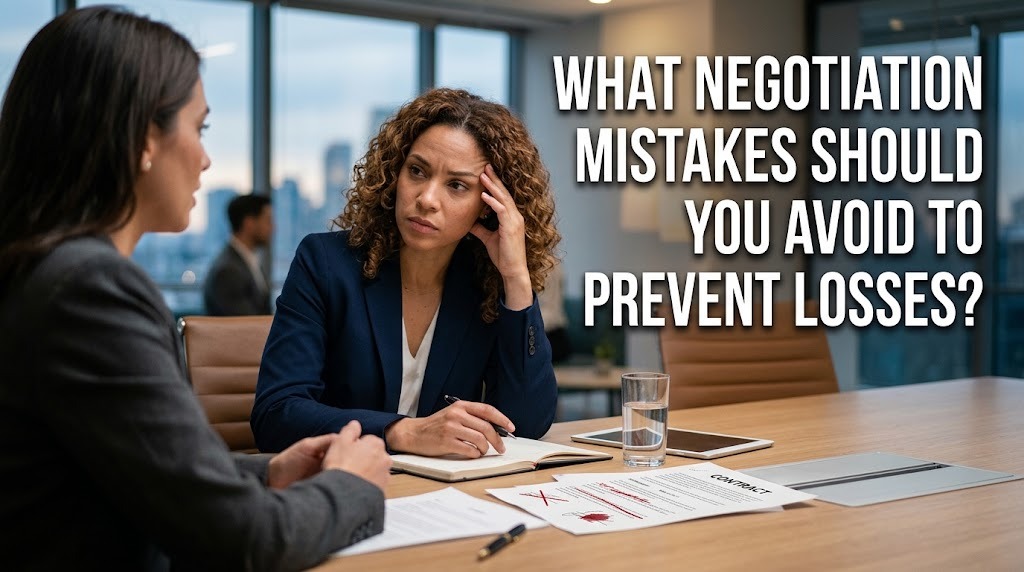
Negotiation is an important process used to reach agreements in business, work, and everyday situations. However, a negotiation can produce unfavorable results when someone enters the discussion without proper preparation or makes decisions based on emotions. Common problems such as poor communication, unrealistic demands, and insufficient research can increase the risk of losses. Understanding these mistakes can help negotiators protect their interests while maintaining good relationships with other parties. Therefore, knowing what negotiation mistakes to avoid is essential for achieving better and more sustainable agreements.
ENTERING A NEGOTIATION WITHOUT PREPARATION
One of the biggest negotiation mistakes is starting a discussion without sufficient preparation. A negotiator should understand the subject, identify important priorities, and collect relevant information before making an offer. Without preparation, it becomes difficult to determine whether a proposal is reasonable or unfavorable. Lack of information can also make a person more vulnerable to pressure from the other party. Proper negotiation preparation provides a stronger foundation for making informed decisions.
Preparation should include identifying the desired outcome and the minimum acceptable result. It is also useful to consider possible objections and prepare alternative responses. A negotiator should understand the market conditions, available alternatives, and potential risks related to the agreement. This information can help prevent rushed decisions during difficult discussions. The better the preparation, the easier it is to remain confident and focused throughout the negotiation.
FOCUSING ONLY ON WINNING
Another common mistake is treating negotiation as a competition where one party must completely defeat the other. This approach can create unnecessary tension and make cooperation more difficult. Negotiators who focus only on their own interests may overlook opportunities that could benefit both sides. A better approach is to identify areas where mutual benefits can be created. This can increase the possibility of reaching an agreement that both parties consider acceptable.
A successful negotiation does not always mean getting everything you want. Sometimes, a reasonable compromise can provide greater long-term value than an aggressive demand. Maintaining a cooperative attitude can also protect professional relationships after the agreement is reached. When both parties feel that their important interests have been considered, they may be more willing to cooperate in the future. Therefore, negotiators should focus on creating value rather than simply winning.
FAILING TO LISTEN TO THE OTHER PARTY
Poor listening can significantly reduce the effectiveness of a negotiation. Some negotiators spend too much time preparing their own arguments and fail to pay attention to what the other party is actually saying. This can cause them to miss important information about the other party's needs and concerns. Active listening allows negotiators to understand priorities that may not be immediately obvious. It can also reveal opportunities for creating better solutions.
Listening does not mean agreeing with everything the other party says. Instead, it means carefully understanding their position before responding. Asking relevant questions can clarify unclear information and prevent misunderstandings. Paying attention to tone, concerns, and priorities can also help you adjust your approach when necessary. Effective listening makes communication more productive and supports better negotiation decisions.
MAKING EMOTIONAL DECISIONS
Emotions can strongly influence the way people behave during negotiations. Anger, fear, frustration, or excessive excitement may cause someone to make decisions without considering the long-term consequences. For example, a negotiator may reject a reasonable offer simply because they feel offended by the way it was presented. Maintaining emotional control helps prevent temporary feelings from affecting important decisions. A calm approach also makes it easier to evaluate proposals objectively.
When a negotiation becomes tense, taking a short pause can be useful. Instead of responding immediately to a challenging statement, consider the information and determine the most appropriate response. Focusing on facts and objectives can help reduce emotional reactions. Professional behavior is particularly important when negotiations involve colleagues, clients, managers, or long-term business partners. Staying calm can protect both the quality of the agreement and the professional relationship.
GIVING TOO MANY CONCESSIONS
Concessions are sometimes necessary, but giving too many concessions can weaken your position. A negotiator who continuously reduces their demands without receiving anything in return may create an unbalanced agreement. The other party may also assume that additional concessions are still possible. Therefore, every concession should be considered carefully and connected to the overall goals of the negotiation. Strategic concessions can help create flexibility without sacrificing important interests.
It is useful to determine in advance which points are negotiable and which points are essential. If you make a concession, consider asking for something reasonable in return. This creates an exchange rather than simply giving away value. You should also avoid making major concessions too quickly because doing so may reduce your bargaining position. Careful control of concessions can help prevent unnecessary losses while keeping the negotiation productive.
IGNORING THE FINAL AGREEMENT DETAILS
A negotiation does not truly end when both parties verbally agree. Important details should be reviewed carefully before the agreement becomes final. Issues such as deadlines, responsibilities, payment terms, quality standards, and consequences for non-compliance should be clearly understood. Ignoring these details can create misunderstandings and unexpected costs later. A careful agreement review can reduce the risk of future disputes.
Both parties should make sure that the final terms accurately reflect what was discussed. If an agreement is written in a contract or other formal document, read it carefully before accepting it. Ask for clarification when any provision is unclear or appears different from the negotiated terms. Documenting important decisions can provide a clear reference if questions arise later. Paying attention to final details is an essential step in preventing negotiation losses.
CONCLUSION
Avoiding common negotiation mistakes can significantly improve the chances of achieving a favorable outcome. Proper preparation, active listening, emotional control, and careful management of concessions can help negotiators protect their interests. It is also important to avoid focusing only on winning and to carefully review the final agreement before accepting its terms. Good negotiation requires patience, preparation, flexibility, and clear communication rather than aggressive demands alone. By recognizing and avoiding these mistakes, anyone can negotiate with greater confidence and reduce the risk of unnecessary losses.
Recent Posts

Bagaimana Sistem SKS pada Program Kuliah... 22.11.2026/37 View

How Does Technology Make Daily Evaluation... 21.11.2026/70 View

Apa Strategi Menghadapi Kesenjangan antara Kompetensi... 21.11.2026/73 View

Mengapa Inventaris Aset Penting bagi Kelancaran... 21.11.2026/68 View

When Should Musicians Join a Record... 21.11.2026/71 View
