

What Nonverbal Communication Mistakes Often Happen?
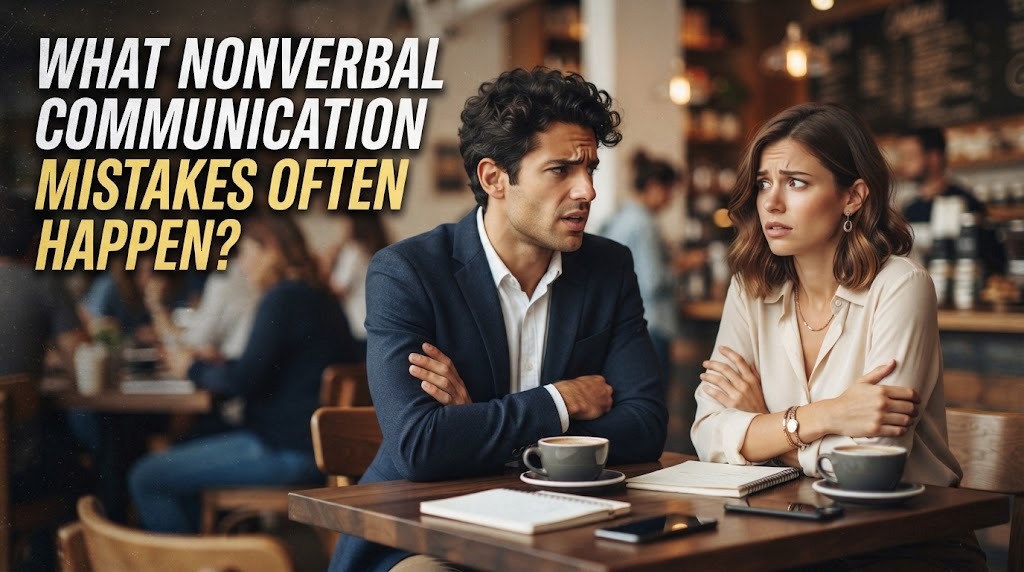
Nonverbal communication is an important part of everyday interaction because people communicate through facial expressions, eye contact, gestures, posture, tone of voice, and physical distance. However, people can sometimes send the wrong message through their body language without realizing it. These nonverbal communication mistakes can create confusion, discomfort, or misunderstandings during conversations.
Understanding common mistakes can help people become more aware of how they communicate. Small changes in body language can make interactions feel more comfortable and respectful. By paying attention to nonverbal signals, people can support their spoken messages and build better relationships.
AVOIDING EYE CONTACT
Avoiding eye contact is one of the common nonverbal communication mistakes. Looking away too often may make someone appear distracted, uninterested, or uncomfortable during a conversation. However, avoiding eye contact does not always have a negative meaning because some people may feel nervous or have different cultural communication habits.
The important thing is to use natural and appropriate eye contact. People do not need to stare continuously at another person. Looking at the speaker regularly while occasionally looking away can create a more relaxed and comfortable interaction.
USING CLOSED BODY LANGUAGE
Closed body language can sometimes create distance between people. Crossing the arms tightly, turning the body away, or keeping a very stiff posture may make someone appear defensive or unwilling to communicate. These signals can influence how other people feel during an interaction.
An open and relaxed posture can create a more welcoming impression. Facing the person who is speaking, keeping the shoulders relaxed, and using natural movements can show attention. However, body language should remain comfortable rather than forced.
USING TOO MANY GESTURES
Gestures can help explain ideas, but using too many movements can become distracting. Constant hand movements, excessive pointing, or unnecessary body movements may make it difficult for others to focus on the message. In formal situations, excessive gestures may also appear unprofessional.
The best approach is to use gestures when they naturally support the message. Simple movements can emphasize important points without taking attention away from the conversation. Controlled and appropriate gestures can make communication clearer and more effective.
IGNORING FACIAL EXPRESSIONS
Facial expressions can communicate emotions even when people do not say anything. A person may use appropriate words but have an expression that suggests boredom, anger, or disinterest. This can create mixed signals and make the listener unsure about the real meaning of the message.
People should become more aware of their facial expressions during important conversations. A relaxed face, natural smile, or attentive expression can support friendly and respectful communication. At the same time, expressions should match the situation rather than being forced.
USING AN INAPPROPRIATE TONE OF VOICE
Tone of voice is another important part of nonverbal communication. The same words can have different meanings depending on volume, pitch, speed, and emotional tone. Speaking too loudly may sound aggressive, while speaking too quietly may make the message difficult to hear.
A suitable tone should match the situation and purpose of the conversation. Speaking clearly and calmly can help create a comfortable communication environment. Paying attention to tone can also prevent simple statements from being interpreted as rude or unfriendly.
IGNORING PERSONAL SPACE
Personal space is important because people have different levels of comfort with physical distance. Standing too close can make someone feel uncomfortable, while standing too far away may create unnecessary distance. These expectations can also vary depending on culture, relationship, and situation.
People should pay attention to the other person's reactions and maintain an appropriate distance. Professional situations may require more personal space than conversations between close friends. Respecting physical boundaries can help create a safer and more comfortable interaction.
HOW TO AVOID NONVERBAL COMMUNICATION MISTAKES
Avoiding nonverbal communication mistakes starts with self-awareness and observation. People can pay attention to their posture, eye contact, facial expressions, gestures, and tone of voice during conversations. Practicing in front of a mirror or recording a presentation can also help identify habits that may need improvement.
It is equally important to consider the context and the other person's communication style. A gesture that feels normal to one person may have a different meaning to someone else. By staying flexible, respectful, and attentive, people can reduce misunderstandings and communicate more effectively.
CONCLUSION
Common nonverbal communication mistakes include avoiding eye contact, using closed body language, making excessive gestures, ignoring facial expressions, using an inappropriate tone, and invading personal space. These behaviors can sometimes create confusion or discomfort. By becoming more aware of nonverbal signals and adapting them to different situations, people can improve their communication skills and relationships.
Recent Posts

Bagaimana Sistem SKS pada Program Kuliah... 22.11.2026/40 View

How Does Technology Make Daily Evaluation... 21.11.2026/71 View

Apa Strategi Menghadapi Kesenjangan antara Kompetensi... 21.11.2026/73 View

Mengapa Inventaris Aset Penting bagi Kelancaran... 21.11.2026/69 View

When Should Musicians Join a Record... 21.11.2026/73 View
