

What Preparations Are Needed Before Joining the MAPSI Competition?
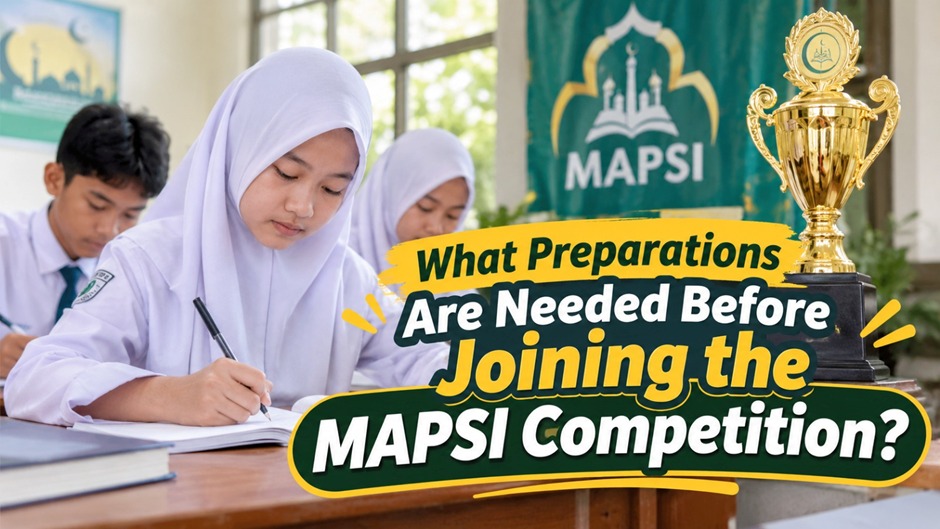
The MAPSI Competition is an educational event that encourages students to develop their Islamic knowledge, religious skills, creativity, and confidence. Through this competition, students have opportunities to demonstrate their abilities in various areas of Islamic education and arts. However, participating successfully requires more than talent alone. Students need proper preparation, consistent practice, and a good understanding of the competition requirements.
Preparing for MAPSI should begin well before the competition takes place. Students need to identify their chosen category, improve relevant skills, understand the assessment criteria, and prepare mentally. Teachers and parents can also provide important support throughout the process.
So, what preparations are needed before joining the MAPSI Competition? Here are some essential steps students should consider.
1. UNDERSTAND THE COMPETITION CATEGORIES
The first step is to understand the categories available in the MAPSI Competition. Different categories may require different abilities, such as Quranic recitation, memorization, Islamic knowledge, religious arts, or other activities based on the organizer's regulations. Students should not choose a category simply because it looks interesting. They need to consider their interests, talents, and current abilities before making a decision.
Understanding the available categories helps students prepare more effectively. They can focus their time and energy on the skills required for their selected competition. Choosing the right category also makes the preparation process more organized and realistic. Students should always check the latest official information because competition categories may vary depending on the event level and organizer.
2. STUDY THE OFFICIAL COMPETITION RULES
Every competition has rules that participants must follow. These rules may explain registration procedures, participant requirements, performance duration, technical arrangements, judging criteria, and other important conditions. Students should read the official guidelines carefully before starting their preparation. This helps them avoid mistakes that could affect their participation.
Teachers can assist students in understanding requirements that may be difficult to interpret. Participants should also pay attention to deadlines and required documents. Understanding the official regulations helps students prepare according to the competition standards. It also prevents unnecessary problems on the competition day.
3. IMPROVE SKILLS ACCORDING TO THE SELECTED CATEGORY
After choosing a category, students should focus on developing the abilities needed for that activity. For example, participants in Quranic recitation should practice pronunciation, fluency, and Tajweed. Students joining an Islamic knowledge competition need to study relevant religious materials and improve their ability to answer questions accurately. Meanwhile, participants in religious arts should develop their technical abilities and presentation skills.
Skill development requires regular practice and clear learning goals. Students should identify their weaknesses and work on them gradually. Focused skill improvement is more effective than practicing without a specific direction. With consistent effort, participants can become more prepared and confident when demonstrating their abilities.
4. CREATE A REGULAR PRACTICE SCHEDULE
A structured practice schedule helps students manage their preparation time. Instead of studying intensively only a few days before the competition, students should divide their training into manageable daily or weekly activities. This approach allows them to improve gradually without neglecting their school responsibilities.
The schedule should match the student's needs and the difficulty of the selected category. For example, students may dedicate specific sessions to learning theory, practicing techniques, reviewing mistakes, and evaluating their progress. Consistency is more important than excessive practice in a short period. Students should also include enough time for rest to maintain their concentration and physical condition.
5. LEARN FROM QUALIFIED TEACHERS AND MENTORS
Teachers play an important role in helping students prepare for MAPSI. They can explain competition materials, demonstrate correct techniques, identify mistakes, and provide useful feedback. Their experience can help students understand what needs to be improved before the competition begins.
Students should actively ask questions whenever they encounter difficulties. They should also be willing to accept corrections and apply the suggestions provided by their teachers. Guidance from qualified teachers makes the learning process more organized and helps students avoid repeatedly practicing incorrect techniques. Support from mentors can also encourage students to remain motivated throughout their preparation.
6. PRACTICE UNDER COMPETITION CONDITIONS
Practicing in a normal classroom environment is useful, but students should also experience situations similar to the actual competition. They can participate in practice sessions that include time limits, performance arrangements, and simulated judging. This helps them become familiar with the atmosphere of a formal event.
For example, students preparing for Quranic recitation can practice performing in front of teachers and classmates. Participants in knowledge-based categories can answer practice questions within a limited time. Simulation exercises help students manage pressure and recognize areas that still need improvement. The more familiar they become with the competition format, the easier it may be to adapt on the actual day.
7. DEVELOP SELF-CONFIDENCE AND MENTAL READINESS
Mental preparation is just as important as technical preparation. Some students may feel nervous when performing in front of judges or competing against other participants. Excessive anxiety can affect concentration and make it difficult to demonstrate their abilities properly.
Students can build confidence through regular practice, positive thinking, and supportive feedback. They should focus on giving their best performance rather than worrying too much about winning. A confident and prepared mindset helps participants stay calm and respond to unexpected situations. They should also understand that competition is an opportunity to learn, gain experience, and improve themselves.
8. PREPARE NECESSARY EQUIPMENT AND DOCUMENTS
Students should prepare all required documents and equipment before the competition day. Depending on the category and organizer's instructions, these may include registration information, participant identification, school documents, uniforms, learning materials, or other supporting items. Participants should confirm the exact requirements instead of making assumptions.
It is also helpful to prepare these items several days in advance. Students can create a checklist to ensure that nothing important is forgotten. Proper logistical preparation reduces unnecessary stress and allows participants to concentrate on their performance. Teachers and parents can help check that all required items are ready.
9. MAINTAIN PHYSICAL HEALTH AND CONCENTRATION
Good physical condition supports effective learning and competition performance. Students who do not get enough sleep or regularly skip meals may experience difficulties maintaining concentration. Therefore, maintaining healthy habits should be part of their preparation.
Students should get sufficient rest, eat balanced meals, drink enough water, and maintain a reasonable daily routine. They should also avoid excessive practice that causes physical or mental exhaustion. A healthy body supports a focused mind, helping participants stay attentive during preparation and competition activities. Balancing practice with rest is an important part of effective preparation.
10. EVALUATE PROGRESS BEFORE THE COMPETITION
Evaluation helps students understand whether their preparation is progressing well. They should review their performance regularly and identify skills that still need improvement. Teachers can provide assessments based on the relevant competition category and its official judging criteria.
Students should use feedback as a learning opportunity rather than viewing mistakes as failures. They can record their progress, compare practice performances, and set new targets when necessary. Regular evaluation helps participants recognize their strengths and weaknesses before the competition begins. This process also makes their final preparation more focused and effective.
CONCLUSION
Preparing for the MAPSI Competition requires planning, consistent practice, skill development, and mental readiness. Students should begin by understanding the competition categories and official rules before choosing the activities that match their abilities. They also need guidance from teachers, regular practice sessions, and opportunities to evaluate their performance.
In addition, preparing documents, maintaining physical health, and developing self-confidence can help students participate more comfortably. These preparations should be carried out gradually rather than being rushed at the last minute.
Most importantly, students should remember that MAPSI is not only about winning awards. It is also an opportunity to improve Islamic knowledge, develop talents, build discipline, and gain valuable experiences. With proper preparation and a positive attitude, students can participate more confidently and make the most of the competition.
Recent Posts

How Does Technology Make Daily Evaluation... 21.11.2026/62 View

Apa Strategi Menghadapi Kesenjangan antara Kompetensi... 21.11.2026/63 View

Mengapa Inventaris Aset Penting bagi Kelancaran... 21.11.2026/59 View

When Should Musicians Join a Record... 21.11.2026/58 View

Daily Evaluation or Daily Planning Which... 21.11.2026/66 View
