

What Problems Commonly Occur at Mobile Samsat?
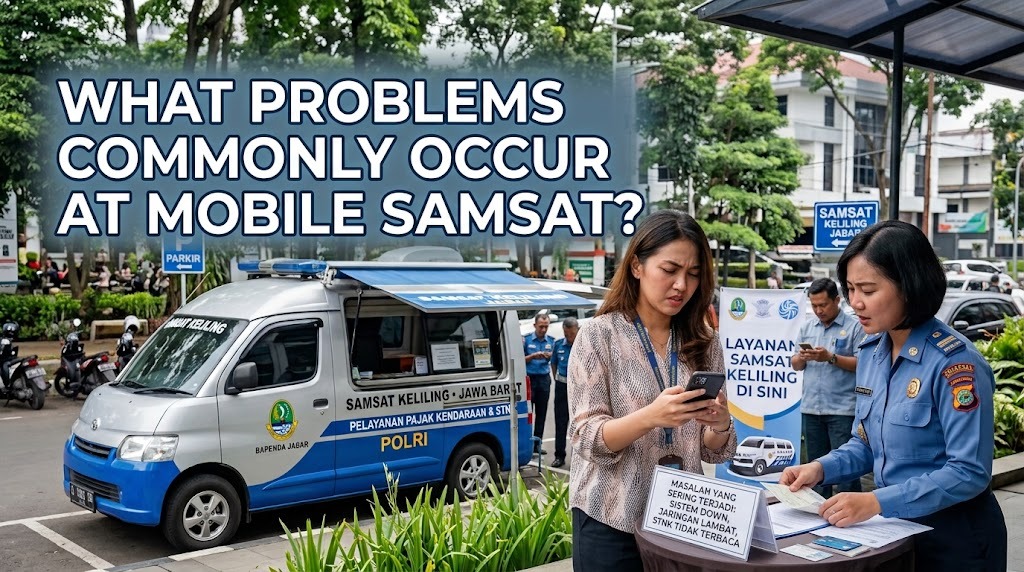
Mobile Samsat helps vehicle owners pay annual vehicle tax through services provided at designated locations outside permanent Samsat offices. This service offers convenience for people who want to complete their administrative obligations without traveling to a main office. However, several problems can occur during the process, including long queues, incomplete documents, technical disruptions, and limited service availability. Understanding these challenges can help vehicle owners prepare before visiting a Mobile Samsat location and complete their transactions more efficiently.
LONG QUEUES AND WAITING TIMES
Long queues are among the common problems that vehicle owners may experience at Mobile Samsat locations. The number of visitors can increase during busy periods, particularly when many people choose to pay their vehicle tax near its due date. Because mobile services operate with limited staff and facilities, processing each transaction may take time. Visitors can reduce waiting times by checking the service schedule and arriving early.
INCOMPLETE REQUIRED DOCUMENTS
Incomplete documentation can prevent vehicle owners from completing their transactions. Applicants generally need to prepare the original vehicle registration certificate, commonly known as STNK, along with identification documents and other requirements specified by the local Samsat authority. Missing documents or inconsistencies between the information provided and official records may require additional verification. Checking the latest requirements before departure can help prevent unnecessary delays.
LIMITED SERVICE LOCATIONS AND SCHEDULES
Mobile Samsat services usually operate at specific locations and times rather than remaining available throughout the day in one place. Some residents may find it difficult to reach the designated service point because of distance, transportation limitations, or work commitments. Schedule changes can also create confusion if information is not updated or checked in advance. Vehicle owners should verify the latest location and operating hours through official local Samsat channels before traveling.
TECHNICAL AND SYSTEM DISRUPTIONS
Digital systems play an important role in verifying vehicle information and processing tax payments. Internet connectivity problems, server interruptions, or equipment malfunctions may temporarily slow down transactions. When a system becomes unavailable, staff may need to pause certain services until normal operations resume. Although these disruptions are not always avoidable, checking official announcements and allowing extra time for the visit can help visitors manage unexpected delays.
PAYMENT AND TRANSACTION PROBLEMS
Payment difficulties can occur when a transaction cannot be processed as expected. Possible causes include payment system interruptions, incorrect transaction information, or confusion about the accepted payment methods. Visitors may also be uncertain about the total amount due or whether additional administrative charges apply. To avoid misunderstandings, vehicle owners should confirm the payment amount and accepted methods through official channels and retain proof of payment after completing the transaction.
VEHICLE TAX ELIGIBILITY ISSUES
Not every vehicle registration matter can necessarily be handled through Mobile Samsat. These services commonly focus on eligible annual vehicle tax payments and related registration validation, while other administrative procedures may require a visit to a permanent Samsat office. Problems may arise when a vehicle has outstanding administrative issues, registration data discrepancies, or a request outside the mobile service's scope. Confirming eligibility before visiting can help vehicle owners choose the appropriate service.
UNCLEAR OR OUTDATED INFORMATION
Information about operating schedules, service locations, required documents, and payment procedures may not always reach the public consistently. Relying on old social media posts or information shared by other people can cause visitors to arrive at the wrong location or without the necessary documents. This problem is especially inconvenient for people who travel a considerable distance to access the service. Checking recent announcements from official Samsat or relevant regional government accounts can help ensure that the information is accurate.
ACCESSIBILITY AND FACILITY LIMITATIONS
Mobile service units may have limited space, seating, parking areas, or facilities for people with disabilities and older visitors. Some service locations may also be difficult to access during bad weather or in crowded public areas. These limitations can affect comfort, safety, and the overall experience of visitors who need additional assistance. Organizers can improve accessibility by selecting suitable locations, providing clear queues, and sharing information about available facilities.
HOW TO PREVENT COMMON MOBILE SAMSAT PROBLEMS
Vehicle owners can reduce the likelihood of encountering problems by preparing their documents, checking their vehicle tax status, and confirming the current service schedule before leaving home. Arriving early may help avoid peak queues, while keeping sufficient funds and understanding the accepted payment methods can make transactions smoother. Visitors should also confirm whether their administrative needs can be handled by Mobile Samsat or require a permanent office. If a problem occurs, asking authorized staff for clarification is safer than relying on unofficial information.
CONCLUSION
Mobile Samsat provides a practical way to access eligible vehicle tax services, but visitors may still encounter queues, incomplete documentation, technical disruptions, limited schedules, and eligibility restrictions. Most of these challenges can be managed through careful preparation and the use of accurate, official information. By checking the requirements in advance and understanding the service limitations, vehicle owners can save time and make their Mobile Samsat visits more convenient.
Recent Posts

Bagaimana Sistem SKS pada Program Kuliah... 22.11.2026/57 View

How Does Technology Make Daily Evaluation... 21.11.2026/86 View

Apa Strategi Menghadapi Kesenjangan antara Kompetensi... 21.11.2026/84 View

Mengapa Inventaris Aset Penting bagi Kelancaran... 21.11.2026/82 View

When Should Musicians Join a Record... 21.11.2026/86 View
