

What Qualifications Are Needed to Become a Professional Vice Principal of Curriculum?
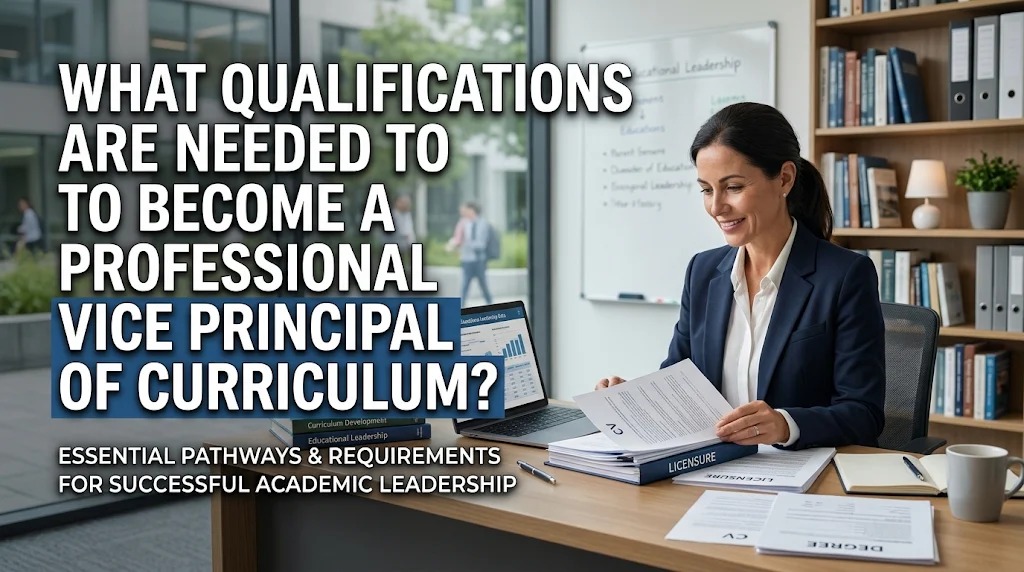
A Vice Principal of Curriculum plays an important role in managing academic activities and supporting the implementation of educational programs at school. This position requires more than teaching experience because the person responsible must coordinate teachers, organize class schedules, monitor curriculum implementation, and evaluate learning activities. Therefore, individuals who want to pursue this role need appropriate educational backgrounds, professional experience, and leadership abilities.
Becoming a professional Vice Principal of Curriculum requires a combination of academic qualifications, teaching competence, management skills, and an understanding of educational policies. The specific requirements may differ depending on national regulations, school policies, and the type of educational institution. However, several qualifications and competencies are generally important for carrying out this responsibility effectively.
HAVING AN APPROPRIATE EDUCATIONAL BACKGROUND
An appropriate educational background is an important foundation for someone who wants to become a Vice Principal of Curriculum. Candidates generally need a university degree in education or another field relevant to the subjects and educational environment they work in. This academic foundation helps individuals understand teaching principles, student development, instructional methods, and educational management.
Some candidates may also pursue postgraduate education, such as a master's degree in educational management, curriculum development, or a related discipline. Further study can provide deeper knowledge of academic planning, institutional leadership, educational evaluation, and policy implementation. However, the required degree level depends on the regulations and recruitment criteria applicable to each school.
Beyond formal qualifications, candidates need to understand how educational theories are applied in real classroom situations. Knowledge of curriculum structures, assessment methods, and instructional planning is particularly useful. A relevant educational background provides the knowledge needed to coordinate academic activities and support teachers effectively.
HAVING TEACHING EXPERIENCE AND PROFESSIONAL COMPETENCE
Teaching experience is valuable because a Vice Principal of Curriculum needs to understand the challenges teachers face during classroom instruction. Experience in preparing lesson plans, delivering learning materials, assessing students, and managing classroom activities provides practical knowledge for making academic decisions.
Through teaching experience, candidates can understand how curriculum requirements affect daily educational activities. They can also recognize common difficulties, such as limited learning resources, differences in student abilities, and challenges in implementing particular instructional methods. This understanding helps the vice principal develop more realistic academic programs.
Professional competence is also important for maintaining educational standards. Candidates should be familiar with instructional planning, classroom assessment, curriculum implementation, and teacher development. Practical teaching experience combined with professional competence helps a Vice Principal of Curriculum provide relevant guidance and make informed academic decisions.
DEVELOPING LEADERSHIP AND MANAGEMENT SKILLS
A Vice Principal of Curriculum needs strong leadership and management abilities to coordinate various academic responsibilities. The position involves working with teachers, school leaders, administrative staff, and other educational personnel. Without effective leadership, academic programs may become difficult to organize and implement consistently.
Management skills are necessary for preparing schedules, distributing responsibilities, organizing meetings, and monitoring program progress. The vice principal must also be able to establish priorities and manage available resources according to the school's needs. These abilities help ensure that academic activities remain organized throughout the school year.
Decision-making is another important leadership competency. Problems such as teacher schedule conflicts, changes in curriculum requirements, or delays in academic activities may require appropriate solutions. A professional vice principal should be able to examine available information, consult relevant parties, and determine practical steps. Strong leadership and organizational skills support effective curriculum management and teamwork.
UNDERSTANDING CURRICULUM DEVELOPMENT AND EDUCATIONAL POLICIES
A professional Vice Principal of Curriculum must understand how school curricula are developed, implemented, and evaluated. This knowledge helps the individual coordinate learning programs according to educational objectives and applicable regulations. It also allows the vice principal to communicate curriculum changes clearly to teachers.
Understanding curriculum development includes knowledge of learning objectives, subject structures, instructional materials, teaching approaches, and assessment systems. The vice principal should also be able to identify whether academic programs are appropriate for students' needs and the school's conditions. This knowledge is useful when coordinating the preparation of instructional documents and reviewing learning activities.
Educational policies may change over time, requiring schools to adjust their academic programs. Therefore, the vice principal needs to follow relevant regulations and participate in professional development activities. Knowledge of curriculum development and educational policies helps ensure that academic management remains relevant, consistent, and compliant with applicable requirements.
POSSESSING COMMUNICATION, PROBLEM-SOLVING, AND TECHNOLOGY SKILLS
Communication skills are essential because the Vice Principal of Curriculum interacts with many people who have different responsibilities and perspectives. The individual must be able to explain academic policies, coordinate meetings, listen to teachers' concerns, and communicate decisions clearly. Effective communication helps prevent misunderstandings and strengthens cooperation within the school.
Problem-solving skills are equally important. Academic management may involve unexpected situations, such as teacher absences, scheduling conflicts, limited classroom facilities, or difficulties in implementing learning programs. A professional vice principal should be able to identify the source of a problem, consider available alternatives, and coordinate an appropriate solution with relevant personnel.
Technology skills are also increasingly useful in modern educational management. Familiarity with spreadsheets, digital scheduling tools, learning management systems, and academic information platforms can make administrative tasks more efficient. Communication, problem-solving, and digital competence help the vice principal manage academic responsibilities in an organized and responsive way.
CONCLUSION
Becoming a professional Vice Principal of Curriculum requires several important qualifications, including an appropriate educational background, teaching experience, professional competence, leadership abilities, and knowledge of curriculum development. Candidates also need communication, problem-solving, organizational, and technology skills to coordinate academic activities effectively.
The exact requirements may vary depending on educational regulations and school policies. Therefore, individuals interested in this position should understand the applicable appointment criteria and continue developing their professional abilities. By combining academic knowledge with practical experience and effective leadership, a Vice Principal of Curriculum can support teachers, improve academic management, and contribute to better educational quality.
Recent Posts

Bagaimana Sistem SKS pada Program Kuliah... 22.11.2026/11 View

How Does Technology Make Daily Evaluation... 21.11.2026/63 View

Apa Strategi Menghadapi Kesenjangan antara Kompetensi... 21.11.2026/64 View

Mengapa Inventaris Aset Penting bagi Kelancaran... 21.11.2026/61 View

When Should Musicians Join a Record... 21.11.2026/59 View
