

What Risks Arise From Unsupported Robotic Software Dependencies?
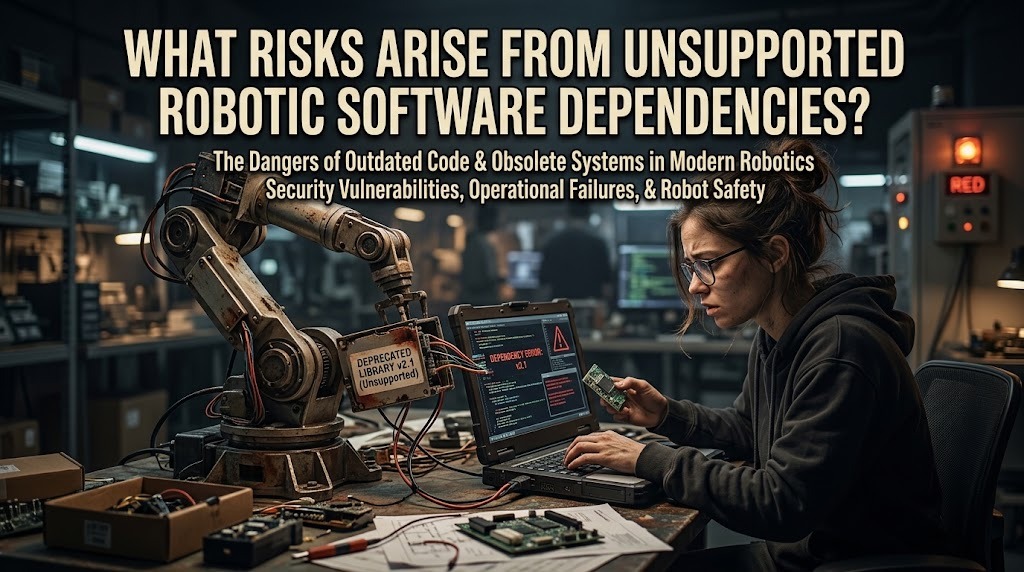
Robotic systems rely on software libraries, frameworks, drivers, and operating system components to perform tasks accurately and safely. These dependencies help developers build robot applications without creating every function from scratch. However, when a dependency becomes unsupported by its developer, it can introduce security vulnerabilities, compatibility problems, and operational failures. Understanding these risks helps robotics teams maintain reliable systems and protect equipment from unexpected disruptions.
SECURITY VULNERABILITIES IN ROBOTIC SYSTEMS
Unsupported software dependencies may contain security weaknesses that no longer receive patches or updates. If attackers exploit these vulnerabilities, they could gain unauthorized access to a robot's control system, communication network, or sensitive operational data.
The consequences depend on the robot's purpose. A compromised industrial robot could disrupt manufacturing, while a vulnerable service robot might expose private information or become unavailable. Regular security assessments and replacing outdated components can reduce these risks.
SOFTWARE COMPATIBILITY PROBLEMS
Robotic applications often depend on specific versions of programming libraries, drivers, operating systems, and middleware. When one component becomes unsupported, it may stop working correctly after other parts of the system are updated.
For example, an outdated camera driver may fail to communicate with a newer operating system. This can prevent a robot from processing visual information or completing navigation tasks. Developers should test dependency compatibility before applying major software updates.
UNEXPECTED ROBOT OPERATIONAL FAILURES
Unsupported dependencies can cause software crashes, incorrect data processing, memory errors, or communication interruptions. These problems may affect essential robotic functions such as movement control, object detection, and sensor interpretation.
In industrial environments, a software failure can interrupt production or damage equipment. In safety-critical applications, incorrect system behavior may also create hazards for nearby people. Testing, fault monitoring, and controlled shutdown mechanisms are important safeguards.
REDUCED PERFORMANCE AND RELIABILITY
Older software components may not support modern hardware capabilities or optimized processing methods. As a result, robots may experience slower response times, increased resource consumption, or inconsistent performance.
These limitations can become more serious when robots must process large amounts of sensor data or respond to changing environments in real time. Monitoring processing delays, memory usage, and system stability helps teams identify performance problems before they affect operations.
DIFFICULTY MAINTAINING AND DEBUGGING SOFTWARE
When a dependency is no longer supported, developers may lose access to official documentation, bug fixes, technical support, and community assistance. Investigating software errors can therefore require more time and specialized knowledge.
Maintaining unfamiliar or poorly documented code also increases the likelihood of introducing new defects during repairs. Teams can reduce this burden by documenting software architecture, recording dependency versions, and maintaining automated tests.
INCREASED MAINTENANCE COSTS
Unsupported dependencies can increase long-term development and maintenance expenses. Engineers may need to investigate problems manually, modify existing code, or replace components that no longer work with the current system.
In some cases, upgrading a dependency affects several connected modules, requiring extensive regression testing. Planning regular software maintenance and allocating time for dependency updates can prevent expensive emergency repairs.
SUPPLY CHAIN AND THIRD-PARTY RISKS
Robotic applications frequently incorporate third-party packages and open-source libraries. A vulnerability or malicious change in one dependency can affect every application that incorporates the compromised component.
The risk becomes harder to manage when developers do not know the complete dependency chain. Software bills of materials, dependency scanning, trusted package sources, and version verification help organizations understand which components they use and where potential weaknesses exist.
STRATEGIES FOR MANAGING UNSUPPORTED DEPENDENCIES
Robotics teams should maintain an inventory of software components and regularly check whether each dependency still receives security updates. When possible, unsupported components should be upgraded, replaced with maintained alternatives, or isolated behind appropriate security controls.
Before deploying changes, engineers should perform automated tests, hardware-in-the-loop testing where appropriate, and regression testing of important robotic functions. Safety-critical systems also need documented risk assessments and procedures for returning to a known stable version if an update fails.
Teams should prioritize dependencies according to their exposure, severity of known vulnerabilities, operational importance, and available alternatives. This approach helps organizations focus resources on the components that pose the greatest risks.
CONCLUSION
Unsupported robotic software dependencies can create security vulnerabilities, compatibility issues, operational failures, performance limitations, and higher maintenance costs. Their impact may extend beyond software to equipment reliability and human safety. By monitoring dependencies, testing updates, documenting software components, and replacing unsupported libraries when necessary, robotics teams can improve system security and maintain dependable operations.
Recent Posts

Bagaimana Sistem SKS pada Program Kuliah... 22.11.2026/49 View

How Does Technology Make Daily Evaluation... 21.11.2026/77 View

Apa Strategi Menghadapi Kesenjangan antara Kompetensi... 21.11.2026/78 View

Mengapa Inventaris Aset Penting bagi Kelancaran... 21.11.2026/74 View

When Should Musicians Join a Record... 21.11.2026/79 View
