

What Role Did Rivers Play in City Development?
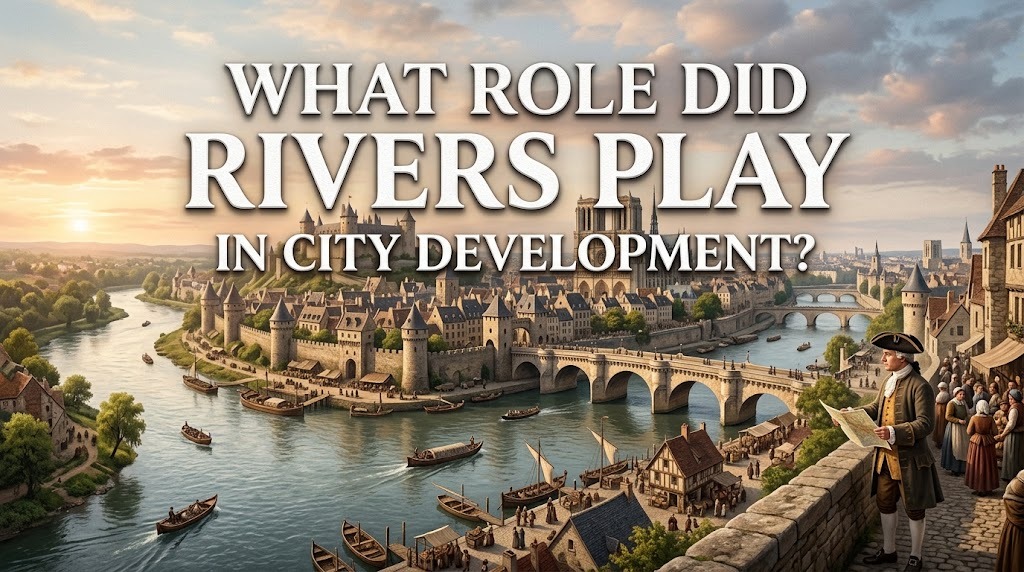
Rivers have played an important role in the development of many cities throughout history. Communities often settled near rivers because they provided water, fertile land, transportation routes, and opportunities for trade. As populations increased, these settlements could develop into larger urban centers with markets, industries, and public infrastructure. The relationship between rivers and cities has therefore influenced both the location and growth of urban communities.
PROVIDING ACCESS TO FRESH WATER
Fresh water was one of the most important reasons early communities settled near rivers. People needed water for drinking, cooking, cleaning, farming, and raising animals. A reliable river could support a growing population more effectively than an area with limited water sources.
As settlements expanded, rivers continued to support urban activities. People developed wells, canals, reservoirs, and water distribution systems to make river resources more accessible. However, communities also had to manage risks from pollution, drought, and excessive water use.
SUPPORTING AGRICULTURE
Rivers helped cities develop by providing water for agricultural activities. Floodplains often contained fertile soil because rivers deposited nutrient-rich sediments across surrounding land. Productive farmland could provide food for both rural communities and nearby urban populations.
Agricultural surpluses also supported economic development. When farmers produced more food than their families needed, they could exchange or sell the surplus in nearby markets. This encouraged specialization and allowed more people in cities to work in occupations other than farming.
FACILITATING TRANSPORTATION
Before modern highways and railways existed, rivers were important transportation routes. Boats could carry heavy goods over long distances more efficiently than many land-based methods available at the time.
Settlements along navigable rivers could therefore become important transportation hubs. Goods such as agricultural products, timber, minerals, and manufactured items could move between rural areas and urban markets. River transportation helped connect cities with wider regional and commercial networks.
ENCOURAGING TRADE AND MARKETS
Rivers supported trade by connecting producers, merchants, and consumers. A city located near a major river crossing or port could attract traders who needed places to exchange, store, and transport goods.
Markets often developed close to riverbanks because merchants could easily receive shipments. Warehouses, docks, workshops, and commercial districts could then grow around these trading areas. Over time, successful river-based trade could contribute significantly to urban expansion.
SUPPORTING INDUSTRIAL DEVELOPMENT
Rivers became important to industrial development because industries required water and transportation. Factories could use river water for certain production processes, while boats transported raw materials and finished products.
During industrialization, many factories and warehouses were constructed near rivers to reduce transportation costs. River access could therefore influence where industrial districts developed. However, industrial pollution later created serious environmental problems in some urban waterways.
INFLUENCING CITY LOCATION AND LAYOUT
The presence of a river often influenced the physical structure of a city. Bridges, roads, docks, markets, and residential areas developed around important crossing points and riverbanks.
Rivers could also divide urban areas into separate districts, making bridges and crossings essential connections. In some cities, riverfront areas became major commercial centers, while other sections developed into residential or industrial zones. The river thus became part of the city's geographic identity and urban planning.
PROVIDING ENERGY AND NATURAL RESOURCES
Flowing water could provide mechanical energy for mills and other equipment before modern electricity became widespread. Water-powered facilities often developed along rivers because they could use the movement of water to operate machinery.
Rivers also provided resources such as fish, reeds, sand, and other materials in different regions. These resources supported local livelihoods and contributed to economic activity. Their importance varied according to the characteristics of each river and surrounding environment.
CREATING CHALLENGES FOR URBAN DEVELOPMENT
Although rivers provided many benefits, they also created risks. Flooding could damage buildings, roads, crops, and infrastructure, particularly when settlements were built on low-lying floodplains.
Cities developed different strategies to manage these risks, including embankments, drainage systems, flood barriers, reservoirs, and improved urban planning. Modern cities increasingly combine flood protection with environmental management to reduce risks while preserving river ecosystems.
RIVERS AS PARTS OF MODERN CITY LIFE
Today, many cities continue to depend on rivers for transportation, water management, recreation, tourism, and environmental functions. Former industrial riverfronts have also been redeveloped into parks, public spaces, residential areas, and commercial districts.
Urban planners increasingly recognize that healthy rivers can improve environmental quality and provide valuable public spaces. Protecting waterways from pollution and excessive development is therefore an important part of sustainable urban planning.
CONCLUSION
Rivers played a major role in city development by providing fresh water, supporting agriculture, enabling transportation, encouraging trade, and supplying resources and energy. Their advantages attracted settlements and helped many communities grow into important urban centers. At the same time, flooding and pollution created challenges that required effective management. The historical relationship between rivers and cities continues to influence urban planning, economic activity, and environmental protection today.
Recent Posts

Bagaimana Sistem SKS pada Program Kuliah... 22.11.2026/50 View

How Does Technology Make Daily Evaluation... 21.11.2026/79 View

Apa Strategi Menghadapi Kesenjangan antara Kompetensi... 21.11.2026/79 View

Mengapa Inventaris Aset Penting bagi Kelancaran... 21.11.2026/75 View

When Should Musicians Join a Record... 21.11.2026/80 View
