

What Role Do Digital Libraries Play in Modern Education?
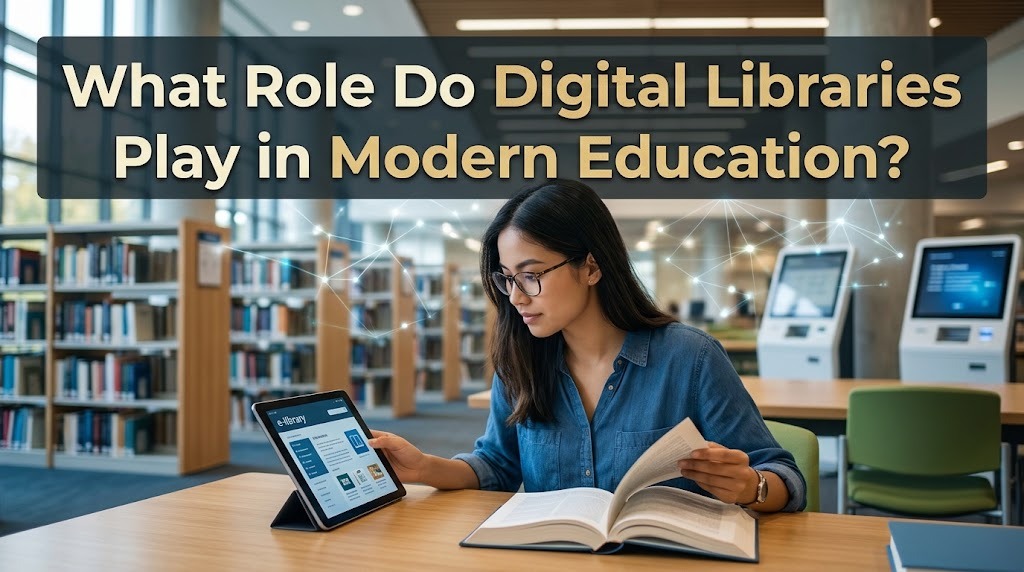
DIGITAL LIBRARIES IN MODERN EDUCATION
The development of digital technology has changed how students, teachers, and researchers access educational information. Digital libraries provide electronic collections that can include books, academic journals, research papers, reports, and other learning materials. These resources can be accessed through digital devices, depending on the platform and its access requirements. As education becomes increasingly connected to technology, digital libraries have become an important part of the modern learning environment.
Digital libraries do more than replace printed books with electronic versions. They provide tools that can help users search, organize, and access information more efficiently. Students can use these services to support classroom learning, assignments, examinations, and research projects. This makes digital libraries a valuable complement to traditional educational resources.
PROVIDING BROADER ACCESS TO KNOWLEDGE
One of the most important roles of digital libraries is providing broader access to educational resources. Students can search for available materials without always needing to visit a physical library. Depending on institutional subscriptions and licensing arrangements, they may access electronic books, scholarly articles, journals, and other academic publications. This can make valuable information easier to reach.
Digital libraries can also help overcome some geographical and physical limitations. A student who cannot visit a library during its operating hours may still be able to access resources remotely when online access is available. This is particularly useful for students involved in distance or blended learning. By expanding access, digital libraries can contribute to a more flexible educational environment.
SUPPORTING TEACHING AND LEARNING
Digital libraries support teachers and students by providing additional materials beyond standard classroom resources. Teachers can use academic publications and electronic books when preparing lessons, developing assignments, or exploring current information related to their subjects. Students can use the same resources to review concepts and find additional explanations. This creates opportunities for learning that extend beyond textbooks and classroom discussions.
The availability of digital resources can also encourage students to take greater responsibility for their education. They can search for information based on their own questions and learning needs. This supports independent learning and allows students to explore topics at different levels of depth. As a result, digital libraries can strengthen the relationship between classroom instruction and self directed study.
SUPPORTING ACADEMIC RESEARCH
Research is another major area where digital libraries play an important role. Students and researchers can use digital platforms to locate academic sources for papers, projects, theses, and other scholarly work. Search functions can help users find materials by keywords, author, subject, title, and publication information. These tools can make the process of collecting references more organized and efficient.
Digital libraries can also help users compare information from different publications. Reviewing multiple sources allows students to identify different perspectives and develop stronger arguments. However, users still need to evaluate the quality and relevance of each source before including it in academic work. Careful source evaluation is essential for producing accurate and evidence based research.
DEVELOPING DIGITAL AND INFORMATION LITERACY
Digital libraries can contribute to the development of important digital literacy and information literacy skills. Students learn how to search databases, use keywords effectively, identify relevant sources, and manage digital information. They also need to understand how to distinguish credible academic materials from unreliable information. These skills are increasingly important because modern learners encounter information across many digital platforms.
Learning how to use a digital library can therefore become part of broader academic skill development. Students can practice evaluating authors, publishers, publication dates, evidence, and research quality. They can also learn responsible practices for using and citing information. These abilities can remain useful beyond university because information evaluation is valuable in professional and everyday life.
CONCLUSION
Digital libraries play an important role in modern education by expanding access to knowledge, supporting teaching and learning, improving academic research, and developing information literacy. They give students and educators more opportunities to find and use educational resources in flexible ways. Digital libraries can also support online, blended, and independent learning environments. Their role has therefore grown alongside the wider adoption of educational technology.
However, digital libraries work most effectively when users have the skills and resources needed to use them properly. Educational institutions should provide reliable platforms, quality collections, appropriate access, and guidance for students and teachers. Users should also evaluate information carefully and respect copyright and academic integrity. When these factors are combined, digital libraries can make modern education more accessible, flexible, and research oriented.
Recent Posts

Bagaimana Sistem SKS pada Program Kuliah... 22.11.2026/35 View

How Does Technology Make Daily Evaluation... 21.11.2026/69 View

Apa Strategi Menghadapi Kesenjangan antara Kompetensi... 21.11.2026/70 View

Mengapa Inventaris Aset Penting bagi Kelancaran... 21.11.2026/67 View

When Should Musicians Join a Record... 21.11.2026/69 View
