

What Role Do Inspirational Teachers Play in Student Growth?
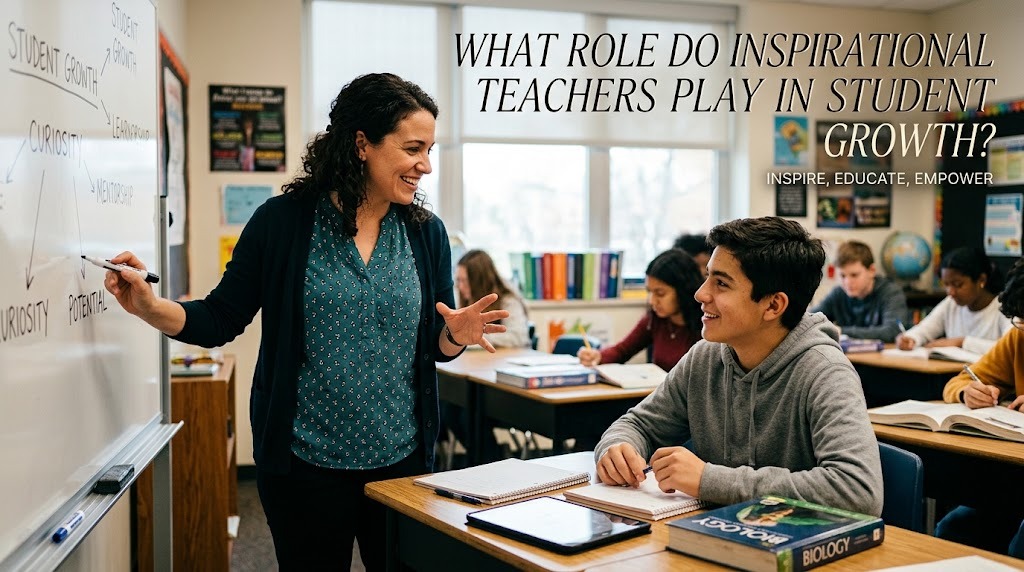
Inspirational teachers play an important role in student growth by encouraging learning, building confidence, and helping students discover their potential. Their influence extends beyond academic achievement because they also support personal development, social skills, and emotional well-being. Through meaningful guidance and positive interactions, teachers can help students become more independent, responsible, and motivated to improve themselves.
Every student has different strengths, challenges, and learning needs. Inspirational teachers recognize these differences and create opportunities for students to develop at their own pace. Their support can make the learning process more engaging and help students prepare for future challenges.
BUILDING STUDENT CONFIDENCE
Confidence is an important part of student growth because it influences how students approach new experiences and difficult tasks. Inspirational teachers help students believe in their abilities by recognizing their progress, encouraging participation, and providing constructive feedback. Instead of focusing only on mistakes, they help students understand what they can improve and how to achieve better results.
When students feel supported, they may become more willing to ask questions, express opinions, and try unfamiliar activities. These experiences help them develop confidence through practice rather than relying only on praise. Over time, students can become more comfortable facing academic challenges and learning from their experiences.
INCREASING LEARNING MOTIVATION
Student motivation can change depending on the difficulty of a subject, personal circumstances, and previous learning experiences. Inspirational teachers help maintain interest by connecting lessons to real-life situations and explaining why particular skills matter. They may also use discussions, practical activities, and creative assignments to make learning more meaningful.
Encouragement from teachers can help students continue working when they encounter difficulties. By recognizing effort and showing students how to make progress, teachers can help them develop a stronger commitment to learning. This motivation can support more consistent study habits and greater participation in classroom activities.
DEVELOPING CRITICAL THINKING SKILLS
Critical thinking enables students to evaluate information, examine different perspectives, and make reasoned decisions. Inspirational teachers encourage these abilities by asking thoughtful questions and inviting students to explain their reasoning. Rather than providing every answer immediately, they guide students through the process of finding solutions independently.
Classroom discussions, research projects, and problem-solving exercises can strengthen this skill. Students learn to distinguish evidence from assumptions and consider alternative explanations before reaching conclusions. These abilities are useful not only for academic assignments but also for everyday decisions and future professional responsibilities.
ENCOURAGING CREATIVITY AND INNOVATION
Creativity allows students to explore ideas, develop original solutions, and express themselves in different ways. Inspirational teachers create opportunities for students to experiment, ask unusual questions, and approach assignments from multiple perspectives. They understand that learning does not always require one fixed method of reaching an answer.
A supportive classroom environment helps students share ideas without excessive fear of making mistakes. Teachers can encourage creativity through presentations, collaborative projects, writing activities, and practical experiments. These experiences help students recognize their interests and discover abilities they may not have realized they possessed.
STRENGTHENING CHARACTER AND RESPONSIBILITY
Student growth involves more than academic performance. Honesty, discipline, empathy, and responsibility are also important qualities that influence how students interact with others and manage their obligations. Inspirational teachers demonstrate these values through their daily actions and encourage students to practice them in school activities.
For example, teachers can help students understand responsibility by assigning group tasks with clear roles and deadlines. They can also teach fairness by listening to different opinions and addressing conflicts respectfully. Through these experiences, students learn that personal success should be accompanied by consideration for others.
SUPPORTING EMOTIONAL AND SOCIAL DEVELOPMENT
Students may experience stress, disappointment, uncertainty, or difficulties in their relationships with classmates. Inspirational teachers can provide a supportive learning environment where students feel respected and comfortable seeking appropriate guidance. Listening carefully and responding without unnecessary judgment can help students feel understood.
Teachers also support social development by encouraging teamwork, respectful communication, and conflict resolution. Group assignments allow students to practice sharing responsibilities, accepting different viewpoints, and working toward common goals. These experiences can help them build healthier relationships and become more aware of other people's needs.
HELPING STUDENTS DISCOVER THEIR POTENTIAL
Every student has different interests, talents, and aspirations. Inspirational teachers help students explore these strengths by providing varied learning opportunities and constructive feedback. A student who struggles with one subject may demonstrate strong abilities in communication, leadership, creativity, or practical problem-solving.
By recognizing these differences, teachers can encourage students to explore activities that match their interests and develop new competencies. They may recommend competitions, extracurricular programs, projects, or additional learning resources. Such guidance can help students make more informed decisions about their education and future career paths.
PREPARING STUDENTS FOR FUTURE CHALLENGES
Education helps students prepare for situations that require adaptability, persistence, and independent thinking. Inspirational teachers support this preparation by assigning meaningful challenges and teaching students how to manage difficulties. They encourage students to view setbacks as opportunities to evaluate their strategies and improve their performance.
Teachers can also help students develop practical skills such as communication, time management, collaboration, and problem-solving. These abilities are valuable in higher education, employment, and everyday life. By combining academic instruction with opportunities to apply knowledge, teachers help students become better prepared for changing expectations.
BUILDING A LIFELONG LOVE OF LEARNING
Inspirational teachers can influence how students view education long after they leave the classroom. When lessons encourage curiosity and exploration, students may begin to see learning as a continuous process rather than something limited to examinations. This attitude can motivate them to read, practice new skills, and seek knowledge independently.
Teachers can nurture this mindset by welcoming questions, introducing diverse resources, and showing enthusiasm for their subjects. They can also demonstrate that learning involves revising ideas and remaining open to new information. These habits help students adapt to new opportunities and continue developing throughout their lives.
CONCLUSION
Inspirational teachers contribute to student growth by building confidence, strengthening motivation, developing critical thinking, and encouraging positive character. They also help students explore their potential, improve social skills, and prepare for future responsibilities. Although student development is influenced by many factors, supportive teachers can make the learning process more meaningful and encourage students to keep improving. Their lasting contribution lies in helping students become not only more capable learners but also more independent, responsible, and thoughtful individuals.
Recent Posts

Bagaimana Sistem SKS pada Program Kuliah... 22.11.2026/58 View

How Does Technology Make Daily Evaluation... 21.11.2026/86 View

Apa Strategi Menghadapi Kesenjangan antara Kompetensi... 21.11.2026/84 View

Mengapa Inventaris Aset Penting bagi Kelancaran... 21.11.2026/82 View

When Should Musicians Join a Record... 21.11.2026/86 View
