

What Role Do Literacy Movements Play in Improving the Quality of Education?
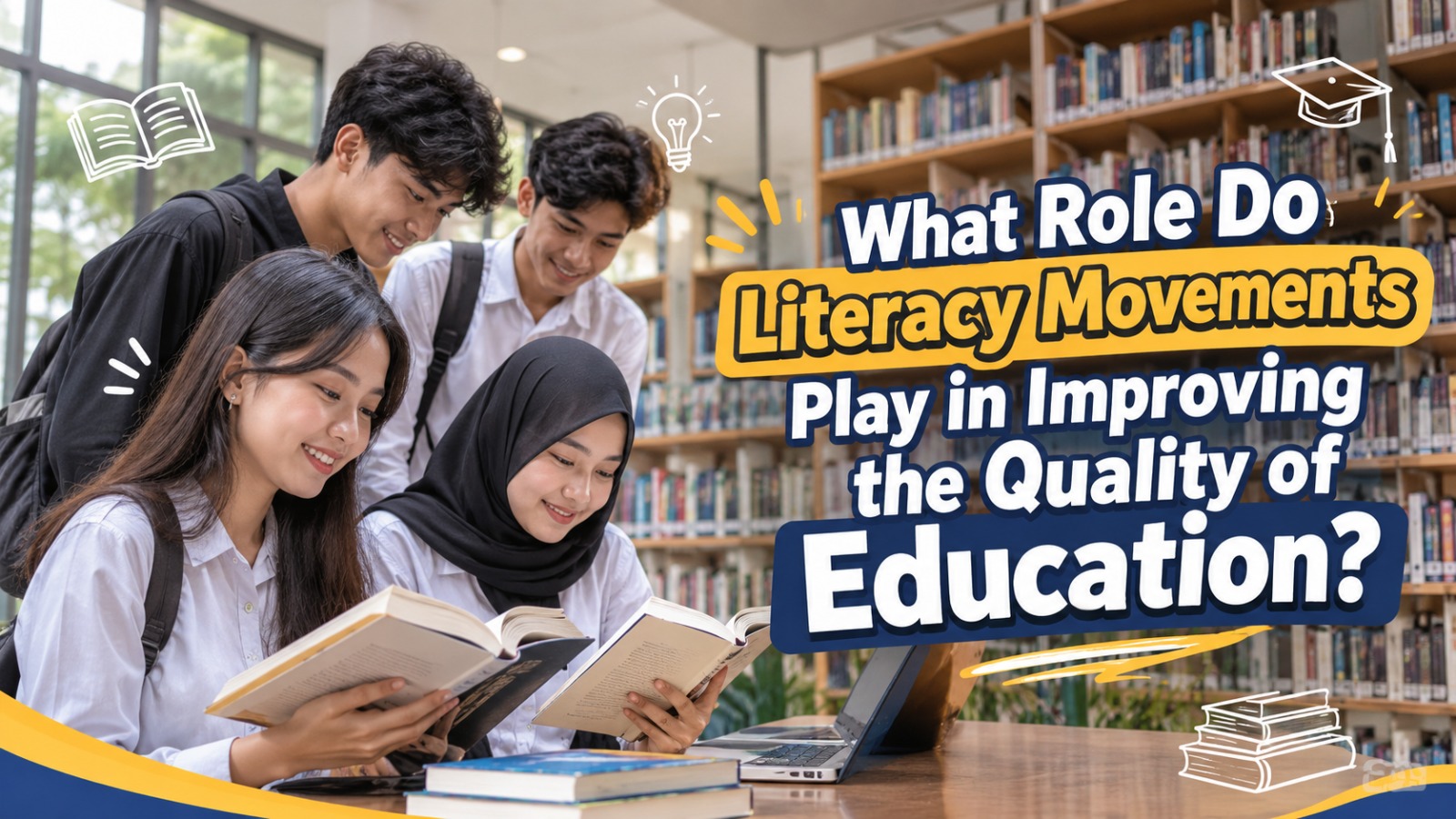
Literacy movements play an important role in improving the quality of education by developing students' reading habits, expanding their knowledge, and strengthening their ability to understand information. Education is not only about attending classes or memorizing lessons but also about developing the skills needed to think, communicate, and solve problems. Through literacy activities, students can become more active in the learning process and gain a deeper understanding of different subjects.
In today's digital era, access to information is becoming easier through books, websites, electronic libraries, and educational platforms. However, students must also learn how to select reliable information and use it appropriately. This makes literacy movements increasingly important for creating an educational environment that supports independent learning, creativity, and academic development.
UNDERSTANDING LITERACY MOVEMENTS IN EDUCATION
A literacy movement is an organized effort to encourage individuals to develop reading, writing, comprehension, and information-processing skills. In education, literacy movements aim to make reading and learning important parts of students' daily activities. These programs can be implemented through classroom reading sessions, school libraries, writing activities, book discussions, and various educational projects.
Literacy movements also encourage students to become more independent when searching for knowledge. Instead of depending entirely on teachers and textbooks, students can explore additional learning materials to understand subjects more deeply. This approach helps create a learning environment where curiosity, participation, and continuous improvement are encouraged. Therefore, literacy movements are an important foundation for developing a more effective and meaningful education system.
IMPROVING STUDENTS' READING AND COMPREHENSION SKILLS
One of the main contributions of literacy movements is improving students' reading and comprehension skills. Reading regularly helps students recognize new vocabulary, understand sentence structures, and identify important information from different texts. These abilities are essential because almost every school subject requires students to read and understand instructions, explanations, and learning materials.
Strong reading comprehension also helps students understand lessons more effectively. For example, students who can identify the main ideas of a text will find it easier to summarize information, answer questions, and complete assignments. Teachers can support this development by introducing interesting reading materials, organizing reading challenges, and encouraging students to discuss what they have learned.
Furthermore, reading activities can improve students' writing and communication abilities. When students become familiar with different types of texts, they can learn how to organize ideas and express their opinions more clearly. As a result, literacy movements help strengthen several essential academic skills at the same time.
DEVELOPING CRITICAL THINKING AND PROBLEM-SOLVING ABILITIES
Literacy movements contribute to educational quality by helping students develop critical thinking and problem-solving abilities. Through reading, students encounter different arguments, perspectives, facts, and explanations. They learn to compare information, examine evidence, and determine whether an idea is reasonable before accepting it as true.
These skills are particularly important in modern education because students receive information from many sources, including social media and digital platforms. Without sufficient literacy skills, they may struggle to distinguish accurate information from misleading content. Therefore, literacy activities should encourage students to question information, check its sources, and develop logical conclusions.
In addition, teachers can use group discussions, research assignments, and reading-based projects to strengthen analytical abilities. These activities allow students to identify problems, exchange ideas, and consider different solutions. By developing these abilities, literacy movements prepare students to face academic challenges and make responsible decisions in everyday life.
SUPPORTING TEACHERS AND CREATING EFFECTIVE LEARNING ENVIRONMENTS
Literacy movements also support teachers in creating more effective and interactive learning environments. Teachers can use reading materials, educational articles, digital resources, and classroom discussions to make lessons more interesting. These methods encourage students to participate actively instead of simply listening to explanations and memorizing information.
Furthermore, literacy programs provide teachers with opportunities to identify students' learning difficulties. For example, students who struggle to understand reading materials may need additional guidance, vocabulary exercises, or simpler learning resources. By recognizing these challenges, teachers can adjust their teaching strategies according to students' abilities and educational needs.
Schools can also establish supportive facilities such as comfortable reading areas, well-organized libraries, and access to digital learning resources. These facilities make it easier for teachers and students to conduct educational activities. When schools provide sufficient resources and encourage collaboration, literacy movements can contribute to a more inclusive and productive learning environment.
STRENGTHENING DIGITAL LITERACY AND ACCESS TO EDUCATION
In the digital era, literacy movements must also focus on developing digital literacy skills. Students increasingly use smartphones, computers, websites, and online learning platforms to access educational information. Although technology provides many learning opportunities, students must understand how to use these resources safely, responsibly, and effectively.
Digital literacy helps students search for relevant information, evaluate online sources, recognize misinformation, and protect their personal information. These skills are important because not every piece of information available on the internet is accurate or suitable for educational purposes. Schools can introduce digital literacy through online research projects, educational videos, digital reading activities, and guided discussions about internet safety.
Moreover, digital technology can expand access to educational resources, particularly for students who have limited access to printed books. Electronic libraries and online learning platforms allow students to explore various subjects beyond classroom materials. However, schools must also consider internet availability, device access, and students' digital abilities to ensure that these opportunities are accessible to everyone.
CONCLUSION
Literacy movements play an essential role in improving the quality of education by strengthening reading comprehension, critical thinking, communication, and digital literacy skills. These abilities help students understand lessons more effectively, become independent learners, and develop the confidence to explore new knowledge.
The success of literacy movements requires cooperation between schools, teachers, students, families, and communities. Schools should provide interesting reading programs, adequate learning facilities, and access to reliable educational resources. With consistent support and participation, literacy movements can create a stronger learning culture and contribute to developing knowledgeable, creative, and competitive generations.
Recent Posts

Bagaimana Sistem SKS pada Program Kuliah... 22.11.2026/28 View

How Does Technology Make Daily Evaluation... 21.11.2026/65 View

Apa Strategi Menghadapi Kesenjangan antara Kompetensi... 21.11.2026/65 View

Mengapa Inventaris Aset Penting bagi Kelancaran... 21.11.2026/62 View

When Should Musicians Join a Record... 21.11.2026/63 View
