

What Role Do Museums Play in Preserving National Cultural Heritage?
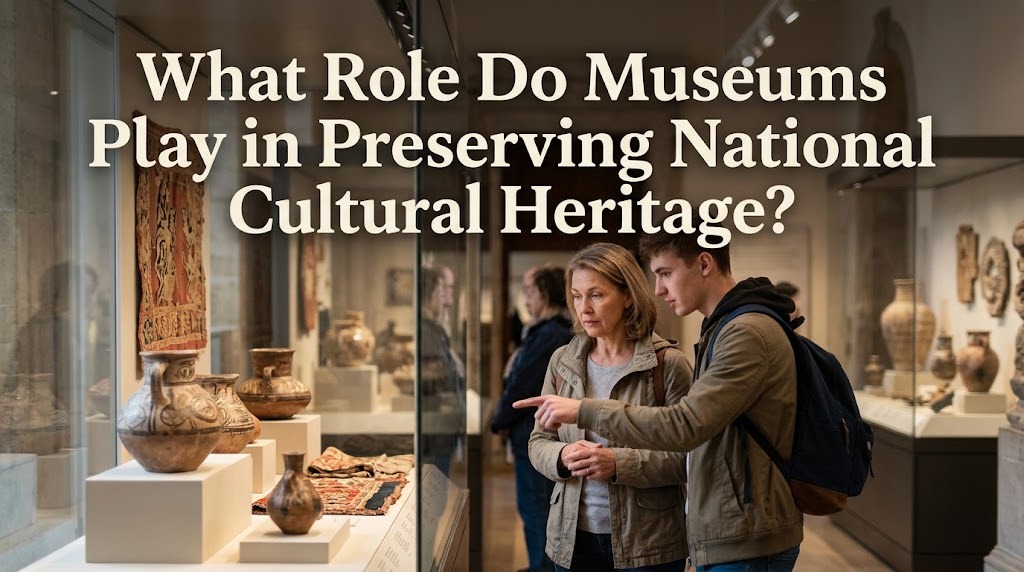
Museums play an important role in preserving national cultural heritage by protecting historical objects, documenting the past, and educating the public about a nation's identity. They collect and care for valuable items such as traditional clothing, ancient tools, artworks, manuscripts, and archaeological discoveries. These collections help people understand how their ancestors lived and how society developed over time. Museums also connect younger generations with their cultural roots and encourage respect for historical traditions. Through preservation, research, and education, museums help ensure that cultural heritage remains accessible to future generations.
PRESERVING HISTORICAL OBJECTS AND ARTIFACTS
One of the main roles of museums is to protect objects that provide evidence of a nation's history and culture. These objects may include ancient pottery, traditional weapons, historical documents, musical instruments, paintings, and ceremonial items. Museums use appropriate storage conditions, careful handling, and conservation techniques to reduce damage caused by humidity, light, dust, and aging. These practices help extend the life of important cultural objects.
Preserving artifacts also allows future generations to study the materials, designs, and techniques used by earlier communities. Researchers can examine these objects to understand historical events, trade, technology, and everyday life. Museums must also maintain accurate records of their collections, including their origins and cultural significance. Responsible collection management helps protect historical information and supports ethical cultural preservation.
EDUCATING THE PUBLIC ABOUT NATIONAL HISTORY
Museums provide educational opportunities for people of different ages and backgrounds. Through exhibitions, guided tours, information panels, and educational programs, visitors can learn about important historical events and cultural traditions. These experiences make history easier to understand by presenting original objects and reliable explanations. Museums can also encourage visitors to ask questions and explore different perspectives on the past.
Schools often organize museum visits to help students connect classroom lessons with real historical evidence. Students can see traditional objects, examine historical photographs, and learn about the development of their country. These activities can increase their curiosity and appreciation for cultural heritage. By making historical knowledge accessible, museums help build public awareness of the importance of preservation.
STRENGTHENING NATIONAL IDENTITY
Museums help strengthen national identity by showing how different communities have contributed to a country's history and cultural development. Their collections can represent regional traditions, languages, clothing, crafts, and artistic achievements. By presenting these cultural elements, museums help people recognize the diversity that forms part of their national identity. They also encourage a sense of connection between past and present generations.
In Indonesia, museums can introduce visitors to the country's diverse ethnic groups, historical kingdoms, independence movement, and traditional arts. For example, the National Museum of Indonesia in Jakarta houses collections related to Indonesian archaeology, history, and cultural life. Such institutions help visitors understand the historical experiences that have shaped the nation. They can also promote national unity by showing how different cultural traditions contribute to a shared national story.
DOCUMENTING CULTURAL TRADITIONS AND HISTORICAL KNOWLEDGE
Museums do more than preserve physical objects. They can also document traditional practices, oral histories, local knowledge, and cultural expressions that may become less common over time. Through interviews, photographs, audio recordings, and research, museums can record information shared by cultural practitioners and community members. These records help preserve knowledge that might otherwise be lost when traditions are no longer widely practiced.
Museums may organize demonstrations, workshops, and cultural events to help visitors understand how traditional crafts, music, and other practices are performed. Collaboration with local communities is important because cultural knowledge should be presented accurately and respectfully. Communities should have opportunities to explain the meaning of their traditions and participate in decisions about how their heritage is displayed. This approach helps museums preserve living cultural heritage as well as historical collections.
SUPPORTING RESEARCH AND CULTURAL CONSERVATION
Museums serve as important centers for research into history, archaeology, art, and cultural development. Researchers can study museum collections to investigate past societies, identify historical connections, and develop a deeper understanding of cultural practices. The findings can improve public knowledge and contribute to the protection of cultural resources. Museums may also work with universities, conservation specialists, and other cultural institutions to share expertise.
Conservation work helps ensure that historical objects remain stable and suitable for study and display. Specialists assess the condition of artifacts and choose appropriate methods to prevent further deterioration. Museums can also provide information that supports the preservation of historical sites and cultural objects outside their collections. Through research and conservation, they help protect important evidence of national heritage.
USING TECHNOLOGY TO MAKE CULTURAL HERITAGE ACCESSIBLE
Modern technology allows museums to share cultural heritage with wider audiences. Digital catalogs, online exhibitions, virtual tours, and high-quality photographs can make collections accessible to people who cannot visit in person. These resources are especially useful for students, researchers, and people living far from major museums. Digital access can also encourage interest in historical objects and cultural traditions.
Technology can support preservation by creating digital records of artifacts and historical documents. These records may help researchers study objects without handling them unnecessarily. However, digital copies cannot fully replace the physical objects themselves, and museums must continue protecting their original collections. Accurate descriptions, reliable digital storage, and respect for cultural ownership are also necessary for responsible digital preservation.
FACING CHALLENGES IN CULTURAL HERITAGE PRESERVATION
Museums face several challenges when protecting national cultural heritage. Limited funding, insufficient conservation facilities, natural disasters, environmental changes, and a lack of trained specialists can threaten collections. Museums must also address ethical questions about the ownership and display of cultural objects, particularly items acquired during colonial periods or through questionable transactions. These issues require careful research, transparency, and cooperation with relevant communities and institutions.
Museums can respond by improving conservation practices, training staff, strengthening disaster preparedness, and seeking sustainable funding. They can also work with cultural communities to review collection histories and address concerns about the return of objects when appropriate. Public programs and partnerships can increase awareness and support for museum activities. By addressing these challenges, museums can fulfill their responsibilities more effectively.
CONCLUSION
Museums play a vital role in preserving national cultural heritage by protecting historical objects, educating the public, strengthening national identity, documenting traditions, supporting research, and using technology to expand access. They help communities understand their history and appreciate the cultural diversity that shapes their nation. Their work also provides valuable resources for education and future research.
Protecting cultural heritage requires cooperation between museums, governments, researchers, and local communities. By supporting museums, respecting historical collections, and participating in educational activities, people can contribute to preserving their country's cultural legacy. Museums therefore serve not only as places to display the past but also as important institutions for safeguarding cultural knowledge for future generations.
Recent Posts

Bagaimana Sistem SKS pada Program Kuliah... 22.11.2026/49 View

How Does Technology Make Daily Evaluation... 21.11.2026/76 View

Apa Strategi Menghadapi Kesenjangan antara Kompetensi... 21.11.2026/78 View

Mengapa Inventaris Aset Penting bagi Kelancaran... 21.11.2026/74 View

When Should Musicians Join a Record... 21.11.2026/78 View
