

What Role Do Universities Play In Advancing Applied Research?
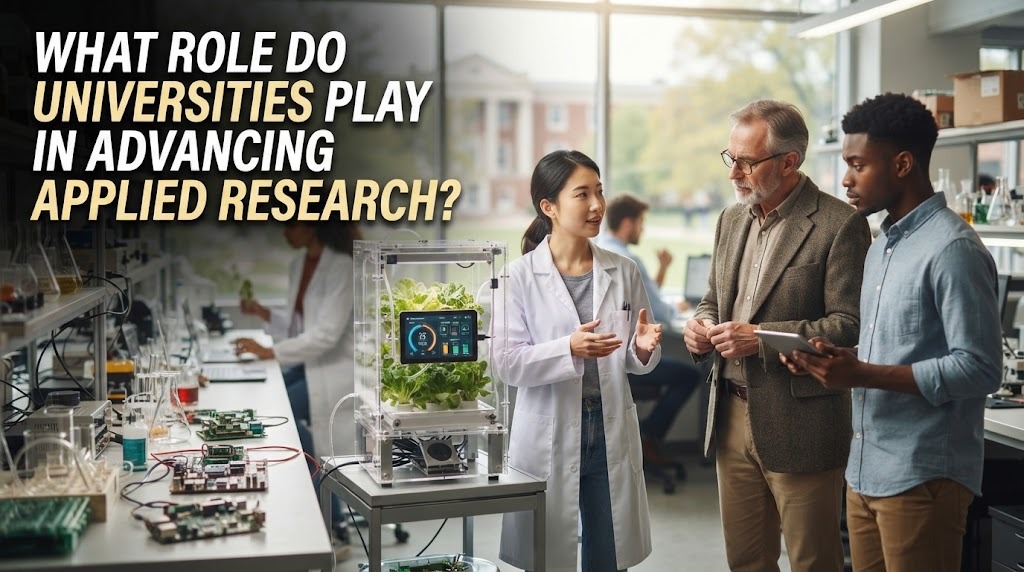
Universities play an important role in solving real-world problems through education, scientific investigation, and innovation. Beyond teaching students, they provide researchers with opportunities to develop practical solutions for challenges in healthcare, technology, business, agriculture, and environmental protection. Applied research allows universities to connect academic knowledge with the needs of communities and industries. Through laboratories, research centers, partnerships, and student projects, universities can help transform scientific findings into useful products, services, and policies. Understanding their role shows why higher education institutions are essential for innovation and social development.
PROVIDING FACILITIES AND RESOURCES FOR APPLIED RESEARCH
Universities support applied research by providing facilities, equipment, and academic resources that researchers need to investigate practical problems. These resources may include laboratories, libraries, specialized software, testing equipment, and research centers. With access to suitable facilities, researchers can conduct experiments, analyze information, and evaluate possible solutions. For example, an engineering department may use a laboratory to test energy-efficient materials for buildings. These facilities help universities produce reliable research findings that can be used to address real-world challenges.
Universities can also provide access to research funding through institutional grants, government programs, and partnerships with external organizations. Funding helps cover expenses such as equipment, materials, fieldwork, and researcher training. However, resources must be managed carefully to ensure that research projects meet their objectives and follow ethical standards. Universities may also help researchers apply for grants and manage research administration. By providing research infrastructure and financial support, universities create an environment where practical investigations can develop and progress.
DEVELOPING INNOVATION THROUGH SCIENTIFIC RESEARCH
Universities contribute to innovation by encouraging researchers to investigate problems and develop new solutions. Applied research allows academics to test ideas, improve existing technologies, and evaluate products or processes under practical conditions. For example, researchers may develop a water filtration system designed to provide cleaner water in communities with limited access to safe supplies. They can test the system's performance, assess its cost, and identify improvements before it is introduced more widely. This process helps turn scientific knowledge into practical innovation.
Research findings can also lead to new products, improved services, and more efficient working methods. In healthcare, university researchers may investigate diagnostic tools or technologies that help medical professionals identify diseases. In agriculture, they may test crop management techniques that improve productivity while conserving resources. Not every research project produces an immediate invention, but each can contribute valuable evidence and knowledge. Through continuous investigation and testing, universities support technological development and practical problem-solving.
BUILDING PARTNERSHIPS WITH INDUSTRIES AND BUSINESSES
Collaboration between universities and industries helps ensure that applied research addresses real business needs. Companies often understand the practical challenges of production, customer service, and market competition, while universities contribute research expertise and scientific methods. By working together, both sides can identify problems, share resources, and develop suitable solutions. For example, a manufacturing company may partner with university engineers to improve machine performance and reduce material waste. Such partnerships connect academic research with industry needs and practical applications.
University and industry collaborations can take different forms, including joint research projects, internships, technical consultations, and product development. Businesses may provide funding, equipment, or access to real working environments where researchers can test their ideas. Universities can contribute specialized knowledge, laboratory facilities, and opportunities for students to gain practical experience. Clear agreements are important to manage intellectual property, confidentiality, funding responsibilities, and research objectives. When these partnerships are well organized, they can support innovation, business competitiveness, and economic growth.
SUPPORTING STUDENTS AND DEVELOPING RESEARCH SKILLS
Universities help advance applied research by preparing students to investigate problems and develop practical solutions. Through research assignments, laboratory activities, final projects, and internships, students learn how to collect data, analyze evidence, and evaluate different approaches. These experiences encourage critical thinking, problem-solving, and scientific reasoning. For example, marketing students may conduct research to understand customer preferences and recommend improvements for a small business. This allows students to apply classroom knowledge to situations they may encounter in their future careers.
Students can also work alongside lecturers and professional researchers on ongoing projects. This collaboration exposes them to research methods, ethical responsibilities, teamwork, and technical skills. Universities may provide workshops, research competitions, mentoring, and opportunities to present findings at academic events. These activities help students communicate their ideas and understand how research contributes to society. By developing capable future professionals, universities strengthen the research skills and innovation capacity needed across different industries.
TURNING RESEARCH FINDINGS INTO COMMUNITY SOLUTIONS
Universities can use applied research to help communities address local problems and improve living conditions. Researchers may work with residents, local organizations, and public institutions to understand community needs before designing an intervention. For example, a university may investigate household waste management and help a neighborhood develop a more effective recycling program. Researchers can monitor participation, measure changes in waste collection, and recommend improvements based on the results. This approach makes community-based research more relevant to the people who may benefit from it.
Community involvement is important because local residents understand their circumstances, challenges, and available resources. Researchers should listen to their experiences and consider cultural, economic, and environmental conditions when developing recommendations. Universities can also share findings through public workshops, educational programs, and accessible reports. However, research recommendations must be realistic, affordable, and suitable for local needs to achieve lasting results. By combining scientific evidence with community participation, universities can support social improvement and better public services.
SUPPORTING GOVERNMENT POLICIES AND PUBLIC DECISIONS
Universities can provide evidence that helps governments make informed decisions about public services and development programs. Researchers may investigate education quality, public health, transportation, environmental management, or employment challenges. Their findings can help policymakers understand the causes of problems and compare possible responses. For example, a university research team may evaluate whether a job training program helps participants gain relevant skills and find employment. This evidence can guide decisions about public policy and resource allocation.
University researchers may also evaluate existing policies to determine whether they achieve their intended goals. They can analyze public data, interview affected communities, and compare outcomes before and after a program is introduced. Their findings may identify weaknesses, unexpected effects, or opportunities for improvement. Research does not replace political judgment or public consultation, but it can provide useful evidence for evaluating policy options. Through independent investigation and transparent reporting, universities can strengthen evidence-based decision-making and public accountability.
PROMOTING SUSTAINABLE DEVELOPMENT THROUGH RESEARCH
Universities contribute to sustainable development by investigating ways to protect natural resources and improve economic and social well-being. Applied research can focus on renewable energy, clean water, sustainable agriculture, waste reduction, and environmentally friendly production. For example, researchers may test solar energy systems to determine their performance under local weather conditions and estimate their operating costs. The findings can help communities and businesses assess whether the technology is suitable for their needs. In this way, universities support sustainable technology and environmental protection.
Research can also help organizations understand the long-term effects of their activities. Universities may study energy consumption, pollution levels, or the environmental impact of different materials and production methods. Based on the evidence, researchers can recommend ways to reduce waste and use resources more efficiently. Successful implementation often requires cooperation with governments, businesses, and local communities. By connecting scientific knowledge with practical action, universities can contribute to sustainable development and long-term social progress.
CHALLENGES UNIVERSITIES FACE IN ADVANCING APPLIED RESEARCH
Although universities have an important research role, they may face challenges such as limited funding, insufficient equipment, and a shortage of specialized personnel. Some projects require years of investigation before producing useful results, while funding programs may have strict requirements or limited availability. Researchers may also struggle to move findings from laboratory testing into real-world use. These difficulties can slow progress and limit the impact of promising ideas. Therefore, stable funding, skilled researchers, and effective management are important for advancing applied research.
Another challenge is ensuring that research findings reach the people and organizations that can use them. Academic results may not always match industry priorities or community needs, particularly when researchers have limited opportunities to collaborate with external partners. Universities can address this issue by building stronger partnerships, involving users early in research projects, and communicating findings in accessible language. They should also evaluate the real-world impact of their projects instead of focusing only on publications. By improving collaboration and knowledge sharing, universities can increase the practical value and social impact of research.
CONCLUSION
Universities play a vital role in advancing applied research by providing facilities, developing research skills, encouraging innovation, and connecting researchers with industries, governments, and communities. Their work helps transform scientific knowledge into practical solutions for challenges in technology, healthcare, education, business, and environmental protection. Although limited resources and implementation difficulties can create obstacles, strong partnerships and responsible research management can improve outcomes. Ultimately, universities are important drivers of applied research, innovation, and sustainable development because they connect knowledge with the practical needs of society.
Recent Posts

Bagaimana Sistem SKS pada Program Kuliah... 22.11.2026/43 View

How Does Technology Make Daily Evaluation... 21.11.2026/72 View

Apa Strategi Menghadapi Kesenjangan antara Kompetensi... 21.11.2026/74 View

Mengapa Inventaris Aset Penting bagi Kelancaran... 21.11.2026/70 View

When Should Musicians Join a Record... 21.11.2026/74 View
