

What Role Does Drainage Play in Preventing Urban Floods?
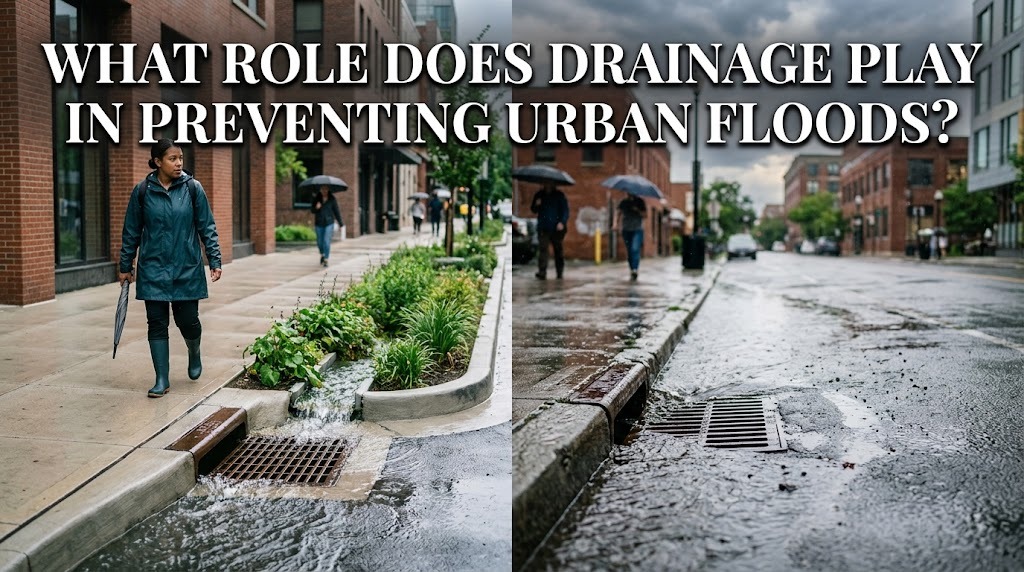
Drainage plays an essential role in preventing urban floods by collecting rainwater and directing it away from streets, buildings, and other developed areas. During heavy rainfall, effective drainage systems help prevent water from accumulating on the ground and disrupting daily activities. These systems include drains, pipes, canals, culverts, and pumping facilities that transport stormwater toward suitable outlets. When drainage infrastructure is properly designed and maintained, it can reduce flood risks, protect property, and support safer urban environments.
COLLECTING AND CHANNELING RAINWATER
One of the main functions of urban drainage is to collect rainwater before it accumulates on roads and other surfaces. Rainwater flows from rooftops, sidewalks, parking areas, and streets into drainage openings connected to larger networks.
Once collected, the water moves through pipes, channels, or canals toward rivers, reservoirs, retention ponds, or other designated outlets. This process helps control surface water and reduces the likelihood of localized flooding. The effectiveness of drainage depends on the system's capacity, layout, and connection to appropriate discharge points.
REDUCING WATER ACCUMULATION ON ROADS
Roads and paved surfaces allow little rainfall to enter the soil. As a result, water can accumulate quickly when drainage openings are insufficient or blocked. Effective roadside drainage provides pathways for runoff to leave the road surface.
Proper drainage can improve road safety by reducing standing water that makes driving and walking more dangerous. It can also help prevent water from entering nearby buildings and damaging road foundations. However, drainage must be designed to handle expected rainfall without transferring excessive water to other vulnerable areas.
PREVENTING DAMAGE TO HOMES AND BUILDINGS
Urban flooding can cause extensive damage when water enters residential and commercial buildings. Effective drainage helps reduce this risk by directing rainwater away from foundations, entrances, and surrounding properties.
Building drainage, roadside channels, and neighborhood stormwater networks need to work together to manage runoff. In flood-prone areas, additional measures such as raised entrances, protective barriers, and flood-resistant materials may also be necessary. Drainage can reduce exposure to surface water, but it cannot guarantee that buildings will remain dry during every extreme weather event.
MANAGING HEAVY RAINFALL
Drainage systems help cities manage rainfall by transporting water away from developed areas. However, every system has a limited capacity. If rainfall exceeds that capacity, water may accumulate even when the infrastructure is functioning correctly.
To improve flood protection, engineers assess local rainfall patterns, land elevation, surface runoff, and expected urban growth. Larger pipes, wider channels, additional storage facilities, or pumping stations may be needed in areas where water frequently accumulates. Planning for future rainfall conditions is also important because urban development and changing weather patterns can increase drainage demands.
MAINTAINING RIVERS AND WATERWAYS
Urban drainage systems often discharge stormwater into rivers, canals, and other waterways. These outlets must remain functional so that collected water can leave the drainage network efficiently.
If rivers are already overflowing or water levels are unusually high, drainage may become slower or reverse in some systems without suitable protective measures. Regular maintenance of waterways, culverts, and discharge points helps preserve their capacity. In vulnerable areas, floodgates, pumps, and other control structures may help manage water movement when gravity drainage is insufficient.
PREVENTING FLOODS THROUGH REGULAR MAINTENANCE
Drainage systems require regular inspection and cleaning to remain effective. Garbage, leaves, sediment, and vegetation can accumulate inside drains and reduce the amount of water that can pass through them.
Damaged pipes, collapsed channels, and poorly maintained pumping equipment can also interfere with water movement. Local authorities can reduce these problems through scheduled inspections, sediment removal, repairs, and cleaning before periods of heavy rainfall. Residents can contribute by disposing of waste properly and reporting blocked or damaged drainage infrastructure.
SUPPORTING URBAN DEVELOPMENT
As cities grow, more land becomes covered by buildings, roads, and other impermeable surfaces. This increases surface runoff and places additional pressure on existing drainage networks.
Urban planners must therefore consider drainage capacity when approving new housing, commercial buildings, industrial facilities, and transportation projects. New developments may need additional drains, retention ponds, permeable surfaces, or other stormwater controls. Coordinating drainage improvements with urban growth helps prevent infrastructure from becoming inadequate as population and development increase.
COMBINING DRAINAGE WITH GREEN INFRASTRUCTURE
Conventional drainage works best when combined with measures that reduce the amount of runoff entering the system. Parks, wetlands, rain gardens, green roofs, and permeable pavements can absorb or temporarily store some rainfall before it reaches drains.
These features help reduce peak water flow during storms and provide additional capacity when drainage networks are under pressure. Retention ponds and detention basins can also temporarily store excess water and release it gradually. Combining engineered drainage with natural water-management methods can create a more resilient approach to urban flood prevention.
DRAINAGE CHALLENGES IN INDONESIAN CITIES
Many Indonesian cities experience heavy seasonal rainfall, rapid urban development, and pressure on existing drainage infrastructure. In some areas, waste accumulation, river overflow, coastal conditions, and land subsidence can make flood management more difficult.
Improving drainage requires local authorities to assess the specific causes of flooding in each area. Solutions may include repairing drains, enlarging channels, maintaining rivers, installing pumping systems, improving waste collection, and protecting natural water-storage areas. Community participation is also important because drainage infrastructure cannot operate effectively when waterways are repeatedly blocked by rubbish.
THE LIMITATIONS OF DRAINAGE SYSTEMS
Drainage systems are important, but they cannot prevent every urban flood. Extremely heavy rainfall may exceed their design capacity, while rivers, coastal water, or groundwater may cause flooding independently of local drainage performance.
Poorly designed drainage can also transfer water downstream and increase flood risks in other neighborhoods. For this reason, effective flood management should include catchment-wide planning, green infrastructure, flood-risk mapping, early-warning systems, and emergency preparedness. A coordinated approach helps cities address both the immediate movement of stormwater and the broader causes of flooding.
CONCLUSION
Drainage plays a vital role in preventing urban floods by collecting rainwater, channeling runoff, protecting buildings, and reducing water accumulation on roads. Its effectiveness depends on suitable design, sufficient capacity, regular maintenance, and functional connections to rivers or other outlets. Combining drainage infrastructure with green spaces, responsible urban planning, and effective waste management can further reduce flood risks. Although drainage cannot eliminate every flood, a well-maintained and carefully planned system helps cities manage rainfall more safely and protect their communities.
Recent Posts

Bagaimana Sistem SKS pada Program Kuliah... 22.11.2026/54 View

How Does Technology Make Daily Evaluation... 21.11.2026/83 View

Apa Strategi Menghadapi Kesenjangan antara Kompetensi... 21.11.2026/81 View

Mengapa Inventaris Aset Penting bagi Kelancaran... 21.11.2026/78 View

When Should Musicians Join a Record... 21.11.2026/82 View
