

What Role Does Education Play in Preparing Future Generations for Change?
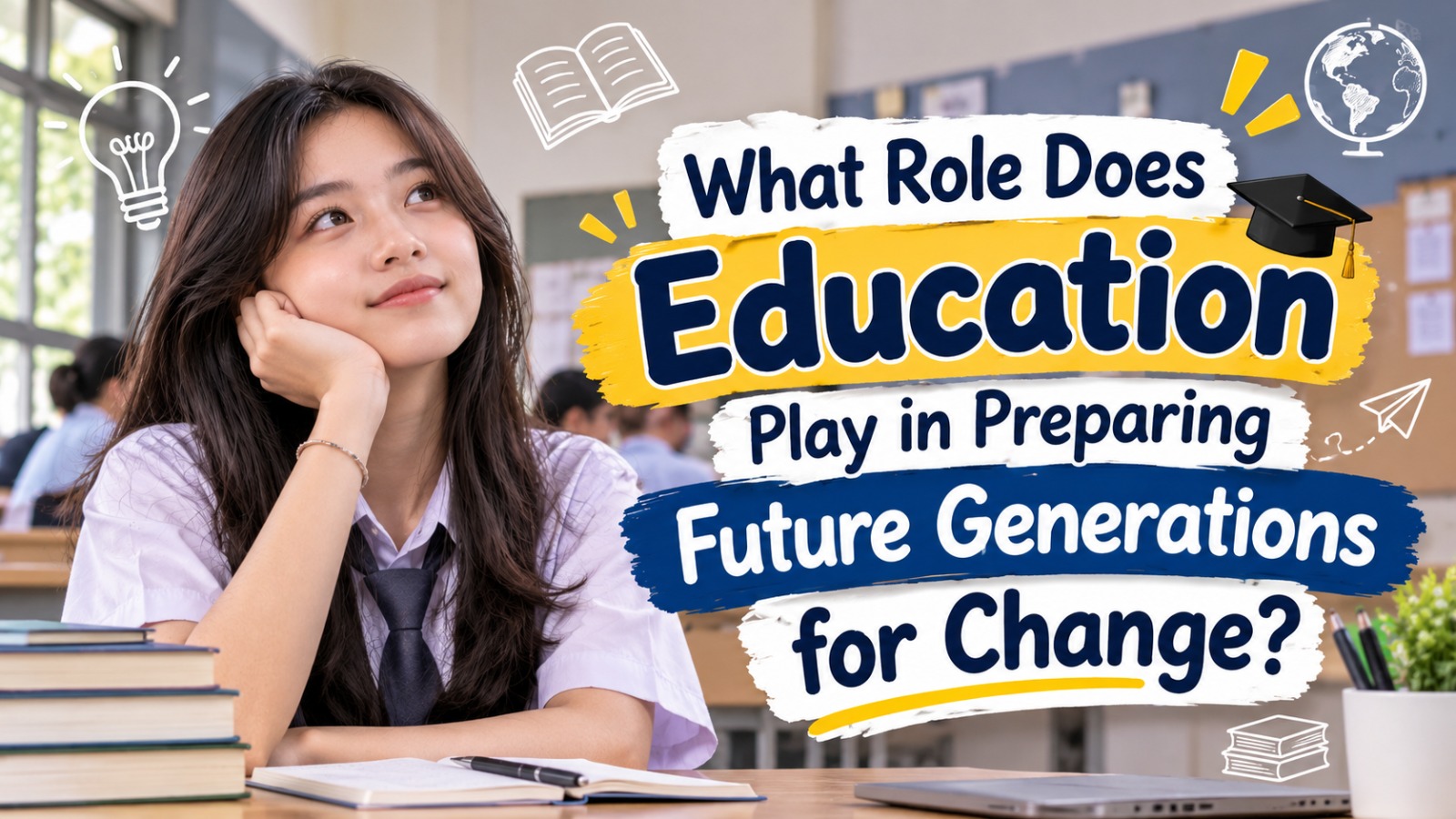
Education plays an important role in preparing future generations to face a world that continues to change. Developments in technology, economic conditions, social values, and employment opportunities require people to become more flexible and knowledgeable. Through education, individuals can develop the skills and mindset needed to understand new situations and respond to different challenges. Education is not only about gaining academic knowledge but also about building character, creativity, and problem-solving abilities. Therefore, education is one of the most important foundations for preparing future generations to adapt and succeed in changing times.
DEVELOPING KNOWLEDGE AND UNDERSTANDING
Education helps students gain the knowledge they need to understand the world around them. Through different subjects, they learn about science, technology, history, economics, and social issues. This knowledge allows them to recognize changes happening in society and understand how those changes influence everyday life. Students also learn to connect information from different fields, which helps them develop a broader perspective. A strong foundation of knowledge makes individuals better prepared to face unfamiliar situations and make informed decisions.
In addition, education encourages people to become lifelong learners. The knowledge gained at school or university may not always be sufficient for future challenges because information and technology continue to develop. Individuals need to remain curious and willing to learn new things throughout their lives. This habit helps them adjust when their jobs, responsibilities, or environments change. As a result, education should encourage continuous learning rather than focusing only on memorizing information.
BUILDING CRITICAL THINKING AND PROBLEM-SOLVING SKILLS
Critical thinking is an essential ability in a world filled with information and rapid developments. Education teaches students to examine information, compare different opinions, and identify reliable sources. These skills help them avoid accepting information without understanding its accuracy. Students also learn to recognize problems and consider possible solutions before making decisions. Critical thinking allows future generations to respond to change with logical reasoning instead of making decisions based only on assumptions.
Problem-solving skills are equally important because modern society presents challenges that do not always have simple answers. Through discussions, research, assignments, and practical activities, students can learn how to approach difficult situations. They become more confident in identifying problems, evaluating alternatives, and choosing appropriate solutions. These abilities are useful not only in academic environments but also in workplaces and everyday life. By developing critical thinking and problem-solving skills, education prepares individuals to handle uncertainty more effectively.
PREPARING STUDENTS FOR TECHNOLOGICAL DEVELOPMENT
Technology has transformed communication, business, education, transportation, and many other aspects of human life. Therefore, students need digital knowledge to participate effectively in modern society. Education can introduce them to digital tools, online platforms, information systems, and basic technological concepts. It can also teach them how to use technology responsibly and protect their personal information. Digital literacy helps future generations take advantage of technological opportunities while understanding the risks involved.
However, preparing students for technological development should involve more than teaching them how to operate devices. They also need to understand digital ethics, online safety, privacy, and the importance of verifying information. As artificial intelligence and automation become more common, students must learn how technology can support human activities without depending on it completely. Schools and universities should combine technological knowledge with creativity, communication, and independent thinking. This balanced approach helps students remain relevant as technology continues to evolve.
STRENGTHENING CHARACTER AND SOCIAL RESPONSIBILITY
Education also plays a major role in shaping students' character and attitudes. Knowledge alone is not enough to prepare individuals for the challenges of modern life. They need values such as honesty, discipline, responsibility, empathy, and respect for others. These qualities help them interact positively with people from different backgrounds and handle disagreements constructively. Strong character enables individuals to face social changes without losing their principles and sense of responsibility.
Social responsibility is another important aspect of education. Students should understand that their actions can influence their communities and the environment. Through group projects, community activities, and classroom discussions, they can learn cooperation, leadership, and respect for different perspectives. These experiences help them become active members of society rather than individuals who focus only on personal success. Education that combines academic learning with character development can produce generations that contribute positively to social progress.
IMPROVING CREATIVITY AND ADAPTABILITY
Creativity helps individuals discover new ideas and develop solutions when facing unfamiliar challenges. Education can encourage creativity by giving students opportunities to conduct experiments, create projects, express opinions, and explore different approaches. Instead of always expecting one correct answer, teachers can encourage students to think independently and consider alternative possibilities. This learning environment helps them become more confident in exploring new ideas. Creative thinking is valuable because changing times often require people to find new ways to solve existing problems.
Adaptability is equally important because future generations will experience changes in education, employment, technology, and social life. Students need to become comfortable with learning new skills and adjusting their plans when circumstances change. Education can develop this ability through collaborative assignments, practical experiences, and activities that require students to respond to different situations. They also need to learn how to manage failure and use mistakes as opportunities for improvement. With creativity and adaptability, individuals can approach change as an opportunity to grow rather than something they should always fear.
CONNECTING EDUCATION WITH FUTURE CAREER OPPORTUNITIES
The world of work continues to develop as industries adopt new technologies and business models. Some traditional jobs may change, while new professions emerge and require different qualifications. Education helps students understand these developments and prepare for future career opportunities. Schools and universities can provide career guidance, vocational training, internships, and practical projects that connect learning with workplace needs. Relevant education helps students develop the knowledge and practical skills required to compete in an evolving job market.
Education should also prepare students to become flexible workers and independent creators of opportunities. Communication, teamwork, leadership, digital literacy, and professional ethics are important skills in many industries. Students should have opportunities to practice these abilities before entering the workplace. Cooperation between educational institutions, businesses, and communities can also help ensure that learning programs remain relevant. By connecting academic knowledge with real-world experience, education can help future generations build more sustainable careers.
CONCLUSION
Education plays a fundamental role in preparing future generations to face changing times. It develops knowledge, critical thinking, problem-solving abilities, digital literacy, creativity, and adaptability. Beyond academic achievement, education also strengthens character, social responsibility, and readiness for future career opportunities. However, education must continue to evolve so that its learning methods and materials remain relevant to society's needs. By providing meaningful and balanced learning experiences, education can prepare future generations to face uncertainty, take advantage of new opportunities, and contribute to a better future.
Recent Posts

How Does Technology Make Daily Evaluation... 21.11.2026/57 View

Apa Strategi Menghadapi Kesenjangan antara Kompetensi... 21.11.2026/59 View

Mengapa Inventaris Aset Penting bagi Kelancaran... 21.11.2026/54 View

When Should Musicians Join a Record... 21.11.2026/54 View

Daily Evaluation or Daily Planning Which... 21.11.2026/61 View
