

What Role Does Government Play in Solving Urban Traffic Congestion Sustainably?
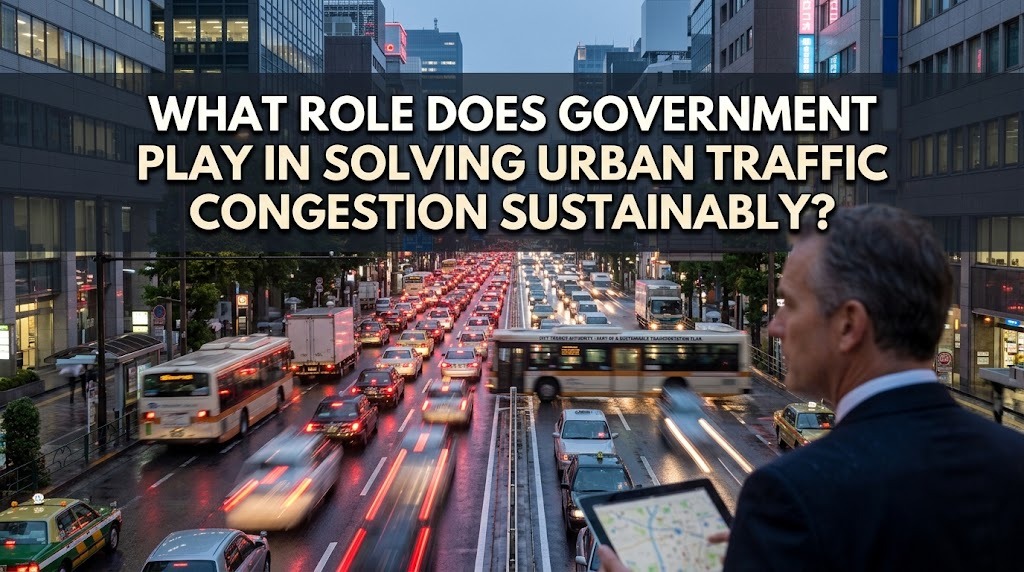
Urban traffic congestion is a major challenge in many cities, affecting transportation efficiency, air quality, economic productivity, and people's daily lives. As populations grow and private vehicle ownership increases, existing roads often struggle to accommodate rising travel demand. Although individual choices can influence traffic conditions, long-term solutions require coordinated policies and effective public investment. Government plays a crucial role in reducing traffic congestion sustainably by improving public transportation, developing better urban infrastructure, managing vehicle use, and encouraging environmentally friendly travel. Through careful planning and cooperation with communities, governments can create transportation systems that serve both present and future generations.
DEVELOPING RELIABLE AND ACCESSIBLE PUBLIC TRANSPORTATION
One of the most important responsibilities of government is providing reliable public transportation. Buses, trains, and other mass transit services can move large numbers of passengers while using less road space per person than individual cars. Governments can invest in new routes, improve service frequency, maintain vehicles, and ensure that transportation connects residential areas with workplaces, schools, hospitals, and commercial centers. When public transportation is affordable, comfortable, and dependable, more people may choose it instead of driving private vehicles.
Accessibility is equally important for making public transportation attractive to different groups. Governments should provide suitable facilities for older adults, people with disabilities, children, and passengers with limited incomes. Integrated ticketing systems and coordinated schedules can make transfers between buses and trains easier. Authorities should also use passenger data and public feedback to identify underserved areas and improve service quality. By making public transportation a practical daily option, governments can reduce dependence on private vehicles and help relieve congestion on busy roads.
IMPROVING URBAN PLANNING AND TRANSPORTATION INFRASTRUCTURE
Urban planning strongly influences how people travel throughout a city. When housing, workplaces, schools, and essential services are located far apart, residents may have to rely on cars or motorcycles for everyday activities. Governments can encourage mixed-use neighborhoods where homes, businesses, public facilities, and recreational areas are located closer together. This can reduce unnecessary long-distance journeys and make walking, cycling, and public transportation more convenient.
Governments should also improve existing transportation infrastructure rather than relying only on road expansion. Maintaining roads, redesigning dangerous intersections, creating dedicated bus lanes, and providing safe sidewalks can improve the movement of people. Protected bicycle lanes can make cycling a more practical alternative for short journeys. Development projects should be coordinated with transportation services so that new residential and commercial areas do not create additional traffic problems. Through integrated planning, governments can use available road space more efficiently while supporting sustainable urban growth.
IMPLEMENTING EFFECTIVE TRAFFIC MANAGEMENT POLICIES
Governments can reduce congestion by managing how vehicles use limited road space. Traffic management policies may include parking regulations, restrictions on certain vehicles, congestion pricing, and designated low-emission zones. For example, congestion pricing charges drivers to enter specific busy areas at particular times, encouraging some travelers to use public transportation or change their departure schedules. Properly designed parking policies can also reduce traffic caused by drivers searching for available spaces or parking illegally.
However, these policies must reflect local transportation conditions and people's ability to choose alternatives. Strict vehicle restrictions may create difficulties for workers, people with disabilities, and residents living in areas with limited public transportation. Governments should therefore provide reasonable exemptions where appropriate and improve alternative travel options before introducing major restrictions. Clear communication and consistent enforcement are necessary to help residents understand and follow the rules. Authorities should regularly evaluate traffic volumes, travel times, and public feedback to determine whether policies are achieving their intended goals.
USING SMART TECHNOLOGY AND DATA-BASED DECISIONS
Modern technology gives governments new ways to monitor traffic and improve transportation efficiency. Intelligent traffic light systems can adjust signal timing according to traffic conditions, helping reduce unnecessary delays at intersections. Cameras, road sensors, and traffic monitoring platforms can identify congestion hotspots, detect accidents, and provide information about road conditions. Governments can use these tools to coordinate traffic signals, manage incidents, and direct resources to locations experiencing recurring problems.
Data analysis can also help authorities plan transportation improvements more accurately. By examining travel patterns, passenger numbers, accident records, and traffic volumes, planners can identify where additional public transportation services or safety improvements are needed. Artificial intelligence may help predict congestion, although its results depend on data quality and require human oversight. Governments must also protect personal information and maintain cybersecurity when collecting or processing transportation data. When used responsibly, smart technology can support better decisions and improve the performance of existing transportation networks.
PROMOTING ENVIRONMENTALLY FRIENDLY TRANSPORTATION
Sustainable traffic management requires governments to encourage transportation choices that reduce environmental damage. Walking, cycling, and shared transportation can decrease dependence on private vehicles, especially for short journeys and daily commuting. Governments can build continuous sidewalks, protected bicycle lanes, safe crossings, and convenient connections to public transportation stations. These facilities make active travel safer and more practical for people of different ages and abilities.
Authorities can also support cleaner transportation through policies that encourage low-emission buses, electric public transportation, and more efficient vehicle use. However, electric vehicles alone cannot eliminate congestion because they still occupy road space. Sustainable transportation policies must therefore address both vehicle emissions and the number of trips made by private vehicles. Public awareness campaigns, employer travel programs, and convenient public transportation services can help residents adopt more sustainable travel habits. By combining environmental policies with effective mobility planning, governments can improve air quality while reducing pressure on urban roads.
STRENGTHENING PUBLIC PARTICIPATION AND LONG-TERM EVALUATION
Government action is more effective when residents, businesses, transportation operators, and community organizations participate in the planning process. Public participation allows authorities to understand local travel difficulties, identify unsafe locations, and consider the needs of different communities. Public consultations, surveys, and community meetings can reveal problems that traffic data alone may not fully explain. Involving residents early can also increase public understanding and support for transportation policies.
Long-term evaluation is necessary to ensure that traffic solutions remain effective as cities change. Governments should monitor indicators such as average travel time, traffic volume, public transportation ridership, road safety, accessibility, and air quality. They should also assess whether policies create unequal burdens for particular communities or simply move congestion to neighboring streets. When a strategy does not produce the expected results, authorities should adjust it using evidence and public feedback. Consistent evaluation, transparent decision-making, and cooperation across government departments can help cities build transportation systems that remain efficient, fair, and sustainable.
CONCLUSION
Government plays a central role in solving urban traffic congestion sustainably through public transportation investment, effective urban planning, smart traffic management, and environmentally responsible policies. Governments can also encourage walking, cycling, and shared transportation while ensuring that mobility remains accessible to different communities. Successful solutions require more than building roads because congestion is closely connected to land use, travel behavior, and transportation demand. By using reliable data, involving the public, and evaluating policies over time, authorities can improve traffic flow without overlooking environmental and social needs. With consistent commitment and integrated planning, cities can develop transportation systems that are more efficient, inclusive, and sustainable.
Recent Posts

Bagaimana Sistem SKS pada Program Kuliah... 22.11.2026/54 View

How Does Technology Make Daily Evaluation... 21.11.2026/83 View

Apa Strategi Menghadapi Kesenjangan antara Kompetensi... 21.11.2026/82 View

Mengapa Inventaris Aset Penting bagi Kelancaran... 21.11.2026/78 View

When Should Musicians Join a Record... 21.11.2026/84 View
