

What Role Does Lecturer Training Play in Developing Pedagogical Competencies
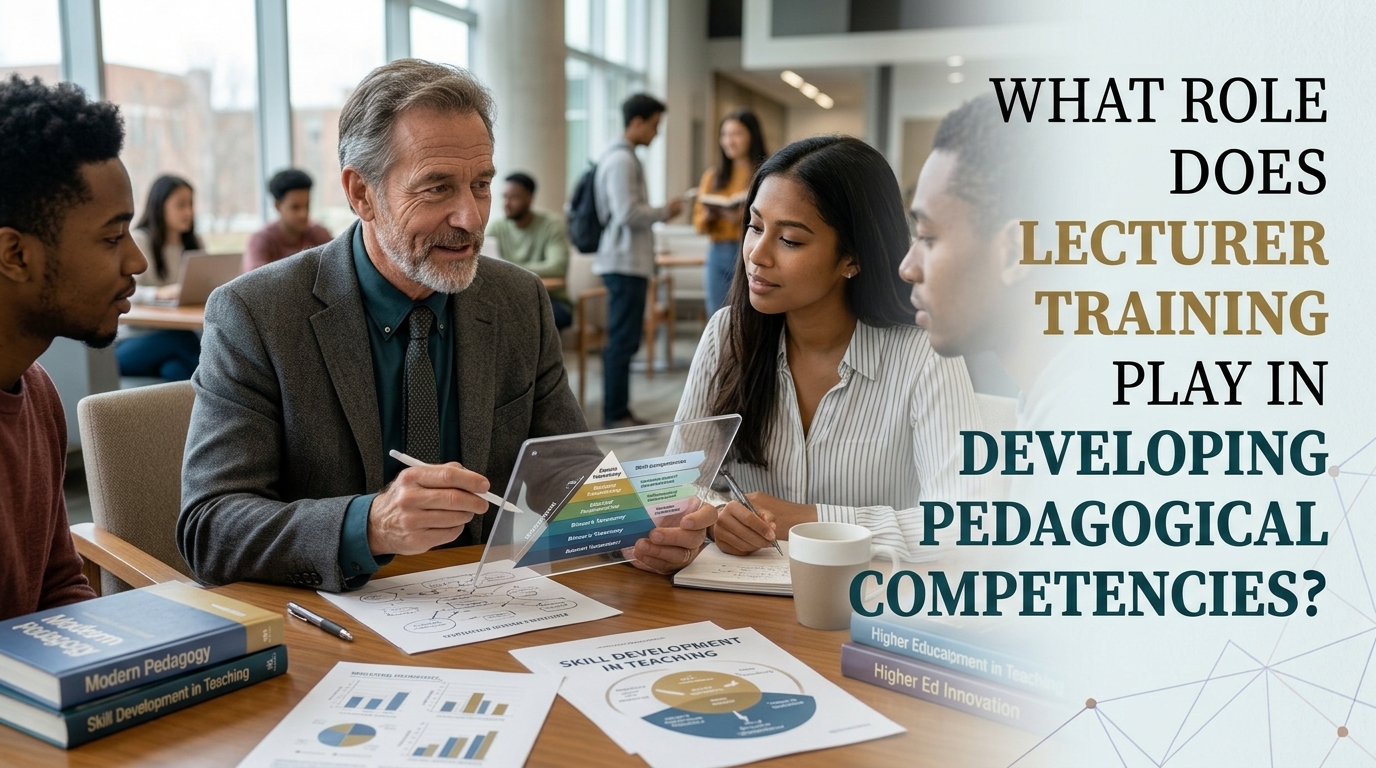
Lecturers play an important role in helping students understand academic concepts, develop critical thinking, and achieve learning goals. To perform these responsibilities effectively, lecturers need more than strong knowledge of their subjects. They also need pedagogical competencies, which include the ability to plan lessons, select appropriate teaching methods, assess student progress, and create supportive learning environments. Lecturer training helps educators strengthen these abilities through structured learning and practical experience. By improving pedagogical competencies, lecturer training can support better teaching quality and more meaningful learning experiences in higher education.
UNDERSTANDING PEDAGOGICAL COMPETENCIES
Pedagogical competencies refer to the knowledge and skills educators use to plan, deliver, and evaluate learning activities effectively. These competencies include understanding student learning needs, designing course materials, managing classroom interactions, and assessing learning outcomes. Lecturers also need to explain complex information clearly and encourage students to participate actively. Strong pedagogical abilities help educators select teaching strategies that match their subjects and students' abilities. These skills are essential for creating structured, inclusive, and productive learning environments.
Pedagogical competence is not developed through subject knowledge alone. Lecturers must also understand how students process information, respond to feedback, and apply what they learn. They need to recognize differences in learning readiness, prior knowledge, and educational needs. Effective teaching combines subject expertise with an understanding of how learning takes place. Lecturer training provides opportunities to develop this combination and apply it in academic settings.
IMPROVING TEACHING METHODS AND STRATEGIES
One of the main roles of lecturer training is helping educators choose effective teaching methods. Training programs can introduce student-centered learning, collaborative projects, case studies, classroom discussions, and problem-based learning. These approaches encourage students to participate rather than simply memorize information. Lecturers can learn when each method is appropriate and how to adapt activities to different subjects. As a result, lessons can become more interactive and relevant to students' academic needs.
Training also helps lecturers evaluate the effectiveness of their teaching strategies. They can use classroom observations, student feedback, and assessment results to identify areas that need improvement. For example, if students struggle to apply a theory, a lecturer may introduce practical exercises or real-world examples. Choosing teaching methods based on learning objectives helps students develop deeper understanding. This reflective approach encourages continuous improvement in teaching practice.
DEVELOPING LESSON PLANNING SKILLS
Effective lesson planning helps lecturers organize learning activities around clear objectives. Lecturer training can teach educators how to define learning outcomes, select suitable content, prepare teaching materials, and allocate time appropriately. These skills help ensure that every activity contributes to the intended learning goals. Lecturers can also learn to connect individual lessons with broader course objectives. A well-planned lesson provides clear direction for both lecturers and students.
Training may also introduce curriculum mapping and constructive alignment, which connect learning outcomes, teaching activities, and assessments. When these elements support one another, students have a clearer understanding of what they are expected to learn and demonstrate. Lecturers can review their plans to ensure that the content is manageable and the activities are appropriate for the available time. They should also allow flexibility when students need additional explanation or practice. These practices make learning more organized and purposeful.
STRENGTHENING CLASSROOM MANAGEMENT
Classroom management is another important part of pedagogical competence. Lecturers need to establish clear expectations, encourage respectful communication, manage discussions, and respond constructively to disruptions. Training can introduce techniques for maintaining student engagement and creating an environment where participants feel comfortable asking questions. These skills are useful in both traditional classrooms and online learning environments. Effective classroom management creates conditions that support concentration, participation, and respectful interaction.
Lecturers also need to manage different opinions and participation levels fairly. Some students may contribute frequently, while others may need more encouragement to express their ideas. Training can help lecturers use group activities, structured discussions, and clear participation guidelines to involve more students. It can also improve their ability to address disagreements professionally. With these skills, lecturers can create a classroom atmosphere that supports collaboration and learning.
ENHANCING ASSESSMENT AND FEEDBACK SKILLS
Assessment allows lecturers to understand whether students have achieved the intended learning outcomes. Lecturer training can help educators design quizzes, assignments, presentations, projects, and examinations that measure relevant knowledge and skills. They can learn to develop clear assessment criteria and use rubrics to improve consistency. Effective assessment measures learning progress rather than relying only on memorization. It also helps lecturers identify topics that students may not fully understand.
Providing useful feedback is equally important. Training can show lecturers how to explain students' strengths, identify specific weaknesses, and recommend practical steps for improvement. Feedback should be timely, understandable, and connected to the learning objectives. Lecturers can also use assessment results to adjust their teaching methods and provide additional support where necessary. Constructive feedback helps students understand how to improve their academic performance.
ADAPTING TEACHING TO DIFFERENT LEARNING NEEDS
Students have different levels of prior knowledge, learning preferences, and academic challenges. Lecturer training helps educators recognize these differences and select appropriate teaching approaches. For example, lecturers may combine verbal explanations, visual materials, practical activities, and collaborative exercises to make lessons more accessible. They can also learn to provide additional resources for students who need more practice. Inclusive teaching gives students fair opportunities to participate and demonstrate their understanding.
Training can also help lecturers consider accessibility when designing learning materials and classroom activities. Clear instructions, readable documents, captions for relevant videos, and alternative ways to participate can support a wider range of learners. Lecturers should avoid assuming that every student has the same resources or learning conditions. They can seek student feedback to identify barriers and make reasonable adjustments. This approach promotes a more supportive and equitable learning environment.
DEVELOPING DIGITAL PEDAGOGICAL COMPETENCIES
Digital technology has expanded the ways lecturers deliver lessons and support student learning. Lecturer training can help educators use learning management systems, online discussions, interactive presentations, virtual classrooms, and digital assessment tools. These skills are valuable for face-to-face, online, and blended learning. Lecturers can learn to select digital tools according to their learning objectives rather than using technology without a clear purpose. Digital pedagogical competence means combining educational knowledge with effective technology use.
Training should also address the limitations and risks of digital learning. Lecturers need to consider internet access, student privacy, academic integrity, and the reliability of digital resources. They should understand how to maintain interaction and provide feedback when students learn remotely. Emerging technologies, including artificial intelligence, should be used responsibly and in accordance with institutional policies. By developing these competencies, lecturers can create digital learning experiences that remain focused on educational quality.
PROMOTING CRITICAL THINKING AND ACTIVE LEARNING
Pedagogical training can help lecturers design activities that develop students' critical thinking and problem-solving abilities. Instead of focusing only on delivering information, lecturers can use case studies, debates, research tasks, and real-world problems. These activities encourage students to examine evidence, compare viewpoints, and explain their reasoning. Active learning helps students participate in constructing knowledge instead of passively receiving information. It can also improve their ability to apply concepts beyond the classroom.
Lecturers need to guide these activities carefully to ensure that students understand their purpose. They can provide clear instructions, relevant resources, and questions that encourage deeper analysis. Group discussions should give students opportunities to explain their ideas and consider alternative perspectives. Lecturers can then evaluate learning through reflections, presentations, or practical assignments. These methods help develop both subject knowledge and transferable skills.
ENCOURAGING REFLECTION AND CONTINUOUS IMPROVEMENT
Pedagogical competence develops through practice, feedback, and reflection. Lecturer training can introduce reflective teaching methods that help educators examine what worked well and what needs to change. Lecturers may review student feedback, compare assessment results, observe colleagues, or keep teaching journals. These activities help them identify patterns and make informed decisions about their teaching practices. Reflective teaching encourages lecturers to improve based on evidence rather than routine alone.
Universities can support continuous improvement through mentoring, peer observation, teaching workshops, and professional learning communities. Lecturers can share effective strategies and discuss challenges with colleagues from different disciplines. Follow-up training can address new needs identified during classroom practice. Institutions should also provide time and resources for educators to apply what they learn. This ongoing support helps pedagogical development become a regular part of academic life.
THE ROLE OF UNIVERSITIES IN SUPPORTING LECTURER TRAINING
Universities are responsible for providing relevant opportunities for lecturers to develop pedagogical competencies. Institutions can assess training needs through teaching evaluations, lecturer feedback, student experiences, and academic development plans. Based on these findings, they can organize workshops on lesson planning, assessment, classroom management, inclusive teaching, and digital learning. Training programs should match lecturers' actual needs and provide practical opportunities to apply new skills. This makes professional development more useful and relevant.
Universities should also evaluate whether training improves teaching practices over time. They can consider evidence such as lesson plans, classroom observations, student feedback, and progress toward learning outcomes. No single measure can fully represent teaching quality, so evaluations should use several sources of information. Institutions should also recognize that improvement takes time and may require continued mentoring. With appropriate resources and institutional support, lecturer training can contribute to stronger teaching and better student learning experiences.
CONCLUSION
Lecturer training plays an important role in developing pedagogical competencies by strengthening teaching methods, lesson planning, classroom management, assessment, and digital learning skills. It also helps lecturers respond to diverse student needs, encourage critical thinking, and reflect on their teaching practices. Strong pedagogical competencies enable lecturers to deliver more effective, inclusive, and engaging education. When universities provide relevant training and continuous support, lecturers are better prepared to improve teaching quality and help students achieve their academic goals.
Recent Posts

Bagaimana Sistem SKS pada Program Kuliah... 22.11.2026/45 View

How Does Technology Make Daily Evaluation... 21.11.2026/73 View

Apa Strategi Menghadapi Kesenjangan antara Kompetensi... 21.11.2026/75 View

Mengapa Inventaris Aset Penting bagi Kelancaran... 21.11.2026/71 View

When Should Musicians Join a Record... 21.11.2026/75 View
