

What Role Does SWOT Analysis Play in Business Planning?
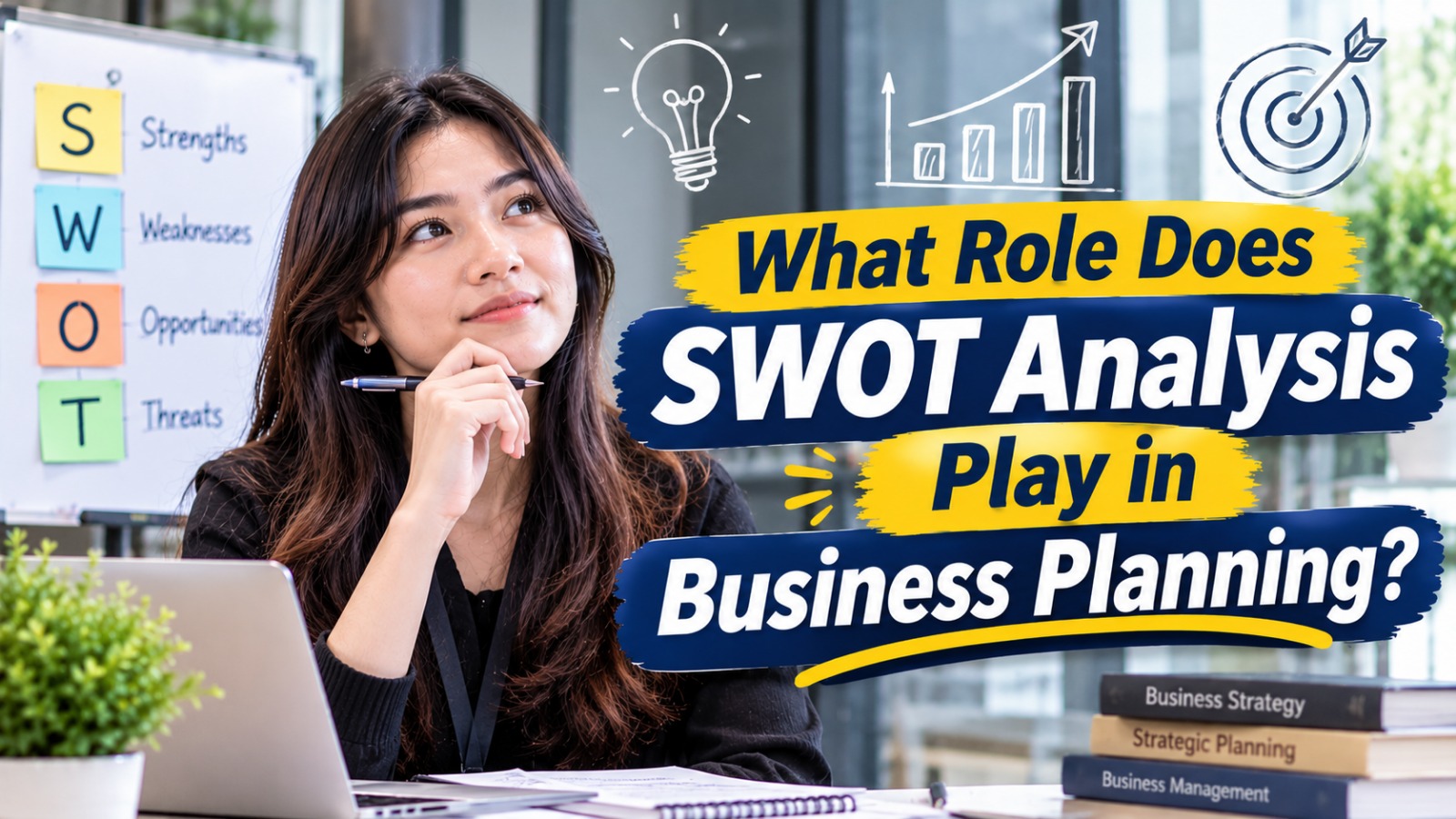
SWOT analysis is an important tool in business planning because it helps entrepreneurs understand their company's internal capabilities and external business environment. It examines four main factors: strengths, weaknesses, opportunities, and threats. By evaluating these elements, business owners can identify what their companies do well, recognize areas that need improvement, and understand conditions that may influence future performance.
Including SWOT analysis in a business plan allows entrepreneurs to develop strategies based on a clearer assessment of their business situation. It also supports decision-making, risk management, resource allocation, and long-term planning. Rather than relying only on assumptions, businesses can use SWOT findings to establish realistic objectives and prepare for different market conditions.
UNDERSTANDING BUSINESS STRENGTHS
Strengths are internal advantages that help a business compete and achieve its objectives. These advantages may include product quality, skilled employees, strong customer relationships, efficient operations, financial resources, or a recognizable brand. Identifying strengths helps entrepreneurs understand which capabilities can support business development.
In a business plan, strengths can be used to establish competitive advantages and determine which resources should receive further investment. For example, a small bakery with unique recipes and loyal customers may use these advantages to introduce new products or expand its customer base. Recognizing strengths also helps business owners make better use of existing capabilities.
IDENTIFYING BUSINESS WEAKNESSES
Weaknesses are internal limitations that may prevent a business from achieving its goals. They can include limited capital, insufficient employee skills, outdated equipment, poor marketing activities, or inefficient management systems. Identifying these weaknesses allows entrepreneurs to understand which areas require improvement.
A business plan should explain how the company intends to address its limitations. For instance, a small retail business with weak online sales may need to improve its digital marketing and online ordering systems. By recognizing weaknesses early, entrepreneurs can prepare improvement strategies before these limitations create more serious operational problems.
RECOGNIZING MARKET OPPORTUNITIES
Opportunities are external conditions that a business can use to support growth and development. These may include increasing customer demand, emerging technologies, new market segments, changing consumer preferences, or potential business partnerships. Identifying opportunities helps entrepreneurs discover possibilities beyond their current operations.
In business planning, opportunities can guide decisions about product development, marketing activities, and expansion strategies. For example, growing interest in environmentally friendly products may create an opportunity for businesses to introduce sustainable packaging. However, entrepreneurs should evaluate customer demand and financial feasibility before investing in a new opportunity.
EVALUATING POTENTIAL BUSINESS THREATS
Threats are external factors that may negatively affect business performance. These can include stronger competitors, economic uncertainty, rising supplier costs, changing regulations, technological disruption, and declining customer demand. Understanding potential threats helps businesses prepare for conditions that may disrupt their operations.
A business plan can use threat analysis to develop risk management strategies and contingency plans. For example, a company that depends on a single supplier may face operational difficulties if deliveries are interrupted. It can reduce this risk by identifying alternative suppliers and maintaining appropriate inventory levels. Preparing for threats helps businesses become more adaptable to unexpected changes.
SUPPORTING STRATEGIC DECISION-MAKING
SWOT analysis provides a structured overview of a business's current position, making it easier for entrepreneurs to evaluate different strategic options. By examining internal strengths and weaknesses alongside external opportunities and threats, business owners can determine which strategies are suitable for their conditions.
For example, a company with strong product quality and increasing market demand may consider expanding its distribution channels. However, if it has limited financial resources, it may need to improve its cash flow before pursuing expansion. This approach encourages entrepreneurs to consider both potential benefits and existing limitations before making important decisions.
STRENGTHENING COMPETITIVE ADVANTAGES
Understanding competitors and market conditions is essential for developing a competitive business strategy. SWOT analysis helps entrepreneurs identify internal capabilities that can distinguish their products or services from competing alternatives. These capabilities may involve product innovation, customer service, pricing, convenience, or specialized expertise.
The findings can be included in a business plan to explain how the company intends to position itself in the market. For example, a local clothing business may compete through customized designs and personalized customer service rather than attempting to offer the lowest prices. A clear understanding of competitive advantages helps businesses communicate their value to potential customers.
IMPROVING RESOURCE ALLOCATION
Businesses usually operate with limited resources, including money, employees, equipment, and time. SWOT analysis helps entrepreneurs determine which resources should receive priority based on the company's strengths, weaknesses, opportunities, and threats. This makes resource allocation more organized and connected to business objectives.
For instance, a startup with a limited marketing budget may prioritize promotional channels that reach its target customers more efficiently. Meanwhile, a company with outdated production equipment may need to allocate funds toward operational improvements. By considering SWOT findings, entrepreneurs can direct resources toward activities that address important business needs.
SUPPORTING RISK MANAGEMENT
Risk management involves identifying possible problems and preparing strategies to reduce their impact. SWOT analysis contributes to this process by highlighting weaknesses and external threats that may affect business operations. These findings help entrepreneurs recognize potential vulnerabilities before they develop into larger problems.
For example, a business that relies heavily on seasonal sales may experience financial pressure during periods of low demand. Through SWOT analysis, management can recognize this weakness and prepare alternative revenue sources or adjust its operating budget. Although SWOT analysis cannot eliminate business risks, it provides useful information for developing preventive measures.
GUIDING BUSINESS GROWTH AND EXPANSION
SWOT analysis also supports business growth by helping entrepreneurs evaluate whether their companies are ready to pursue new opportunities. Expansion decisions require an understanding of available resources, market demand, operational capacity, and potential challenges. SWOT findings provide a starting point for evaluating these factors.
A business with strong customer relationships and efficient operations may have opportunities to introduce new products or enter additional markets. However, management should also consider financial limitations and competitive pressures. Including these considerations in a business plan helps ensure that expansion strategies are based on realistic business conditions.
HOW TO INCLUDE SWOT ANALYSIS IN A BUSINESS PLAN
Entrepreneurs should conduct SWOT analysis systematically to ensure that the findings provide useful information for business planning. Each factor should be based on relevant evidence, such as financial records, customer feedback, employee evaluations, market research, and competitor information.
The following steps can help businesses prepare an effective SWOT analysis:
- Evaluate internal strengths: Identify the resources, skills, and capabilities that support business performance.
- Recognize internal weaknesses: Examine operational limitations, financial challenges, and areas that need improvement.
- Research external opportunities: Identify market trends, customer needs, new technologies, and potential partnerships.
- Assess external threats: Consider competition, economic conditions, regulatory changes, and other possible challenges.
- Develop strategic actions: Connect the findings with practical objectives, budgets, and business activities.
- Review the analysis regularly: Update the findings when business conditions or company capabilities change.
The results should not remain as a simple list of observations. Entrepreneurs need to translate them into specific actions that support the company's goals. This makes SWOT analysis a practical part of the business plan rather than just a general assessment.
CONCLUSION
SWOT analysis plays an important role in business planning by helping entrepreneurs evaluate internal strengths and weaknesses as well as external opportunities and threats. It provides a clearer understanding of the company's current position and supports decisions related to marketing, resource allocation, risk management, and business expansion.
By using reliable information and connecting SWOT findings with practical strategies, businesses can establish more realistic objectives and prepare for changing market conditions. Regular evaluation also ensures that the analysis remains relevant as the company develops. When applied effectively, SWOT analysis becomes a valuable foundation for informed decision-making and sustainable business growth.
Recent Posts

Bagaimana Sistem SKS pada Program Kuliah... 22.11.2026/4 View

How Does Technology Make Daily Evaluation... 21.11.2026/63 View

Apa Strategi Menghadapi Kesenjangan antara Kompetensi... 21.11.2026/64 View

Mengapa Inventaris Aset Penting bagi Kelancaran... 21.11.2026/61 View

When Should Musicians Join a Record... 21.11.2026/59 View
