

What Role Does the Government Play in Fighting Global Warming?
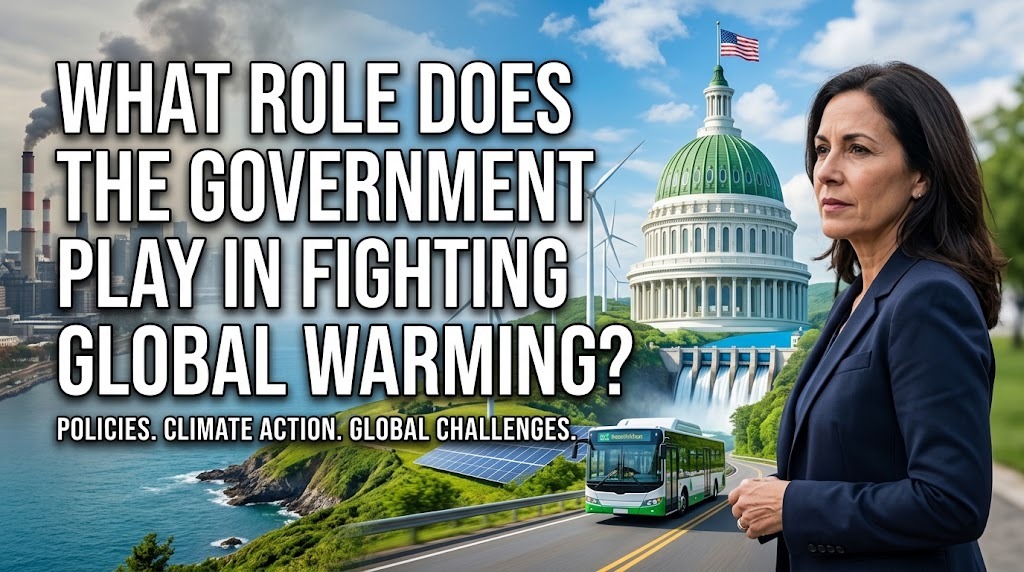
Governments play an important role in addressing global warming because they can establish environmental policies, regulate greenhouse gas emissions, and support the transition to cleaner energy. Although individuals and communities can contribute through daily habits, large-scale climate action also requires coordinated efforts from public institutions, businesses, and society.
Through laws, public investment, education, and international cooperation, governments can encourage activities that reduce greenhouse gas emissions and protect natural resources. Effective policies can also help communities prepare for the effects of climate change. Understanding the government's role in fighting global warming shows why public leadership is an essential part of long-term environmental protection.
ESTABLISHING POLICIES TO REDUCE GREENHOUSE GAS EMISSIONS
One important responsibility of governments is creating policies that help reduce greenhouse gas emissions. These policies can set emissions standards for industries, improve energy efficiency requirements, and establish rules for activities that contribute significantly to global warming. Governments may also introduce carbon pricing or other economic measures to encourage businesses to reduce emissions.
Clear regulations help businesses and public institutions understand their environmental responsibilities. Governments can monitor compliance and require corrective action when applicable rules are violated. However, the effectiveness of these policies depends on how they are designed, implemented, and enforced. By establishing consistent environmental standards, governments can support climate change mitigation across different sectors of the economy.
SUPPORTING RENEWABLE ENERGY AND CLEAN TECHNOLOGY
Governments can help reduce global warming by supporting the development and use of renewable energy, including solar, wind, and hydropower where appropriate. Electricity generated from these sources generally produces fewer operational greenhouse gas emissions than electricity generated by burning fossil fuels. Public policies can encourage investment through suitable incentives, infrastructure development, research funding, and clear energy regulations.
Governments can also support cleaner technologies in transportation, buildings, and industrial production. For example, investment in public transportation and electricity networks can make lower-emission alternatives more accessible. Energy-efficiency programs can help households and businesses reduce unnecessary energy consumption. These measures can contribute to a gradual transition toward a low-carbon economy, although the results depend on local conditions, available technology, and the reliability of implementation.
PROTECTING FORESTS AND NATURAL ENVIRONMENTS
Forests, wetlands, mangroves, and other natural ecosystems can store carbon and support biodiversity. Governments can help protect these environments through land-use regulations, conservation programs, sustainable forestry policies, and measures against illegal deforestation. Protecting existing ecosystems is particularly important because clearing or damaging them can release stored carbon and reduce their ability to absorb carbon dioxide.
Public institutions can also support reforestation and ecosystem restoration in suitable locations. These efforts may improve habitat quality, reduce soil erosion, and provide additional environmental benefits. However, planting trees alone cannot compensate for continued high greenhouse gas emissions. Conservation policies are most effective when they protect existing natural areas and are supported by responsible land management, monitoring, and community participation.
EDUCATING THE PUBLIC AND PREPARING COMMUNITIES FOR CLIMATE IMPACTS
Governments can increase environmental awareness by supporting education programs in schools, universities, and local communities. Public campaigns can explain how energy use, transportation, consumption, and waste management affect greenhouse gas emissions. Access to reliable information helps people understand the reasons behind climate policies and identify practical ways to contribute.
Governments also have a role in preparing communities for climate-related risks. Rising temperatures, coastal flooding, droughts, and changing rainfall patterns can affect health, infrastructure, agriculture, and water supplies. Public authorities can strengthen early warning systems, improve drainage, protect water resources, and develop emergency plans based on local risks. These measures are part of climate change adaptation, which helps communities prepare for and manage climate impacts that cannot be avoided entirely.
COOPERATING WITH OTHER COUNTRIES AND MONITORING PROGRESS
Global warming is a worldwide challenge because greenhouse gases released in one country contribute to changes in the global climate system. Governments can work together through international climate agreements, scientific research, technology sharing, and financial cooperation. Such cooperation can help countries coordinate emissions-reduction efforts and support communities with limited resources.
Governments also need to measure emissions and evaluate whether climate policies are producing meaningful results. This can involve collecting emissions data, publishing progress reports, and reviewing national climate targets. Transparent monitoring allows policymakers and the public to identify areas that require improvement. Through international climate cooperation and evidence-based planning, governments can strengthen their responses while adapting policies to changing scientific knowledge and national circumstances.
CONCLUSION
The government plays an important role in fighting global warming by establishing emissions regulations, supporting renewable energy, protecting natural ecosystems, educating the public, preparing communities for climate impacts, and cooperating with other countries. These responsibilities allow governments to coordinate large-scale action that individuals and communities cannot achieve alone.
However, government policies need effective implementation, public participation, and cooperation from businesses and other institutions. Regular monitoring also helps ensure that environmental programs remain relevant and produce measurable progress. Through consistent climate action, governments can help reduce greenhouse gas emissions, strengthen environmental protection, and support a more sustainable future.
Recent Posts

Bagaimana Sistem SKS pada Program Kuliah... 22.11.2026/49 View

How Does Technology Make Daily Evaluation... 21.11.2026/76 View

Apa Strategi Menghadapi Kesenjangan antara Kompetensi... 21.11.2026/78 View

Mengapa Inventaris Aset Penting bagi Kelancaran... 21.11.2026/74 View

When Should Musicians Join a Record... 21.11.2026/78 View
