

What Role Does the Government Play in Protecting Indonesian Cultural Heritage?
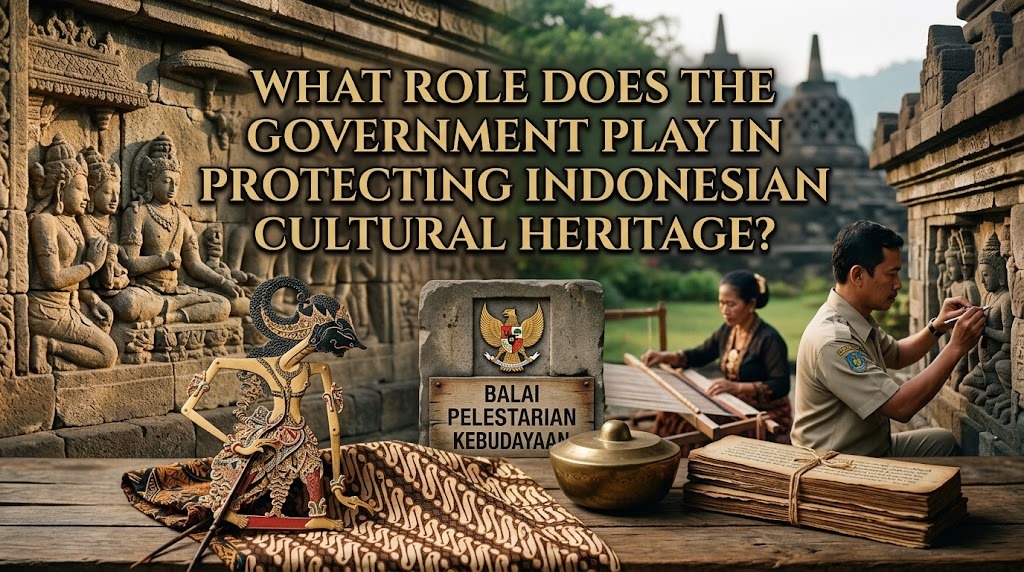
The government plays an important role in protecting Indonesian cultural heritage by preserving historical sites, supporting traditional arts, safeguarding local customs, and ensuring that cultural knowledge is passed on to future generations. Indonesia has a rich cultural heritage that includes traditional dances, regional languages, batik, traditional houses, historical temples, music, crafts, and community ceremonies. These cultural elements reflect the country's history, diversity, and national identity.
Protecting this heritage requires cooperation between the central government, local governments, cultural institutions, and local communities. Government policies can provide legal protection, financial support, educational programs, and resources for conservation. Through these efforts, Indonesia can maintain its cultural diversity while allowing traditions to remain relevant in modern society.
ESTABLISHING LAWS AND CULTURAL PROTECTION POLICIES
One of the government's main responsibilities is creating laws and policies that protect cultural heritage. Legal protection helps prevent the destruction of historical buildings, illegal trade in cultural objects, unauthorized excavation, and activities that threaten important cultural sites. In Indonesia, Law No. 11 of 2010 concerning Cultural Heritage provides a legal framework for protecting and preserving cultural heritage objects, buildings, structures, sites, and areas. Law No. 5 of 2017 concerning the Advancement of Culture also supports the protection, development, utilization, and promotion of Indonesian culture.
These regulations provide a foundation for conservation efforts and clarify the responsibilities of relevant authorities. Governments can identify and register cultural heritage, establish protection measures, and coordinate preservation programs. Effective enforcement is essential because laws cannot protect cultural resources if violations are ignored. Cooperation between government agencies, law enforcement, experts, and communities helps ensure that cultural heritage receives appropriate protection.
PRESERVING HISTORICAL BUILDINGS AND CULTURAL SITES
The government helps preserve historical buildings, archaeological sites, monuments, and other important cultural locations. These places provide evidence of past civilizations, architectural development, religious practices, and historical events. Without proper maintenance, they may deteriorate because of weather, pollution, natural disasters, or human activities. Government conservation programs can help prevent irreversible damage.
Preservation activities may include structural inspections, restoration, environmental management, and improvements to visitor facilities. However, restoration must be carefully planned to protect the original materials and historical characteristics of each site. For example, Borobudur Temple requires conservation measures to protect its stone structures and detailed reliefs. Government institutions can work with archaeologists, conservation specialists, and local communities to ensure that these places remain accessible while maintaining their historical significance.
SUPPORTING TRADITIONAL ARTS AND CULTURAL PRACTICES
The government also has a responsibility to support traditional arts and cultural practices that form an important part of Indonesian identity. These include traditional dances, regional music, batik-making, wayang performances, handicrafts, and local ceremonies. Many of these traditions depend on experienced practitioners who pass their knowledge to younger generations. Without sufficient support, some cultural practices may gradually disappear as lifestyles and economic conditions change.
Government support can include grants for artists, cultural festivals, training programs, and facilities for traditional performances. Cultural institutions can also document traditional knowledge and provide opportunities for communities to demonstrate their skills. Supporting local artists helps maintain cultural traditions while creating opportunities for them to earn a living. These efforts encourage younger generations to learn traditional skills and appreciate the value of their cultural heritage.
PROMOTING CULTURAL EDUCATION IN SCHOOLS
Education is an important part of the government's efforts to protect cultural heritage. Schools can introduce students to Indonesian history, regional traditions, traditional arts, and the importance of cultural diversity. Learning about local heritage helps young people understand their cultural roots and develop respect for communities with different customs. It also encourages students to recognize cultural preservation as a shared responsibility.
The government can support cultural education by incorporating relevant topics into school curricula and organizing educational activities. Students can visit museums, explore historical sites, participate in traditional art workshops, and learn regional languages. Teachers can invite local artists or cultural practitioners to share their knowledge and experiences. These activities help connect classroom learning with real cultural practices and encourage students to preserve traditions as they grow older.
PROVIDING FUNDING AND RESOURCES FOR CULTURAL PRESERVATION
Protecting cultural heritage requires adequate funding, trained personnel, and appropriate facilities. Historical buildings need regular maintenance, while traditional artists may require financial assistance to continue their work. Museums and cultural institutions also need resources to preserve collections, conduct research, and provide educational services. Government funding can help address these needs and ensure that preservation programs continue over time.
Financial assistance may be provided through conservation budgets, grants, cultural programs, and partnerships with educational institutions. Local governments can also support community museums, traditional craft centers, and cultural festivals. Funding should be managed transparently and directed toward activities that provide meaningful preservation benefits. By investing in cultural heritage, the government can protect historical resources while supporting local employment and community development.
USING DIGITAL TECHNOLOGY TO DOCUMENT CULTURAL HERITAGE
Digital technology provides new opportunities for documenting and promoting Indonesian cultural heritage. The government can support digital archives containing historical photographs, traditional music recordings, regional stories, manuscripts, and information about cultural sites. These resources make cultural knowledge easier to access for students, researchers, and the general public. Digital documentation is especially useful when traditional knowledge or cultural practices face a risk of disappearing.
Government institutions can also use websites, educational videos, virtual exhibitions, and social media campaigns to introduce Indonesian culture to younger audiences. Digital platforms allow information about local traditions to reach people across different regions and countries. However, digital records should complement the actual practice of cultural traditions rather than replace it. Appropriate consent, accurate information, and respect for community ownership are essential when documenting and sharing cultural knowledge.
INVOLVING LOCAL COMMUNITIES IN CULTURAL PRESERVATION
Local communities are essential partners in protecting Indonesian cultural heritage because they often maintain traditions and possess valuable knowledge about their history. The government can encourage community participation by involving residents in conservation planning, cultural events, and heritage management. This approach helps ensure that preservation programs reflect local needs and cultural values. It also allows communities to share responsibility for protecting their own heritage.
Community involvement can include supporting traditional ceremonies, teaching regional languages, maintaining historic neighborhoods, and organizing local cultural festivals. Governments can provide training and resources while allowing communities to decide how their traditions should be practiced and shared. This is particularly important for cultural knowledge that has specific meanings or restrictions within a community. When local people participate in decision-making, preservation efforts are more likely to remain meaningful and sustainable.
PROMOTING INDONESIAN CULTURAL HERITAGE INTERNATIONALLY
The government also helps introduce Indonesian cultural heritage to international audiences through cultural diplomacy, exhibitions, international cooperation, and tourism promotion. These activities allow people from other countries to learn about Indonesia's traditional arts, historical sites, and cultural diversity. International recognition can increase awareness of Indonesian heritage and encourage cooperation in preservation efforts. It may also create opportunities for cultural exchange and responsible tourism.
For example, Indonesia's batik tradition was inscribed on UNESCO's Representative List of the Intangible Cultural Heritage of Humanity in 2009. Such recognition helps highlight the cultural significance of Indonesian traditions beyond national borders. The government can work with cultural practitioners and international organizations to document, promote, and safeguard these traditions. However, international promotion should respect the communities that maintain cultural heritage and ensure that cultural practices are represented accurately.
CONCLUSION
The government plays a vital role in protecting Indonesian cultural heritage through laws, conservation programs, cultural education, financial assistance, digital documentation, and international cooperation. These efforts help preserve historical sites, traditional arts, regional languages, and cultural knowledge for future generations. Government support also creates opportunities for artists and local communities to continue maintaining their traditions.
However, cultural preservation cannot depend on the government alone. Families, schools, cultural practitioners, businesses, and local communities must also participate in protecting their heritage. By combining effective policies with community involvement and public education, Indonesia can preserve its cultural diversity while ensuring that traditional practices remain meaningful in modern life.
Recent Posts

Bagaimana Sistem SKS pada Program Kuliah... 22.11.2026/49 View

How Does Technology Make Daily Evaluation... 21.11.2026/77 View

Apa Strategi Menghadapi Kesenjangan antara Kompetensi... 21.11.2026/78 View

Mengapa Inventaris Aset Penting bagi Kelancaran... 21.11.2026/74 View

When Should Musicians Join a Record... 21.11.2026/79 View
