

What Role Does Transportation Play in Supporting Business Logistics Operations?
Transportation plays a crucial role in business logistics because it connects suppliers, manufacturers, warehouses, distributors, and customers through the movement of goods. Every company that handles physical products depends on transportation to ensure that materials and finished products reach their destinations efficiently. Without a reliable transportation system, businesses may experience delivery delays, higher operating costs, and disruptions to their daily activities. Effective transportation management helps companies maintain product availability, improve distribution performance, and meet customer expectations. Understanding the role of transportation in business logistics allows organizations to develop better delivery strategies and improve overall operational efficiency.
UNDERSTANDING THE ROLE OF TRANSPORTATION IN BUSINESS LOGISTICS
Transportation in business logistics refers to the process of moving raw materials, products, and other goods from one location to another to support business activities. It connects different stages of the distribution process, starting from suppliers and production facilities to warehouses, retail locations, and final customers.
Transportation is important because products cannot reach their intended destinations without an appropriate delivery system. For example, a manufacturing company needs transportation to receive raw materials from suppliers and distribute finished products to retailers. Similarly, an online business depends on delivery services to send customer orders to different locations. A reliable transportation system ensures that products move according to planned schedules and arrive in suitable conditions.
SUPPORTING PRODUCT DISTRIBUTION AND DELIVERY EFFICIENCY
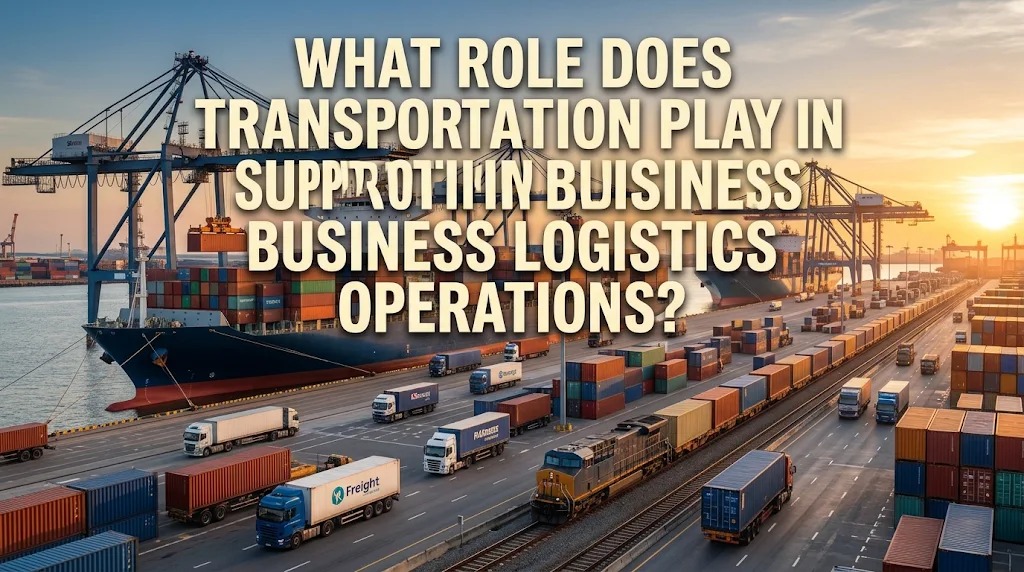
One of the main functions of transportation is supporting product distribution. Companies must select suitable transportation methods to move goods efficiently based on product characteristics, delivery distances, and customer requirements. Common transportation methods include road, rail, sea, and air transportation, each offering different advantages for business operations.
Road transportation provides flexibility for domestic deliveries, while rail transportation can support the movement of large quantities of goods over long distances. Sea transportation is commonly used for international shipping because it can carry substantial cargo volumes at relatively competitive costs. Air transportation is suitable for urgent deliveries and valuable products that require faster shipping. Choosing the right transportation method helps companies improve delivery efficiency, reduce unnecessary expenses, and maintain a reliable distribution network.
REDUCING OPERATIONAL COSTS AND IMPROVING BUSINESS PRODUCTIVITY
Transportation management directly influences a company's operating costs. Expenses such as fuel, vehicle maintenance, driver wages, shipping fees, and toll charges can affect business profitability. If transportation activities are poorly organized, companies may spend more money because of inefficient routes, unnecessary trips, and poorly planned delivery schedules.
Businesses can reduce these expenses by optimizing delivery routes, combining shipments, maintaining vehicles regularly, and selecting suitable transportation providers. Proper scheduling also helps companies use their vehicles and transportation resources more effectively. When transportation costs are controlled, businesses can allocate more financial resources to other important activities, such as production, marketing, and customer service. These improvements contribute to better productivity and long-term operational stability.
ENSURING CUSTOMER SATISFACTION AND DELIVERY RELIABILITY
Transportation plays an important role in maintaining customer satisfaction because delivery performance directly influences the customer experience. Customers generally expect products to arrive on time, in good condition, and according to their orders. Delayed shipments, damaged products, or inaccurate deliveries can reduce customer trust and negatively affect a company's reputation.
To improve delivery reliability, businesses should monitor transportation activities and communicate delivery information clearly. Real-time tracking systems allow companies and customers to follow the movement of shipments throughout the delivery process. Companies should also prepare alternative transportation arrangements to handle unexpected situations, such as traffic congestion, extreme weather, or vehicle breakdowns. Reliable transportation services help businesses build stronger customer relationships and encourage repeat purchases.
THE ROLE OF TECHNOLOGY AND SUSTAINABLE TRANSPORTATION
Modern technology has improved transportation management by providing better information and greater control over delivery activities. Companies can use Transportation Management Systems (TMS) to plan routes, organize shipments, monitor transportation expenses, and evaluate delivery performance. GPS tracking also helps businesses identify vehicle locations and monitor shipment progress in real time.
In addition to digital improvements, businesses increasingly need to consider sustainable transportation. Transportation activities consume energy and contribute to greenhouse gas emissions, particularly when companies rely heavily on conventional fuel-powered vehicles. Companies can reduce their environmental impact by optimizing routes, improving vehicle efficiency, consolidating shipments, and considering lower-emission transportation alternatives where practical. Combining technology with sustainable transportation strategies helps businesses improve logistics performance while supporting environmental responsibility.
CONCLUSION
Transportation plays an essential role in supporting business logistics because it ensures the movement of raw materials and finished products throughout the distribution process. Effective transportation management helps companies improve delivery efficiency, control operating costs, maintain product quality, and increase customer satisfaction. Modern technologies such as GPS tracking and Transportation Management Systems also make transportation activities more organized and transparent. By selecting suitable transportation methods and implementing efficient delivery strategies, businesses can strengthen their logistics operations and maintain a competitive advantage.
Recent Posts

How Does Technology Make Daily Evaluation... 21.11.2026/62 View

Apa Strategi Menghadapi Kesenjangan antara Kompetensi... 21.11.2026/63 View

Mengapa Inventaris Aset Penting bagi Kelancaran... 21.11.2026/59 View

When Should Musicians Join a Record... 21.11.2026/58 View

Daily Evaluation or Daily Planning Which... 21.11.2026/66 View
